×

The Standard e-Paper
Home To Bold Columnists
 The Standard Group Plc is a
multi-media organization with investments in media platforms spanning newspaper
print operations, television, radio broadcasting, digital and online services. The
Standard Group is recognized as a leading multi-media house in Kenya with a key
influence in matters of national and international interest.
The Standard Group Plc is a
multi-media organization with investments in media platforms spanning newspaper
print operations, television, radio broadcasting, digital and online services. The
Standard Group is recognized as a leading multi-media house in Kenya with a key
influence in matters of national and international interest.

Audio By Vocalize
Last month yours truly traveled to the United States of America (USA) and interacted with different stakeholders in the farming sector: from actual farmers to state agencies contributing to productivity.
To many Kenyans USA agriculture is synonymous with progressive farming practices, or, if you wish, industrial farming, where the focus is solely on profits. And as such, lots of chemicals, for routine husbandry, is sprayed with reckless abandon.
In Washington DC, the capital, I met with officials from the National Association of State Departments of Agriculture (NASDA). Patrick Wade, NASDA’s Director of Public Policy, says for over 100 years, the USA has had a robust voluntary conservation programme, informed by events that led to destruction of the environment in the first couple of decades into the 20th century.
“In the 1920s and 1930s we dealt with the Dust Bowl: we had major top soil loss due to high levels of erosion; which reset how we approach farming in the United States,” he said.
In a bid to farm sustainably, in a manner that conserves the environment, the Natural Resources Conservation Service (NRCS), under the United States Department of Agriculture (USDA), was formed. USDA is the equivalent of the Ministry of Agriculture in Kenya.
“NRCS is a national government administration that supports conservation programs voluntarily for farmers to adopt, helping improve the resilience of their farms by promoting ideas such as soil health. Voluntary conservation, as part of farming, is deeply ingrained among our farmers,” Wade says.
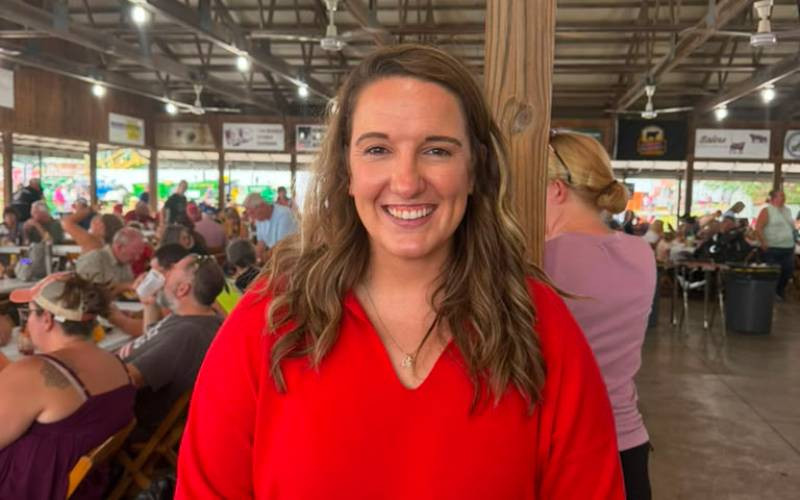
In Iowa, I met Kylie Peterson. Kylie and her family farm corn (maize), soybean, hay, and alfalfa on over 300 acres. “We also raise cattle in the farm,” she says.
The farm, like it is with all farms in USA, is meant to produce for profit. Kylie says her family has established an earthworm rearing project, where they collect ‘worm tea’ and ‘worm castings’ to spray and apply around the farm.
“It is not-for-profit. We do it for one purpose only: to improve soil health, soil structure and improve microbes in the soil,” she says.
Well, the family does benefit indirectly. Because the worm tea carries lots of organic nutrients that the crops would need, reducing costs that would be necessary for fertilisers.
As far as she can recall, nearly all farmers in Iowa farm sustainably, “making sure that they do not destroy the environment and leave it worse off,” for the benefit of the entire ecosystem.
“If we don’t do that, we may not be able to farm in the future,” she added.
NRCS, on its own account, has also proactively sought farmers to fund projects that benefit both the farmer and the environment.
The unit has documented some of its work with farmers. Gary Costlow is one such farmer. Costlow manages Brushy Creek Timber Company in Texas, spanning over 2,000 acres.
He is involved in an Open Pine Project by NRCS’s Environmental Quality Incentives Program (EQIP).
Stay informed. Subscribe to our newsletter
The state of Texas has dense forests which block sunlight from reaching below the canopy, stymieing vegetation growth. To combat this, Costlow is doing thinning, burns, and habitat monitoring.
He told USDA: “We’ll grow a lot of grass where the sunshine gets on the ground, which is what we’re after.”
Costlow has also installed streamside management zones to prevent erosion.
“We do that to establish a buffer against erosion, so we don’t let the timber cutters cut right to the bank of the creek,” he says.
Costlow worked with NRCS to construct a levee that’s holds back water. This created a new ecosystem, attracting numerous waterfowl species such as wood ducks.
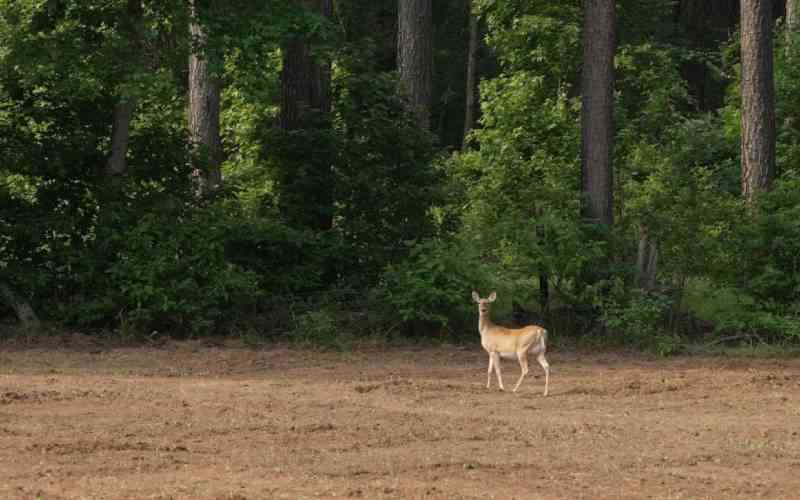
“I can remember when there was no deer here,” he says. “Now we have a manageable herd and that makes me feel really good that we have accomplished that.”
Costlow’s dedication to land management has earned him recognition such as Lonestar Land Steward Award and the Lower Mississippi Valley Regional Conservation Award.
“Mr. Costlow’s focus on wildlife habitat along with timber production is unique. Historically, timber production has been the main focus with wildlife being secondary,” Frank Baca, a biologist with NRCS Wildlife, comments.
Another farmer who took up conservation practices, according to USDA is Guy Choiniere, a fourth-generation farmer in the state of Vermont.
Roughly twenty years ago, a couple of technical service providers approached Guy and his father with a proposition to improve the water quality and soil health of their dairy farm.
“They explained that because the cows were allowed to roam free in the pasture, they had access to the Rock River watershed, which in turn caused unstable stream banks, leading to the sedimentation of surface water and nutrients entering the streams due to manure,” Guy says.
NRCS technical service providers are individuals certified to work with NRCS to help agricultural producers plan and apply conservation practices on working lands.
The technicians helped Guy with construction of a Waste Storage Facility called a bedded pack: an alternative animal housing where cows are kept under a solid manure bed.
High-quality hay mixed with sawdust and manure provides a floor for the bedded pack facility: an enclosed barn that offers comfort for Guy’s cattle.
“With a bedded pack, if it rains, or in stormy weather, the manure doesn’t run off into adjacent surface waters,” says NRCS Soil Conservationist Jimmy Young.
Over time, it composts into an organic fertilizer that is used to improve soil health and overall fertility around the farm.
The farm produces enough manure to completely eliminate conventional fertilisers, effectively converting the farm into an organic enterprise: the farm operates as such.
“The bedded pack has contributed significantly to improvements in water quality within Rock River watershed,” says Jimmy.
All over USA, NRCS programs provide technical and financial assistance to implement several conservation programs.
Iowa’s State Secretary of Agriculture, Mike Naig, says: “We have to protect our soil, build soil health and improve organic matter. We are, we're always thinking about how to protect our soil.”
Kylie, the Iowa farmer, insisted, “This is completely voluntary.” The question is, can Kenya create the same conditions to incentivize farmers to conserve as they produce?
Subscribe to our newsletter and stay updated on the latest developments and special offers!


 Prefer the Standard on Google








 join
join