×

The Standard e-Paper
Home To Bold Columnists
 The Standard Group Plc is a
multi-media organization with investments in media platforms spanning newspaper
print operations, television, radio broadcasting, digital and online services. The
Standard Group is recognized as a leading multi-media house in Kenya with a key
influence in matters of national and international interest.
The Standard Group Plc is a
multi-media organization with investments in media platforms spanning newspaper
print operations, television, radio broadcasting, digital and online services. The
Standard Group is recognized as a leading multi-media house in Kenya with a key
influence in matters of national and international interest.

Audio By Vocalize
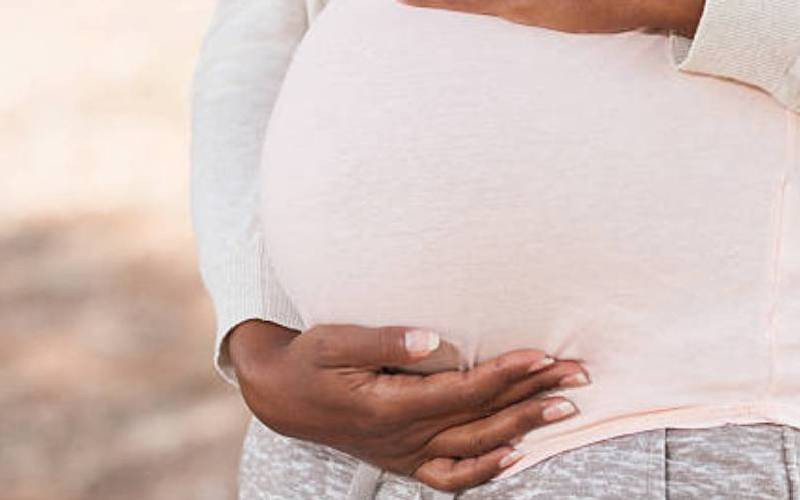
Ruth*, 17, still remembers the fear and uncertainty that gripped her when she discovered she was six weeks pregnant.
The teenager, who lives in Majengo slums, became pregnant after having unprotected sex with a boda boda rider who also earns a living unblocking drainage systems in the neighbourhood. Faced with the possibility of dropping out of school and an uncertain future, she briefly considered terminating the pregnancy.
Her friends, however, warned her about the dangers of unsafe abortion, including severe bleeding, infection and even death. After much reflection, she decided to carry the pregnancy to term.
“Why would God not let the pregnancy go?” Ruth asks. “Maybe it is the only pregnancy God has blessed me with, possibly my only child.”
Initially, she was bitter towards her boyfriend after he denied responsibility for the pregnancy. His position changed only after Ruth’s relatives confronted him and demanded that he accept responsibility.
He has since promised to pay her delivery bill at Pumwani Hospital, where she plans to give birth. His mother has also pledged to buy clothes for the baby.
Although she knew the risks associated with unprotected sex, Ruth admits neither of them used protection. She says they both tested for HIV.
Her story mirrors those of many adolescent girls whose lives are altered by early pregnancy.
Fifteen-year-old Gladys* dropped out of school while in Grade Eight after becoming pregnant. She gave birth in May last year before returning to sit her Grade Nine national examinations.
Throughout her pregnancy, she attended antenatal clinics as recommended. However, she went into labour at eight months and developed complications. Doctors performed an emergency Caesarean section because her birth canal was not ready for delivery.
Despite the challenges, Gladys has embraced motherhood. She says the surgical wound has never fully healed and she still struggles with pain, making it difficult to undertake strenuous work. Doctors advised her not to become pregnant again for at least six years to allow her body sufficient time to recover.
For 23-year-old Branice*, the consequences of teenage pregnancy have stretched across an entire decade. She became pregnant at 13 after moving to Nairobi to work as a house help. She says she fled her employer’s home after experiencing harassment and later found herself pregnant.
Although she considered abortion, she was persuaded against it. The child’s father subsequently disappeared. “He was involved in crime. I never knew where he went,” she says.
Her first-born child is now 11 years old. Branice dropped out of school in Standard Seven and believes her life could have turned out differently had circumstances been kinder. “Maybe I would have completed school,” she reflects.
Stay informed. Subscribe to our newsletter
The growing number of teenage pregnancies has prompted community organisations to intervene where families and public institutions have fallen short.
A visit to Kamukunji, one of Nairobi’s informal settlements, reveals a group of teenage girls gathered for a sensitisation session. Some cradle babies in their arms, others are heavily pregnant and preparing for delivery.
Health educators take them through lessons on breastfeeding, nutrition, hygiene, antenatal care and postnatal services.
Still children
Despite carrying adult responsibilities, many of the girls still display the innocence of childhood. At times, they drift into play with other children before suddenly remembering that they are mothers responsible for young lives. Diana Adeya, the Girls’ Ambassador at the Betty Adera Foundation, says teenage pregnancy is becoming increasingly common in informal settlements.
The organisation works with boys and girls on sexual and reproductive health, HIV prevention, menstrual hygiene, mentorship and life skills.
According to her, many children are growing up with little parental guidance. “Many parents leave home early and return late because they are trying to make ends meet,” she says. “When they get home, they barely have time to talk to their children or ask how their day was.”
The absence of parents, she argues, leaves adolescents vulnerable to peer pressure, exploitation and misinformation. “Children have smartphones and tablets. They are exposed to sexual content online and become curious,” says Adeya. “Without guidance, many end up making risky decisions.”
She also points to the realities of life in informal settlements, where exposure to drugs, crime and exploitation is common. “The environment itself can be toxic for a child’s development.”
To address these challenges, the foundation has established safe spaces where young people can openly discuss issues affecting their lives.
Peer pressure, Adeya says, remains one of the leading drivers of teenage pregnancy. “House parties are common. Some teenagers engage in sexual activity without protection, while music, social media and their surroundings constantly glorify relationships and sex,” she says.
She is also concerned about declining access to free condoms in informal settlements. “There was a time when condoms were readily available in the community,” she says.
As a result, many girls increasingly rely on emergency contraceptive pills, commonly known as P2. Chemists in several informal settlements report strong demand for the pills, often exceeding demand for HIV testing kits.
According to Adeya, many adolescents fear pregnancy more than HIV.
“They tell us HIV is manageable because treatment is available. They fear pregnancy because it can interrupt their education and completely change their lives,” she says.
Adeya’s passion for mentorship stems from personal experience. Raised in Kangemi in a dysfunctional family with largely absent parents, Adeya struggled through poverty after completing primary school. Financial hardship pushed her into relationships with multiple men as she tried to continue her education.
At 18, she became pregnant while in Form Four and sat her national examinations while expecting a child.
“It did not seem unusual because many of my friends had already dropped out of school due to pregnancy,” she recalls. “I felt I had at least made it to Form Four.”
The child’s father later disappeared. Years afterwards, Adeya met a man who accepted both her and her child. They eventually married and built a family together.
Looking back, she believes stronger parental guidance could have altered her path. “If I had a present mother or father to guide me, I probably would not have made many of the decisions I made as a teenager,” she says.
For Petronila Mwono, founder of Enkare Oltau Volunteers Foundation, addressing teenage pregnancy requires more than prevention. She believes young mothers must be helped to heal from trauma, rebuild their confidence and acquire skills to support themselves and their children.
Since 2020, the organisation has run a programme for pregnant teenagers and young mothers in Dandora, many of whom were first reached through drug rehabilitation initiatives. “When we started working in Dandora, many of the girls were heavily using drugs,” she says. Some were so dependent on substances that rehabilitation had to come before any other intervention.
As the programme expanded, the organisation discovered that parental neglect was a recurring theme.
“Many of these children are raising themselves,” says Mwono. “Their parents are busy trying to survive, while others believe providing food is enough.”
In some cases, she says, parents even encourage daughters to enter relationships for financial support.
The foundation enrols girls aged between 12 and 23 in a nine-month empowerment programme led by mentor mothers who experienced teenage pregnancy themselves. Participants receive counselling, therapy and training on sexual and reproductive health, gender-based violence, financial literacy and entrepreneurship. Many participants struggle with low self-esteem after being abandoned by partners.
Low self-esteem
“Most of them hate themselves after becoming pregnant,” she says. “Without emotional support, many return to abusive relationships simply because they have nowhere else to go.” Economic vulnerability also fuels risky behaviour. “Sometimes all it takes is someone buying a girl a snack or a soft drink, and she feels obliged to repay the favour with sex,” says Mwono.
Healthcare access remains another challenge. “Many of these girls do not even have birth certificates or identity cards,” she notes. “Before discussing health insurance, you must first address the lack of basic identification documents.”
Mwono believes Kenya must confront a difficult reality. “Whether we like it or not, these children are having sex,” she says. “Telling them not to have sex is no longer enough because many are already sexually active.”
The concerns are echoed by National Syndemic Diseases Control Council Chief Executive Officer Douglas Bosire, who warns that adolescent girls face a “triple threat” of gender-based violence, teenage pregnancy and HIV infection.
mkahenda@standardmedia.co.ke
Subscribe to our newsletter and stay updated on the latest developments and special offers!

 Prefer the Standard on Google