×

The Standard e-Paper
Fearless, Trusted News
 The Standard Group Plc is a
multi-media organization with investments in media platforms spanning newspaper
print operations, television, radio broadcasting, digital and online services. The
Standard Group is recognized as a leading multi-media house in Kenya with a key
influence in matters of national and international interest.
The Standard Group Plc is a
multi-media organization with investments in media platforms spanning newspaper
print operations, television, radio broadcasting, digital and online services. The
Standard Group is recognized as a leading multi-media house in Kenya with a key
influence in matters of national and international interest.

Audio By Vocalize
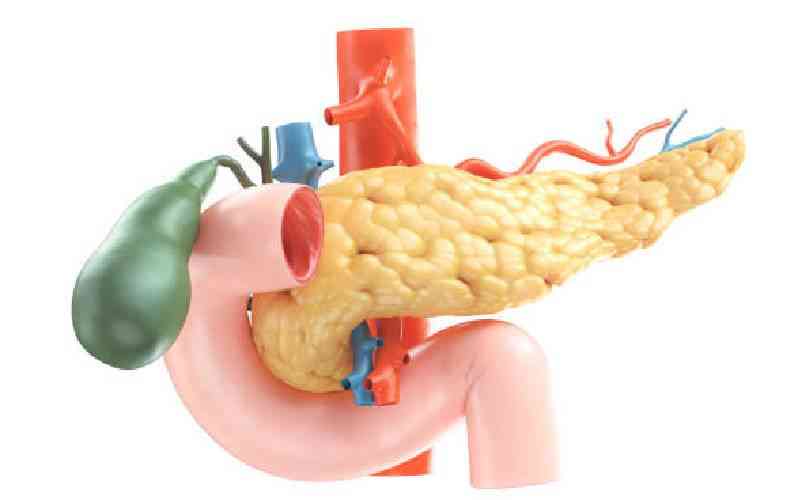
Let us talk about a pain that few people understand until they are forced to live through it. It is not the familiar pain of a muscle strain or stomachache but a sudden and blinding agony that strikes deep in the upper abdomen, radiating through to the back like a burning iron. It is a pain that forces you to your knees, takes your breath away, and reshapes your relationship with your own body within hours.
The culprit is a small, leaf-shaped organ situated behind your stomach known as the pancreas. It mostly works tirelessly in the shadows as it produces enzymes that digest your food and the hormones that manage your blood sugar. However, when pancreatitis strikes, this silent helper undergoes a devastating transformation. The digestive enzymes that are normally released into the small intestine become activated prematurely within the pancreas itself. Instead of digesting food, they begin digesting the organ, triggering severe inflammation and turning the condition into a medical emergency. Yet outside hospital walls, pancreatitis is rarely talked about.
Although pancreatitis is not among the most common diseases, it affects thousands of people across the region each year. According to the National Institutes of Health (NIH), in Eastern Sub-Saharan Africa, an estimated 46,900 people are afflicted by pancreatitis, with an incidence rate of roughly 3.0 cases per 100,000 people. Compared to the global averages, East Africa has a relatively low disease burden, though local institutions still manage frequent cases.
Many of these patients suffering from pancreatitis carry an unfair burden of stigma because the disease is often associated with alcohol use and some fear they will be blamed for their illness. Pancreatitis can also result from gallstones, high blood fat levels, certain medications, genetic factors, structural abnormalities or causes that remain unknown. Smoking is an additional risk factor. In older age groups, acute pancreatitis with no apparent cause may be the earliest sign of a pancreatic tumor, and therefore the search for an etiology must be thorough and unassuming. Regardless of the trigger, the illness is serious, the pain is real and every patient deserves compassion and respectful care without judgment.
Pancreatitis normally presents as chronic or acute. While the acute form is a sudden flare-up that requires immediate care to cool down the organ, chronic pancreatitis is a progressive injury that demands daily management with pain control and replacement enzymes. Fortunately, acute pancreatitis is not always severe because the majority of these sudden episodes are actually mild and resolve within a few days, which means a sudden diagnosis does not automatically mean a lifetime of critical suffering. In emergency and high dependency units, treatment focuses on aggressive fluid replacement, effective pain control and supporting the digestive system by reducing inflammation and protecting vital organs. Recovery does not end when the immediate danger passes because for many survivors, leaving the hospital marks the beginning of a challenging physical and emotional journey.
The pancreas is an unforgiving organ, and recovery can be slow even after the acute attack subsides. The patient is normally overwhelmed with fatigue that may persist for weeks or months. Eating, once a simple pleasure, can become a source of anxiety. Every meal raises questions such as; will this trigger the pain again? Can my body handle it? These fears are understandable. Pancreatitis does more than injure tissue; it undermines confidence and creates a disconnect between daily life and a body that suddenly feels unpredictable.
Surgery for acute pancreatitis is generally reserved mostly for severe cases, particularly when there are infected dead pancreatic tissue or pancreatic collections. In chronic pancreatitis, surgery is only indicated to address refractory pain or symptomatic collections. The surgery is seldom easy and recovery is rarely straightforward. While some people experience only a single episode of acute pancreatitis and recover fully, others require long-term follow-up to prevent recurrence or must adapt to permanent changes in digestion or blood sugar regulation.
Successful recovery depends on a multidisciplinary approach that includes gastroenterologists and surgeons to monitor pancreatic healing, clinical nutritionists to help patients gradually rebuild healthy eating habits and mental health professionals to address the anxiety and emotional trauma that often follow severe illness. Recovery is not a one-size-fits-all process but a personalized journey.
We also live in a culture that encourages people to ignore pain and push through discomfort. Persistent and severe abdominal pain, especially when accompanied by nausea, vomiting or a rapid pulse should never be dismissed as a minor stomach upset. These symptoms are your body's warning signs and deserve prompt medical attention.
If you are recovering from pancreatitis, remember that healing takes time. Feeling exhausted or fearful does not mean you are failing. Seeking medical, nutritional, and emotional support is not a sign of weakness but an essential part of recovery. With patience, proper care, and the support of the right healthcare team, it is possible to rebuild your health and regain confidence in your body.
Dr Misoi is a consultant general and hepato-pancreato-biliary Surgeon
Subscribe to our newsletter and stay updated on the latest developments and special offers!


 Prefer the Standard on Google








 join
join