×
App Icon
The Standard e-Paper
Home To Bold Columnists
★★★★ - on Play Store
Download App

Is your hair overprocessed? What to do

Vocalize Pre-Player Loader

Audio By Vocalize

Is your hair overprocessed? What to do
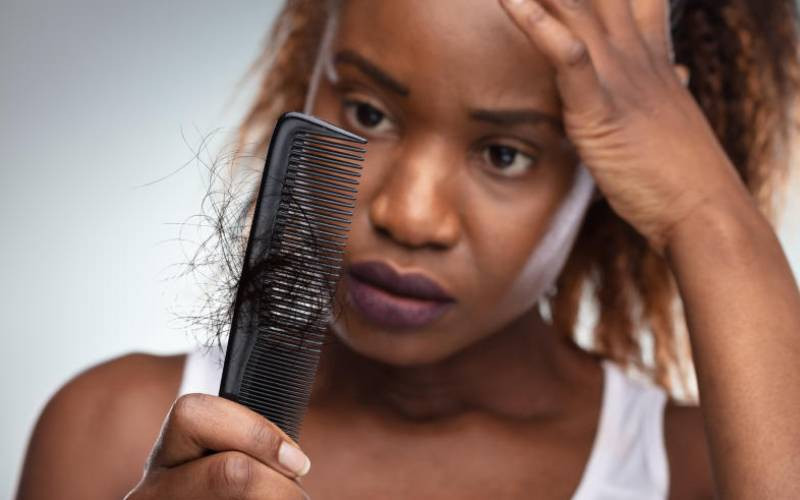
Is your hair overprocessed? What to do (Photo: iStock)

You don't need to be a trichologist to recognise when your hair is damaged; it's often both visible and tangible.

One of the first signs is that the hair's outer cuticle layer becomes permanently lifted, which causes it to absorb water quickly but lose it just as fast. This leads to a parched texture that feels rough and straw-like.

Healthy hair usually has a degree of natural stretch, but overprocessed hair behaves differently. When wet, it becomes unnaturally elastic, feeling limp or mushy. If stretched, it often snaps rather than returning to its original state, indicating that the internal disulfide bonds have been broken.

Even with minimal handling, overprocessed hair breaks easily, especially at the mid-lengths and ends. This is due to a weakened internal cortex that can no longer support the hair's structure. Furthermore, the hair's natural texture becomes inconsistent, and it loses its lustre. The damage to the cuticle prevents light from reflecting evenly, which results in dull, lifeless hair.

If you recognise these signs in your hair, it's crucial not to wait it out. Overprocessed hair requires immediate attention to stop further damage and begin the long, careful process of restoration. The first step is to immediately stop all chemical treatments.

Adding more stress to an already compromised structure will only lead to further breakage and may result in total hair loss. Once you've halted the chemical processes, focus on restoring the balance of protein and moisture.

Hair is made up of two essential components, keratin protein and moisture, that need to be replenished. To achieve this, incorporate deep conditioning treatments rich in hydrating ingredients to restore moisture.

During this recovery period, it's also important to handle your hair gently. Avoid heat styling and opt for low-manipulation hairstyles.

When detangling, be extremely careful and use a wide-tooth comb on hair that is slightly damp and saturated with conditioner or oil to prevent further breakage.

Lastly, regular trims are essential, even though it may be hard to hear. Overprocessed ends are beyond repair, so trimming away the most damaged portions of the hair is crucial.

Support Independent Journalism

Stand With Bold Journalism.
Stand With The Standard.

Journalism can't be free because the truth demands investment. At The Standard, we invest time, courage and skills to bring you accurate, factual and impactful stories. Subscribe today and stand with us in the pursuit of credible journalism.

Pay via
M - PESA
VISA
Airtel Money
Secure Payment Kenya's most trusted newsroom since 1902