 The Standard Group Plc is a multi-media organization with investments in media
platforms spanning newspaper print
operations, television, radio broadcasting, digital and online services. The
Standard Group is recognized as a
leading multi-media house in Kenya with a key influence in matters of national and
international interest.
The Standard Group Plc is a multi-media organization with investments in media
platforms spanning newspaper print
operations, television, radio broadcasting, digital and online services. The
Standard Group is recognized as a
leading multi-media house in Kenya with a key influence in matters of national and
international interest.

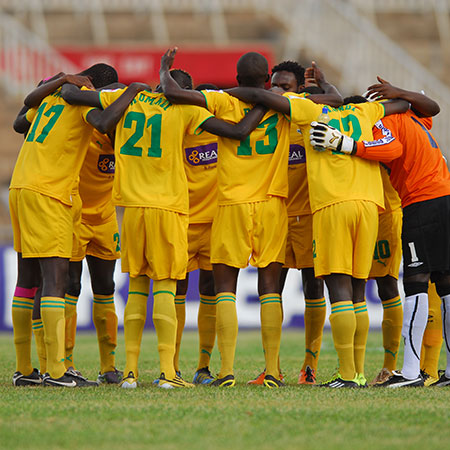
When Mathare United FC was ‘created’ out of ‘slum boys’ in 1994, not many soccer lovers thought it would blossom into a football powerhouse, someday.
Mathare United was an offshoot of Mathare Youth Sports Association (MYSA) that dribbled into Mathare and its environs in 1987, or thereabouts.
Then in 1998 and 2000 Mathare United won the Moi Golden Cup (now President’s Cup) and in 2008, they were Kenya football league champs!
Mathare United had 63 points – three points above what Gor Mahia in the 2013 season. Many will nostalgically remember how the slum boys beat Red Berets courtesy of two goals from striker Francis Ouma at Nyayo National Stadium.
It remains the best record in the Kenya Premier league – later named Tusker premier league – in the last five years.
However, the team that displayed its trademark crisp passes and fluid football seems to have lost its footing. Its fortunes have since plummeted and during the 2013 Kenya premier league, it finished at position 13.
The situation has been worsened by big moneyed clubs like K’ogalo, AFC and Tusker whose deep pockets allow them to poach Mathare’s top talent with better salaries.
Just what has been red-carding Mathare United?
For one, Mathare United is a society club, which relies on the goodwill from donors cash and it thus can hardly compete on shoestring donor budget.
Then there is the case of being one’s worst enemy, and the self-inflicted wounds that come with it. Cases of sexual abuse in the club’s structure have dented the confidence bestowed upon officials running the system.
It would be a soccer sin to mention Mathare United without mentioning visionary founder Bob Munro.
Munro has distinguished himself as a sports personality by ensuring urban development and positive social integration through soccer.
He is the chairman of trustees for MYSA. To capture Munro’s success on the helm of MUFC, I’d quote Sir Bob Charlton, the Manchester United idol, who described Mathare United as the “most remarkable sports club in the world” in 2009.
I caught up with Bob Munro at a garage. “My car is old, I have driven it for the last 15 years”, he says, explaining why he didn’t pick my first call. A conversation ensues, with Munro taking the defensive. “We are losing most of our players to cash loaded opponents, look at Anthony Kimani, Innocent Mutiso and Martin Musalia, they are some of the best players in the country”, before adding, “We don’t have the cash to equal their contract offers which are double or thrice what we pay them”.
“This is one of the most challenging periods of our existence. I don’t remember such traffic of players departing. We hope to put a brave face and adopt ways so as to compete with the financially endowed competitors,” Munro had been quoted in an earlier interview.
In the years prior to 2008, the Kenyan Premier league was financially balanced save for Tusker FC, which was the only team with a financial backing from East African Breweries.
Gor Mahia and AFC Leopards came on, armed with fat sponsorships and fans on the stands opening the gates to footballing capitalism.
MYSA runs 120 league youth leagues, 1500 teams and 20,000 players in Mathare slums. The reasoning would be that the senior team would have top talent players graduating from the youth leagues.
“It is true that we can replace the talent from our youth teams, but you can’t replace the experience and the tenacity of players like Anthony Kimani,” Bob says.
The youth teams are comprised of players under 16 and less than 14. Even though talent can be discerned at this level, the players are too young to be thrown into premier league football.
Mathare head coach Stanley Okumbi reiterates the sentiments: “After 2012 season, we lost 24 out of 27 players. We went back to the drawing board to build a new team”.
The coach lamented the extinction of the Mathare Youth team, which ensured continuous flow of experienced players.
Lacklustre performance
The 2014 season will start in a few weeks. Already, Tusker FC has poached Lloyd Wahome and Osborne Monday. “Sasa itabidi nijue venye nita replace hawa maplayers,” (I have to know how to find replacements to these players) the award winning coach laments.
Lacklustre performance on the final third last season was the major weakness for Mathare. In thirty games, the team drew 17 times, won five and lost eight matches.
Ingwe, the runners up in the league, lost the same number of matches. If Mathare United had won eight of the 17 drawn matches, they would have amassed 48 points and finished a respectable position fourth. Looking forward to the 2014 season, the coach is upbeat that the players will gel as they play more games together.




