 The Standard Group Plc is a multi-media organization with investments in media
platforms spanning newspaper print
operations, television, radio broadcasting, digital and online services. The
Standard Group is recognized as a
leading multi-media house in Kenya with a key influence in matters of national and
international interest.
The Standard Group Plc is a multi-media organization with investments in media
platforms spanning newspaper print
operations, television, radio broadcasting, digital and online services. The
Standard Group is recognized as a
leading multi-media house in Kenya with a key influence in matters of national and
international interest.

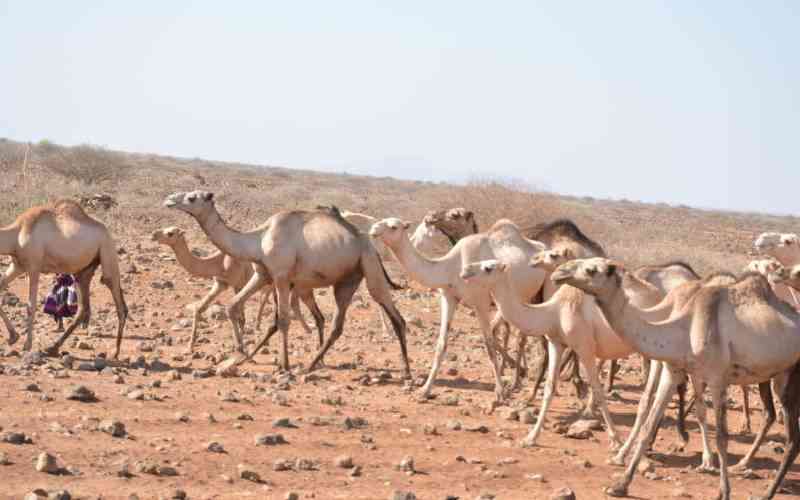
The number of people in need of urgent food supply will hit 2.1 million by January next year as the drought situation in Arid and Semi-Arid Lands (ASAL) counties continue to deteriorate.
According to the latest data by the National Drought Management Authority (NDMA), currently 1.8 million Kenyans face food shortage, with Turkana, Garissa and Mandera being the most affected.
The authority noted that the drought situation is worsening in one county, nine are on alert, while 13 have been classified under the 'normal' drought phase.
Last month, the meteorological department warned of depressed short and long rains mainly in the ASAL counties raising fears of mass livestock deaths.
In its latest report, NDMA noted that the drought situation was on a worsening trend in the ASAL counties, with major livelihood zones experiencing stress, particularly in the water and livestock sectors.
The authority attributed the current crisis to the below-average performance of the October to December short rains in nearly all the identified counties.
"The current food-insecure population across the ASAL counties is estimated at 1.8m people and it is projected to rise to approximately 2.14m by January 2026," reads the report in part.
The counties on Normal Phase are Samburu, Turkana, Taita Taveta, West Pokot, Tharaka Nithi, Embu, Nyeri, Laikipia, Narok, Baringo, Makueni, Meru, and Lamu.
Those on Alert Phase include Wajir, Garissa, Kilifi, Kitui, Marsabit, Kwale, Kajiado, Isiolo and Tana River while Mandera is classified in the 'Alarm' drought phase and requires urgent action.
The report noted that currently over 204,000 people in Turkana were in need of urgent food supplies and water with the number expected to hit 255,000 by January next year.
"In Garissa, over 139,000 people require food and this will rise to 185,400 while in Mandera, 287,700 have been affected and this will hit over 335,000 by January 2026," said the authority.
On the December rainfall outlook, the authority noted that most parts of the country are likely to experience near-average to below-average rainfall while parts of the northeastern region are expected to receive highly depressed rainfall.
"This calls for early planning, resource mobilization and resource allocation to support timely response interventions and mitigate the anticipated impacts," said the authority.
The authority added that it would continue to monitor the drought situation and coordinate interventions with relevant stakeholders to mitigate impacts and strengthen the resilience of vulnerable communities.
Among the mitigation measures the authority has placed include continuous monitoring of the drought situation and dissemination of drought early warning information to vulnerable communities.
The move comes a couple of days after the Council of Governors (COG) called for urgent strategic grain, livestock and hay reserves following the warning of depressed short and long rains.
Last week, COG chairman Ahmed Abdullahi warned of major deaths of livestock and humans in the coming months with parts of the country already experiencing harsh weather conditions.
He termed the warning by the Mets of depressed rains as a major blow to the pastoralists who were yet to recover from the recent drought where over 3m herds of livestock were lost.
"Livestock has started to die and it's time we established strategic livestock, feed and hay reserves so that every drought that occurs does not wipe out our livestock economy," he said.




