 The Standard Group Plc is a multi-media organization with investments in media
platforms spanning newspaper print
operations, television, radio broadcasting, digital and online services. The
Standard Group is recognized as a
leading multi-media house in Kenya with a key influence in matters of national and
international interest.
The Standard Group Plc is a multi-media organization with investments in media
platforms spanning newspaper print
operations, television, radio broadcasting, digital and online services. The
Standard Group is recognized as a
leading multi-media house in Kenya with a key influence in matters of national and
international interest.


Kenya has some of the world's most vulnerable food systems.
Home to over 52 million people, many of whom are poor and face significant challenges in accessing adequate, safe, and nutritious food daily.
These challenges are contributed by extreme climate shocks, global price shocks and undernourishment.
According to the World Bank, Sub-Saharan Africa experiences one-third of the world's droughts, with Ethiopia and Kenya experiencing one of the worst in at last four decades.
This results in poor crop performance, poverty and a poor economy. The International Monetary Fund (IMF) reports that food supplies are especially vulnerable to climate change due to a lack of government intervention, and the adoption of new farming techniques (including improved crop varieties).
Combating drought
It is important to note that most of these farming communities fully depend on rain to grow their crops and just about 1 per cent have access to irrigation systems.
According to a recent note by the United Nations, about 21 per cent of Africans suffer from hunger, a total of 282 million people. No other continent in the world presents such a huge number.
The problem of hunger in Kenya and Africa doesn't need to be a tragedy; learning from the previously reported cases we can put up the right measures to address the question of food insecurity once and for all.
The adoption of agricultural technology advancements is necessary to achieve food security, according to the Bill and Melinda Gates Foundation's annual letter.
The contentious idea of genetically-modified foods is one of these technological advancements that can help Africa revamp its agricultural systems.
By now, everyone has heard of GMOs (genetically modified organisms), but few people understand what they are or if they're safe.
GMOs are living organisms (plants, animals, or microbes) whose genetic makeup has been modified through genetic engineering (GE).
Developing desired traits
These organisms have undergone modifications to develop desired traits such as drought resistance, pest resistance, improved nutrition, and others.
In genetic modification, genes can be deleted, silenced, knocked out, added, and transferred from related and non-related species.
Wouldn't it be good to have plants that could resist pest effects and survive drought with less expensive human intervention in an era where concerns about using chemicals or irrigation water to grow plants are heightened?
Because people don't grasp the method and theory behind it, misconceptions are propagated, breakthroughs are derided, and progress is stifled, as is the case with many scientific advances.
In a report by Cornel University, some GMO crops, such as glyphosate-tolerant species, reduce the need for excessive cultivation that disrupts soil health and can lead to compaction.
In addition, by incorporating a natural defensive mechanism into GMO crops, insect resistance reduces or even eliminates the need for expensive chemical applications.
Publication discredited
So, between GMO and the current agricultural system, which one tends to prevent exposure to Carcinogenic compounds (Cancer causing elements)?
I fully understand that GMO debates are not only highly emotional but also deeply saturated with moral content. Don't you, therefore, think, there's a need to employ science in addressing these concerns?
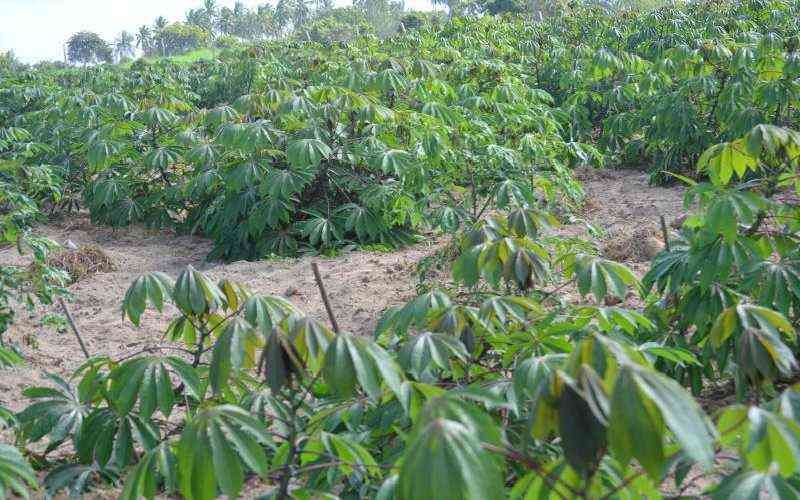
As of today, there is no "validated evidence that genetically modified (GM) crops have a higher harmful impact on health and the environment than any other technology utilized in plant breeding.
The controversial publication by a scientific journal that linked GM corn to cancer in rats has been discredited and retracted from the scientific journal that published it.
The Bacillus thuringiensis (Bt) that confers resistance to pests in transgenic crops is practically nontoxic and doesn't cause disease in birds, fish, and shrimp.
No negative effects or infection was found in rats fed large doses of Bt strains or forced to inhale the spores. A study by the US Government showed that Bt does not cause disease in mammals and that there is no evidence that it can cause a disease outbreak among wild animals.
So how does the Bt technology work?
Spores made by Bt damage the gut of insect larvae after the larvae eat them. The insect gut must have a pH of 9.0 to 10.5 (high pH) to activate the toxin.
Genetic engineering is not a completely novel idea
This is different from the human gut, which has a low pH and is more acidic. The activated toxin breaks down the insect's gut lining. The insect larva dies of infection and starvation. So, what exactly did your "informer" tell you about Bt-products?
Genetic modification is a new technology for the majority of people, a very new technology, and it's the nature of people to naturally fear change and new ideas.
But most people are unaware that genetic engineering is not a completely novel idea. Since the days of early man, humans have been modifying agricultural genes to develop plants with certain desirable qualities. Naturally, genetic modification differs from conventional plant breeding, but the idea is the same; you might argue that genetic modification is a more accurate technique.
So, precisely how does it operate?
The DNA is extracted from any other organism, the gene for the desired trait, such as herbicide resistance, is identified, and it is then inserted into the DNA of a plant cell to confer that trait.
Even though scientists have no control over where the foreign DNA may end up, they can repeat the procedure until they find the genome that has the proper gene in the right location.
Intensive biotechnological research on Genetically Modified Organisms (GMOs) offers a great opportunity for addressing hunger, undernourishment, and food insecurity concerns in our country and continent.
Disconnected from the knowledge of Biology and Biotechnology
Some of the avenues that could be exploited range from increased crop yields, resistance to pests and diseases, and improved nutrient composition and food quality.
However, acceptance and adoption of GMOs in Kenya has been extremely slow, possibly due to differing views on the benefits and safety concerns associated with them.
The reasons for the public opposition to GMO seems to be disconnected from the knowledge of Biology and Biotechnology and that most arguments rely on unfounded rumours, myths and "hot air" reports. A negative attitude towards GMO has further increased confusion in the debate and promoted mistrust of scientific gains.
Surprisingly, people who are against GMOs happened to have taken a Covid-19 vaccine which happens to be a product of Biotechnology.
Others have been to the market purchasing fabrics that have been made from Bt-Cotton.
Need to demystify myths
Focusing on the introduction of Bt-Cotton in India, we learn that Bt resulted in a 24 per cent increase in cotton yield per acre due to reduced pest damage, as well as a 50 per cent increase in cotton profit among smallholders.
These advantages are consistent, and there are even indications that they have increased over time. Golden rice that is genetically designed to produce v-carotene - a precursor to vitamin A has also provided an ideal solution to vitamin A deficiency in rice-dependent regions of the world. Considering the threat of food insecurity and Kenya's burgeoning population, there is an urgent need to demystify myths surrounding GMOs so that Africans don't miss out on a great opportunity for improved food security.
Kenyans must learn that to ensure that each new GM product offers no damage to the environment or the health of humans or animals, governments around the world follow strict biosafety regulations.
Drastically reduced crop productivity
These guidelines call for extensive field and lab testing that might take years. The resulting foods and plants undergo much more extensive testing than their conventional counterparts.
The safety of GM crops has been evaluated in hundreds of scholarly studies, and the vast majority of these papers found that these crops are nutritionally similar to their conventional counterparts and are safe.
We cannot be suffering from unemployment, poverty and hunger and at the same time fighting a technology that could put to an end the question of food security.
The country's regions that produce cereals have recently been devastated by Maize Lethal Necrosis Disease and Fall Armyworm. The virus and the pest drastically reduced crop productivity by one-third and put 70 per cent of Kenya's maize growers in danger.
Solution to hunger
It is impossible to underestimate the significance of maize in Kenya. In Kenya, maize is the most significant meal in Sub-Saharan Africa. It can be cooked, fried by the side of the road, combined with beans, or used to make ugali.
GM foods are by all means the solution to world hunger and food shortage in Africa. Kenyans must congratulate the newly elected President of the Republic of Kenya for his bold step in lifting the ban on GMO products that was imposed in 2012.
President William Ruto understands that embracing new technologies in the agricultural sector would improve the food basket and further improve the livelihood of millions of Kenyans.
-Isaac Ongoma holds an MSc. Molecular Biology and Biotechnology




