 The Standard Group Plc is a multi-media organization with investments in media
platforms spanning newspaper print
operations, television, radio broadcasting, digital and online services. The
Standard Group is recognized as a
leading multi-media house in Kenya with a key influence in matters of national and
international interest.
The Standard Group Plc is a multi-media organization with investments in media
platforms spanning newspaper print
operations, television, radio broadcasting, digital and online services. The
Standard Group is recognized as a
leading multi-media house in Kenya with a key influence in matters of national and
international interest.


Unlike the families of former presidents Mzee Jomo Kenyatta and Daniel arap Moi, no one in retired President Mwai Kibaki’s family seems keen to take over his political mantle, raising the question whether it marks the end of his influence in national politics.
During Kibaki’s final days in office, it was rumoured that his first born son, Jimmy Kibaki, would be gunning for the Othaya parliamentary seat, which had been under his watch for 39 years.
Jimmy was initially active on the ground attending social functions and playing a prominent role in the affairs of the constituency, which was interpreted to mean he was interested in succeeding his father. He had even begun drumming for a political outfit called Simama Kenya.
The speculation, however, died in the lead up to the 2013 elections, when it became apparent that Jimmy was not interested in active politics. The seat is currently held by Mary Wambui.
And as the 2017 elections beckon, there appears to be no change in the political arithmetic, and the Kibakis would still be missing in action, hence breaking the trend of Kenya’s political dynasties.
During the burial of his mother, former First Lady Lucy Kibaki, Jimmy said he had opened to her about his plans, and she told him to “go and think about it.”
But former Industrialisation Assistant Minister Nderitu Mureithi, who is also Kibaki’s nephew, says that leadership and dynasties are not only built in politics, but also in the corporate world, moreover, there are also technocratic dynasties.
“Our third president was known as a political gentleman, and most of us in that family are like that,” explains Mureithi, adding that the family believes that “you should not make someone look bad for you to appear good.”
“The family of retired President Kibaki is known to engage in business and other corporate affairs. Political leadership is one arena, while other fields also matter,” he said, noting that the Kibakis have a strong attachment to the corporate and technocratic fields.
But political analyst, Prof Macharia Munene, says it is too early to start judging the family of former President Kibaki who presented himself as a non-confrontational politician.
“It is too early to judge the retired president’s family. The family base has never been political because even the retired president concentrated much of his effort on building the economy, explained Prof Munene. “It is too early to judge... we can still have a grandson of the former president delving into politics.”
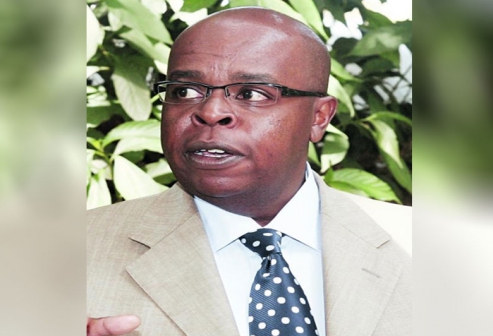
Dr Hillary Barchok, the dean of the Faculty of Education at Chuka University, explains that the success of political heirs is pegged on personal, economic or cultural factors.
“In some communities, there is a belief that leadership skills are a preserve of some families, based on their historic performance in leadership positions. Voters tend to give power to people they can trust,” he says, adding that in most cases, heirs clinch seats riding on the success of their blood relations, taking advantage of established networks, but “one needs to have been actively involved in politics to understand the relevant strings to pull.”
Dr Barchok adds that sympathy votes also account for a sizable number of votes received by political heirs.
Mirugi Kariuki the then MP for the larger Nakuru Constituency and assistant Minister for Internal Security, died in a plane crash in 2006 and was succeeded by his son, William Kariuki Mirugi via a by-election. Nakuru’s youngest lawmaker at only 27, however, lost his seat to Lee Kinyanjui in the 2007 General Election.
In the same plane as Mirugi was Kipkalya Kones, MP for Bomet Constituency and the Minister of State in the Office of the President. After his death, his seat was inherited by his widow, Beatrice Kones, a teacher by profession and who from 1993 to 1995 was Inspector of Schools with the Ministry of Education. The former leader of Maendeleo ya Wanawake was appointed Assistant Minister for Home Affairs in the nusu mkate government of President Mwai Kibaki and then Prime Minister Raila Odinga.
Dr Barchok adds that in cases where heirs are competing for a seat left vacant after a death, their opponents let their victories sail to avoid creating an impression of being unsympathetic.
Once in the seat, one has to play his or her political game carefully to ensure that he or she moves away from the shadows of their predecessor and cut a niche for oneself. One can easily achieve this given solid political support and moulding by seasoned politicians.
Failure to achieve this, and compounded by weaknesses, result in the fading of political clout among political heirs.
An example is that of Vincent M’maitsi who inherited the Hamisi Constituency seat following the death of his father, Samson Lumbete M’maitsi. But the one-term MP has since gone into political oblivion.
Political opponents also take advantage of political novices by discrediting them quite easily, since one can’t rely on inherited political goodwill for a long time, besides a shaky financial base leading to loss of political muscle.
Dr Fredrick Ogenga, the founding Director of the Centre for Media, Democracy, Peace and Security at Rongo University College, argues that politics is about power, garnering and distribution of resources, and that once wealth has been accumulated, the burden shifts to protecting it.
Dr Ogenga explains that, “Everyone is not destined for leadership and that is why those who inherit the seats with the sole view of protecting the wealth do not succeed politically. Politics is not a bloodline discourse.”
With the Kibakis, it is a matter of wait and see.




