×
App Icon
The Standard e-Paper
Join Thousands Daily
★★★★ - on Play Store
Download App

Universities urged to reinvent and be resilient

Vocalize Pre-Player Loader

Audio By Vocalize

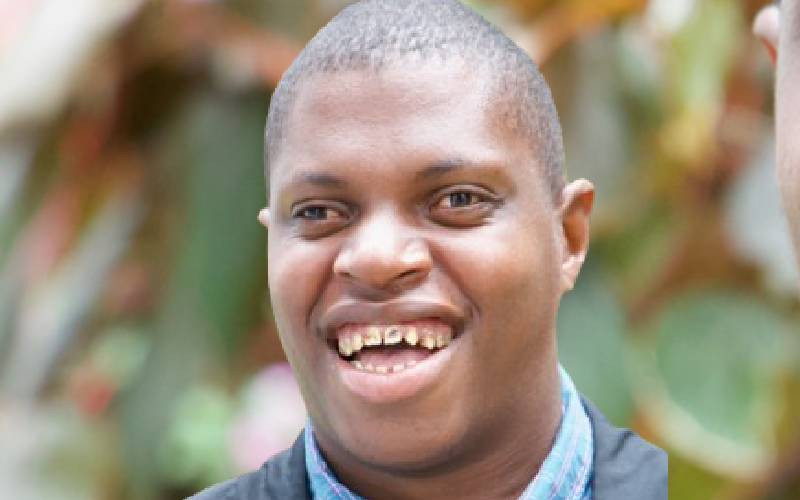
Mount Kenya University Council chair Dr. Vincent Gaitho (left) Confers with Uganda Minister of state for Higher Education Dr. John Muyingo, during Mount Kenya University's 6th graduation ceremony at Thika campus on July 31, 2014. [File, Standard] 

Universities have been urged to reinvent themselves or risk losing relevance in a rapidly evolving higher education landscape.

The Secretary General of the National Association of Private Universities in Kenya (NAPUK) Dr. Vincent Gaitho says the survival of Kenya’s universities will not be determined by the numbers they admit, but by courage, collaboration and sustained relevance.

Speaking during the Kenya Association of Private Universities (KAPU) Annual General Meeting, Dr. Gaitho called on institutions of higher learning to view themselves not as competitors battling for enrollment, but as partners in building a knowledge-driven society.

“Universities form the engine of impact and collaboration in society. It is through your resilience, dedication, and unwavering commitment that private universities in Kenya continue to stand as preferred destinations for those seeking higher qualifications,” he said.

Dr. Gaitho noted that the rapid expansion of universities was driven by high demand for advanced qualifications and the limited capacity of public institutions.

From a single public university at independence, Kenya now has an expansive network of universities across both public and private sectors.

“What began as one campus has exploded into an avalanche of universities across both the public and private sectors,” he said.

Many public universities are grappling with heavy debt burdens, with tuition fees remaining the primary revenue stream, leaving institutions vulnerable to enrollment fluctuations.

These challenges have exposed structural weaknesses, including overreliance on tuition, limited research funding, minimal commercialization of innovations and insufficient diversification of income sources.

In an increasingly competitive global education market, Dr. Gaitho stressed that academic excellence is no longer a prestige symbol but a survival tool.

“In today’s demand-driven higher education space, academic excellence has become the ultimate weapon for sustainability,” he said.

Dr. Gaitho challenged institutions to measure success not by enrollment numbers alone, but by the quality and impact of their graduates.

“Their greatest legacy will be the human capital they  shape graduates equipped not just with knowledge, but with the power to transform humanity,” he said.

With many institutions facing financial strain, he pointed to alumni networks as potential lifelines, but warned that loyalty must be cultivated through positive student experiences.

“Visibility and influence are built not only through media channels but through the lived experiences of students. In essence, every student and graduate becomes a marketer or a demarketer of the institution,” he noted.

Dr. Gaitho stressed that collaboration in research, faculty exchanges and commercialization of innovations must move from aspiration to reality. He further underscored the need for robust data governance systems to comply with Kenya’s data protection laws and enhance institutional credibility.