×
App Icon
The Standard e-Paper
Join Thousands Daily
★★★★ - on Play Store
Download App

Council for Legal Education moves to review exam quality


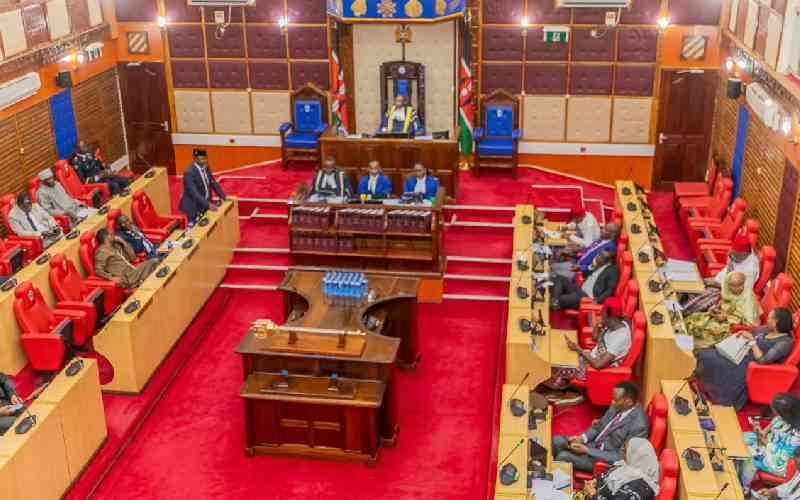
Council's CEO Jack Mwimali said the review focuses on identifying both strengths and weaknesses in the examination and training process, with corrective action to be taken where gaps are found. [Juliet Omelo, Standard]

The Council for Legal Education (CLE) has begun a joint review of the Advocates Training Programme (ATP) with the Kenya School of Law (KSL), following the release of the November 2025 examination results.

The move, the council said, aims at strengthening quality, accountability, and alignment in legal training.


Speaking during a stakeholder engagement with exam setters, markers, moderators and instructors, CLE Chief Executive Officer Jack Mwimali said the meeting was part of the council’s statutory mandate to ensure high standards in legal education.

He noted that the review focuses on identifying both strengths and weaknesses in the examination and training process, with corrective action to be taken where gaps are found.

“This is a deliberate reflection exercise after the exams. We want to understand what worked well, where performance was strong, and where it was not, so that we can improve outcomes and guarantee quality legal education,” Mwimali said.

Kenya School of Law Director and CEO Henry Mutai described the engagement as critical to ensuring harmony between what is taught and what is examined.

He said the timing, ahead of the start of the new academic year, was intentional, to reassure incoming students that their training will directly align with assessment standards.

“KSL trains, CLE examines. Alignment between the two institutions is essential. This meeting ensures that students are taught what will be examined and that exam standards reflect the curriculum,” Mutai said.

Beyond examinations, the two institutions also signalled a forward-looking agenda for legal education, including curriculum updates to address emerging challenges such as artificial intelligence, data protection, climate change law and the broader use of ICT in legal practice.

Mutai maintained that despite concerns about saturation in the legal profession, opportunities remain abundant, particularly within devolved governments, corporate practice and emerging legal fields.

"I urged aspiring lawyers to prepare for hard work and continuous learning in an evolving profession," he said.

In a joint assurance to students and the public, both CLE and KSL emphasised their commitment to producing practice-ready advocates.

They said the goal is not merely to pass candidates, but to ensure that those admitted to the bar can competently serve clients from their first day of practice.

“We do not want to produce half-baked lawyers. Quality, fairness and a humane approach will guide our processes, so that effort and merit are properly rewarded," Mwimali said.

The review outcomes are expected to inform improvements in teaching, assessment and curriculum delivery as the next ATP cohort begins training.