×

The Standard e-Paper
Smart Minds Choose Us
 The Standard Group Plc is a
multi-media organization with investments in media platforms spanning newspaper
print operations, television, radio broadcasting, digital and online services. The
Standard Group is recognized as a leading multi-media house in Kenya with a key
influence in matters of national and international interest.
The Standard Group Plc is a
multi-media organization with investments in media platforms spanning newspaper
print operations, television, radio broadcasting, digital and online services. The
Standard Group is recognized as a leading multi-media house in Kenya with a key
influence in matters of national and international interest.

Audio By Vocalize
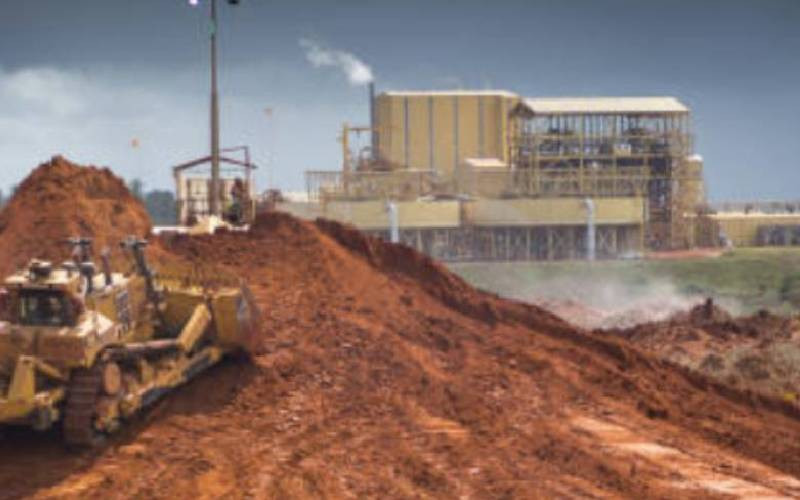
The Supreme Court has ordered the environmental pollution case against Base Titanium to proceed before the High Court in Mombasa.
Justice Philomena Mwilu, Smokin Wanjala, Njoki Ndungu, Issac Lenaola and Willis Ouko directed that the case before the Environment and Lands Court (ELC) should proceed for determination on its merits.
The judges struck out an appeal by Base Titanium dated August 29, 2025 that challenged the jurisdiction of ELC to hear and determine a pollution petition filed against it by Michael Kiswili on behalf of residents of Mavumo B village in Msambweni, Kwale County.
The Apex court judges said that ELC has jurisdiction to hear and determine the said suit under Article 162(2)(b) of the Constitution as read together with Section 13 of the Environment and Land Court Act,
Justice Mwilu said the Court of Appeal did not err in finding that Justice Addraya Dena of ELC had the jurisdiction to hear the case related to the Bill of Rights, associated with environment and land disputes.
“For this reason, we find no merit in the appeal. It is hereby dismissed, and for the avoidance of doubt, we affirm the judgment of the Court of Appeal. Having so found, and to ensure the appellant (Base Titanium) gets his day in court, we hereby declare that the petition filed before the ELC should proceed for determination on its merits,” said Justice Mwilu.
Kiswili claimed that Base Titanium’s mining activities caused environmental degradation, water pollution, excessive noise, and adverse health effects.
He told court that the mining company allegedly commenced its mining operations without undertaking a proper Environmental Impact Assessment (EIA) and, without adequate public participation, contrary to the Constitution and the Environmental Management and Coordination Act, 1999.
In his petition, Kiswili asked the ELC to revoke the EIA and mining License issued to Base Titanium and direct the company to restore the environment to its original clean status.
However, in its appeal, Base Titanium alleged that under Section 155 (b) of the Mining Act, disputes arising from mining operations, including claims relating to environmental harm and compensation, fall within the original jurisdiction of the Cabinet Secretary for Mining, Blue Economy and Maritime Affairs.
Further the mining company said that the ELC only has appellate jurisdiction under Section 157 of the Mining Act, and that the petition was therefore prematurely and improperly before the court.
Base Titanium said that it was lawfully licensed to carry out mining operations, pursuant to a valid mining licence issued under the Mining Act, and that it had fully complied with all statutory and regulatory requirements, including environmental obligations.
The mining company maintained that it had conducted Environmental Impact Assessments, obtained the requisite approvals from the National Environment Management Authority (NEMA) and continuously complied with license conditions and monitoring requirements.
However in her ruling delivered on February, 10 2022, Justice Dena held that the ELC had the original jurisdiction to hear and determine the petition, because the petitioners were seeking a declaration that their rights to a clean and healthy environment had been denied.
Stay informed. Subscribe to our newsletter
Justice Dena said that the residents of Mavumo B village had a right of redress under Article 162 (2) (b) of the Constitution as read together with Section 13 (2) and (3) of the Environment and Land Court Act.
She further said under the Mining Act, she had original jurisdiction to determine disputes relating to the environment, the use of, occupation and title to land.
The ELC judge said that she had the mandate to determine applications for redress for denial or violation of rights and fundamental freedoms relating to the environment and land.
However, Base Titanium told the Supreme Court that Justice Dena failed to appreciate that Parliament, pursuant to Article 162(2) and (3) of the Constitution, limited the jurisdiction of the Environment and Land Court in mining disputes to appellate jurisdiction only. The mining company said that the ELC judge disregarded the mandatory alternative dispute resolution mechanism provided under Section 155 of the Mining Act.
Base Titanium wound up its operations in Kenya in 2024 after 11 years of mining ore in Kwale County and depleting the commercially viable ore.
Currently, the mining site is undergoing an extensive, government-mandated rehabilitation and decommissioning process.
Subscribe to our newsletter and stay updated on the latest developments and special offers!


 Prefer the Standard on Google









 join
join