×

The Standard e-Paper
Smart Minds Choose Us
 The Standard Group Plc is a
multi-media organization with investments in media platforms spanning newspaper
print operations, television, radio broadcasting, digital and online services. The
Standard Group is recognized as a leading multi-media house in Kenya with a key
influence in matters of national and international interest.
The Standard Group Plc is a
multi-media organization with investments in media platforms spanning newspaper
print operations, television, radio broadcasting, digital and online services. The
Standard Group is recognized as a leading multi-media house in Kenya with a key
influence in matters of national and international interest.
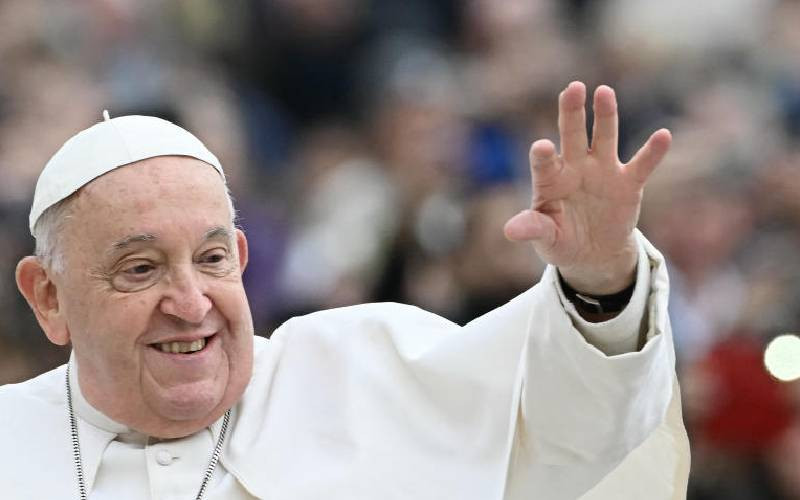
Pope Francis died on Easter Monday, April 21, 2025, having done several things which, in hindsight, imply he had a premonition of his likely departure from the earth. He had been bedridden for more than a month and his doctors preferred his taking things easy. He chose to come out and enjoy Easter Sunday with the people at St. Peter Square, giving audience to US Vice-President J.D. Vance, greeting worshippers and blessing babies. His death at 88 was, therefore, a surprise which sent many to reflect on the meaning of his twelve-year papacy.
Proper beginnings of papacy can be traced to Leo I, the Great, who issued the doctrine of Petrine Primacy that declared the Bishop of Rome to be head of Christianity. Two Roman emperors seeking to govern in harmony by eliminating religious differences, Constantine and Theodosius, had previously tried to have Christianity defined. Constantine, in 325 CE, at Nicea, ordered roughly 300 bishops to settle the dispute between Arius and Athanasius on the nature of Jesus and they came up with the Nicean Creed that decreed that Jesus was both Fully God and Fully Man. Theodosius abandoned the title Pontifex Maximus, which Roman emperors, starting with Caesar Augustus, had expropriated. He also accepted a reprimand from Bishop Ambrose of Milan and issued a decree in 380 CE to require acceptance of the Nicean Creed as the 'Catholic' position in the empire. As the Church influence increased and the empire disintegrated, Christianity was blamed for the disintegration. The blame drove Aurelia Augustine to use his command of history to write The City of God in defence of Christianity. All past history, he essentially argued, was preparation for Christianity.
Subscribe to our newsletter and stay updated on the latest developments and special offers!











 join
join