×

The Standard e-Paper
Fearless, Trusted News
 The Standard Group Plc is a
multi-media organization with investments in media platforms spanning newspaper
print operations, television, radio broadcasting, digital and online services. The
Standard Group is recognized as a leading multi-media house in Kenya with a key
influence in matters of national and international interest.
The Standard Group Plc is a
multi-media organization with investments in media platforms spanning newspaper
print operations, television, radio broadcasting, digital and online services. The
Standard Group is recognized as a leading multi-media house in Kenya with a key
influence in matters of national and international interest.
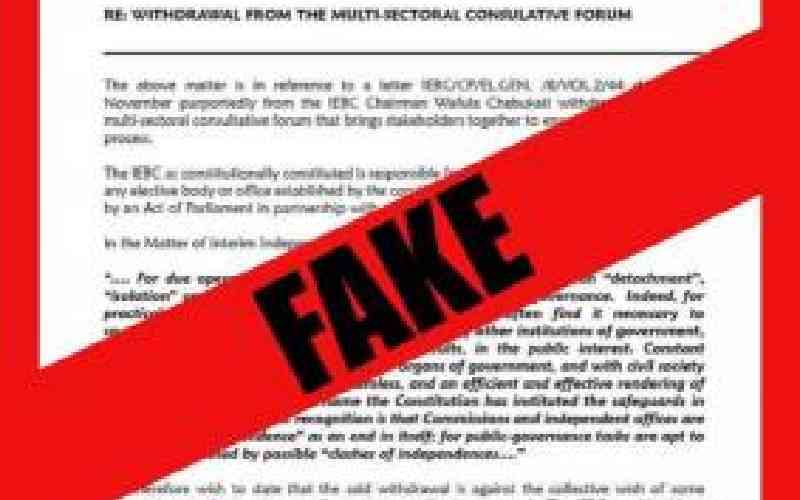
Disinformation was part and parcel of politics long before the emergence of the internet. But the internet - and specifically social media - have exacerbated the spread of disinformation in an unprecedented way. This is due to the ease of access and the potential for information to 'trend' or 'go viral' with minimal effort. As a result of this, social media has become a critical battleground for politicians and political parties.
An estimated 48.4 per cent of social media users in Kenya rely on the same platforms to get news, well above the global average of 34.2 per cent, according DataReportal. What is particularly concerning is that 75 per cent of survey respondents in Kenya are unable to differentiate between real and fake news. That said, Kenyan social media users are becoming increasingly aware and concerned about the presence of online misinformation. If left unchecked, disinformation has the potential to undermine democratic electoral processes.
Subscribe to our newsletter and stay updated on the latest developments and special offers!


 Prefer the Standard on Google









 join
join