×
App Icon
The Standard e-Paper
Kenya’s Boldest Voice
★★★★ - on Play Store
Download App

Kenya to build Sh1.88bn aquaculture centre in Kwale

Vocalize Pre-Player Loader

Audio By Vocalize

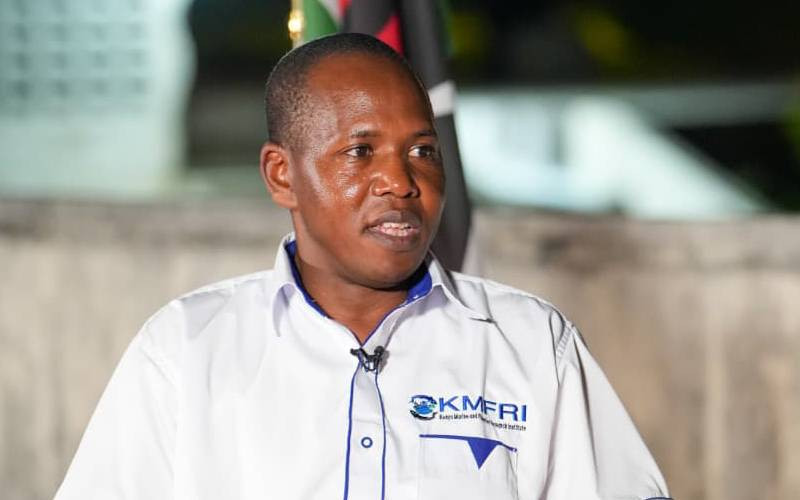
KMFRI chief executive Paul Orina during an interview. 

The government is constructing a Sh1.88 billion mariculture facility in Kwale County, set to become the largest of its kind in East Africa, producing up to five million marine larvae annually.

Kenya Marine and Fisheries Research Institute (KMFRI) chief executive Paul Orina disclosed the details of the National Mariculture Resource and Training Centre (NAMARET) during the 21st episode of the government's public engagement, Sema na Spox — Bonga na Gava, hosted by Government Spokesperson Isaac Mwaura at the KMFRI headquarters in Mombasa.

The facility, being built on 15 acres and financed jointly by the national government and the World Bank as part of the Blue Economy Flagship Projects, will house a marine hatchery producing seaweed, mangroves and other marine species for distribution to coastal farmers.

"The centre will anchor sustainable aquaculture while opening up new economic opportunities for coastal communities," noted Orina.

Beyond the hatchery, NAMARET will include a research laboratory and a training centre to equip farmers with modern aquaculture skills, a combination Orina described as critical to ensuring the facility's long-term impact.

KMFRI is leveraging its existing pool of researchers, particularly those specialising in mangrove conservation, to underpin the project's sustainability credentials.

Orina also pointed to seaweed farming in Kwale as an already-proven model, noting that financial institutions are tracking farmers' output and offering financing to scale production. Seaweed, he said, is rich in omega-3 fatty acids and used in the manufacture of products including lotions, soaps and shower gels.

On youth unemployment, one of Kenya's most persistent economic challenges, Orina argued that fish farming remains an accessible but largely ignored opportunity for young people.

"Opportunities in aquaculture remain widely accessible but underutilised by young people across the country," said Orina.

The KMFRI chief also welcomed the introduction of Marine Biology under the Competency-Based Education (CBE) curriculum, calling it a break from the past in which the subject was confined to universities.

"Unlike before, when Marine Biology was primarily introduced at university level, students are now engaging with it in secondary school," said Orina, adding that the shift gives learners a foundation to build careers in the sector and contribute to Kenya's blue economy.

Support Independent Journalism

Stand With Bold Journalism.
Stand With The Standard.

Journalism can't be free because the truth demands investment. At The Standard, we invest time, courage and skills to bring you accurate, factual and impactful stories. Subscribe today and stand with us in the pursuit of credible journalism.

Pay via
M - PESA
VISA
Airtel Money
Secure Payment Kenya's most trusted newsroom since 1902