×

The Standard e-Paper
Join Thousands Daily
 The Standard Group Plc is a
multi-media organization with investments in media platforms spanning newspaper
print operations, television, radio broadcasting, digital and online services. The
Standard Group is recognized as a leading multi-media house in Kenya with a key
influence in matters of national and international interest.
The Standard Group Plc is a
multi-media organization with investments in media platforms spanning newspaper
print operations, television, radio broadcasting, digital and online services. The
Standard Group is recognized as a leading multi-media house in Kenya with a key
influence in matters of national and international interest.

Audio By Vocalize
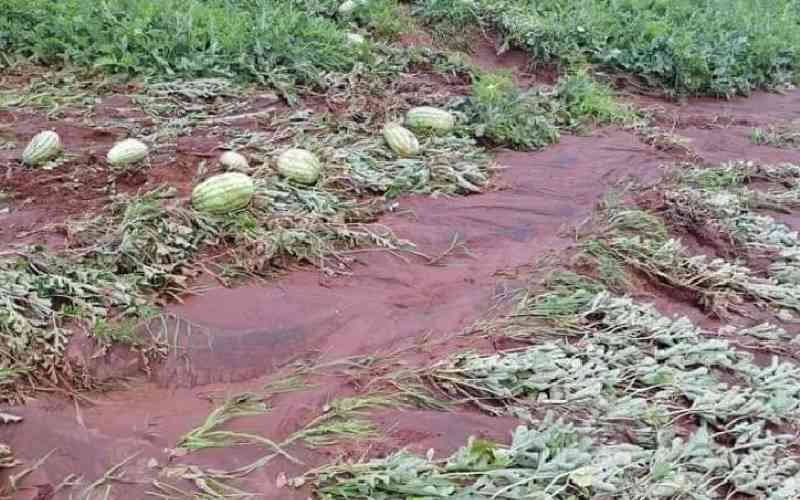
Watermelon farm destroyed by floods. [Courtesy]
Farmers face increased risks of pest outbreaks and crop diseases as El Niño rains expected from October could also disrupt supplies of farm inputs, experts have warned.
AAK-GROW, an organisation representing stakeholders in the pest control sector, issued the warning in a statement on Tuesday, September 22, as farmers prepare for increased rainfall, flooding and prolonged wet conditions.
The Kenya Meteorological Department forecasts above-average rainfall from October to December, with the rains likely to continue into February 2027. The wet conditions could increase flooding, stagnant water, humidity and moisture levels, creating conditions that favour pests and crop diseases.
AAK-GROW says the weather could increase pest activity and outbreaks, including the resurgence of pests that had been suppressed by earlier weather conditions.
Farmers have been urged to activate pest surveillance and early warning systems in their regions and remain alert for migratory pests such as desert locusts and African armyworm.
They have also been advised to watch for possible outbreaks of fall armyworm, stem borers and diamondback moths later in the rainy period, particularly in early 2027.
AAK-GROW says prolonged wetness and high humidity could also increase the risk of fungal diseases.
Farmers have been advised to maintain proper spacing and plant density, use raised beds where possible and inspect crops regularly to detect infections early.
They have also been urged to prune excess branches on fruit trees and maintain adequate stocks of appropriate preventive fungicides.
Farmers have further been advised to use certified seeds and protect harvested produce from moisture through timely harvesting or artificial drying. Increased moisture could create conditions favourable for aflatoxin development.
The group has also called for early weed control and adjustments to herbicide application to reduce the risk of products being washed away by rainfall.
It recommends integrated weed management practices such as cover crops, mulching and conservation agriculture as increased rainfall could increase weed competition and reduce the effectiveness of herbicides.
“Taking the right measures now can help minimise avoidable losses and protect farm productivity, livelihoods and food security,” the statement read.
AAK-GROW has also called for farm inputs to be pre-positioned in areas expected to record high demand.
Stay informed. Subscribe to our newsletter
Flooding, damaged infrastructure and poor road connectivity could disrupt supplies of pesticides, fertilisers, seeds and vaccines, the organisation warned.
Farmers have also been urged to guard against counterfeit products, particularly during stock-outs and delays in resupply.
On livestock, the organisation has advised farmers to ensure animals receive vaccinations on time because wet conditions and flooding could increase animal health risks.
The advisory also warns of risks to human health, with flooding and stagnant water potentially increasing mosquito populations and the spread of mosquito-borne diseases.
Farmers and households have been urged to use treated mosquito nets according to label instructions and rely only on approved mosquito insecticides and repellents.
They have also been cautioned against counterfeit products and advised to use only Pest Control Products Board (PCPB)-approved insecticides with low toxicity.
“The appropriate use of approved agricultural products, regular farm monitoring, early detection of pests and diseases, and proper management of agricultural inputs and waste will support safer and more resilient farming practices during periods of increased rainfall,” the organisation added







Subscribe to our newsletter and stay updated on the latest developments and special offers!








 join
join