×

The Standard e-Paper
Smart Minds Choose Us
 The Standard Group Plc is a
multi-media organization with investments in media platforms spanning newspaper
print operations, television, radio broadcasting, digital and online services. The
Standard Group is recognized as a leading multi-media house in Kenya with a key
influence in matters of national and international interest.
The Standard Group Plc is a
multi-media organization with investments in media platforms spanning newspaper
print operations, television, radio broadcasting, digital and online services. The
Standard Group is recognized as a leading multi-media house in Kenya with a key
influence in matters of national and international interest.

Audio By Vocalize

Moi Girls High School in Marsabit presents creative cultural dance during the National Drama Festival at Kagumo TTC in Nyeri. [Kibata Kihu, Standard]
Kenya National Drama and Film Festival continues to expose the silent struggles learners endure while in learning institutions, calling for interventions.
Through theatre, dance, mime and poetry, learners are confronting deep-rooted challenges such as mental health struggles, unsafe school environments, exploitation, hunger, and the silent burden of academic pressure.
At the heart of these narratives is Moi Girls Marsabit’s gripping play, “The Sound of Silence,” a haunting story of Siti, a quiet Grade 10 student whose shocking act of violence becomes the climax of a story steeped in unspoken pain.
“Siti is not just a character; she represents many students who suffer in silence. We wanted to show what happens when emotional trauma is ignored,” said director Howard Lumumba.
The Dance, produced by Halima Adan, is scripted by Patrick Ngere and Labo Peter, boldly exposing the consequences of untreated mental health issues, urging schools to prioritise counselling and open dialogue.
The theme of mental health and emotional trauma also echoes in a mime titled “Drowning on Dry Land” by Salama Senior School, where a teenager struggles with bedwetting, becoming a victim of ridicule and isolation.

Moi Girls High School in Marsabit presents creative cultural dance during the National Drama Festival at Kagumo TTC in Nyeri. [Kibata Kihu, Standard]
The silence surrounding his condition nearly drives him into depression before acceptance by peers restores his dignity.
Similarly, in Makueni Girls’ spoken word piece “Barua Kapa,” a student pours out her emotional pain in a letter laying bare the psychological toll of performance pressure in the era of Competency-Based Education (CBE).
“I write this letter not with ink, but with tears,” the performer laments, capturing the anguish of students overwhelmed by expectations.
The burden of academic pressure and risk-taking is further explored in “Voyage Sauvage” by St Monica’s Girls.
A chemistry experiment gone wrong results in a fire, dragging a student into a courtroom drama that questions responsibility and safety in schools. The piece underscores the fine line between ambition and recklessness.
“Students are pushed to excel, but are we equipping them with safe environments?” posed one teacher.
Learners are also interrogating the dangers they face on their daily commute to school. In the cultural dance “Agum Argani,” Moi Girls Marsabit highlights the risks associated with boda boda transport.
Stay informed. Subscribe to our newsletter
The performance tells the story of a child who falls victim to a trusted rider, exposing a growing safety concern for school-going children.
“Parents trust bodaboda riders and matatu conductors with their children, but not all riders are responsible. We wanted to start that conversation,” said one official.
Meanwhile, gender and child protection issues emerge strongly in pieces like “Namaiyana” by Makueni Girls, produced by Mary Akoth, where a girl suffers rejection from her peers in school due to a medical condition linked to female genital mutilation (FGM). To make their claims strong, she is also falsely accused of being a dormitory thief.
The performance confronts stigma, ignorance, and the long-term consequences of harmful cultural practices.
The issues of ethics, integrity, and relationships are equally prominent in the ‘Prestine’ solo verse by Oletepes girls.
The verse sensitises about the safety of the girl child, as a minor, she is not safe either in school or in society and predators are on the loose.
In the French play Le Secret du Couloir (The Corridor Secret) by Korongoi Girls, the play follows Ange, a trainee teacher, whose arrival at Somo School sparks rumours among students about an alleged relationship between her and a teacher, Professor Gouna. It damages reputations and exposes the destructive power of gossip.
Meanwhile, “Nembo la Urembo” by Kaaga girls and produced by Eunice Maeke explores the conflict between education and societal expectations, as a young girl risks losing her scholarship unless she competes in a beauty pageant. “Je, urembo ni hatima yangu au elimu?” she questions.
True support lies in listening, understanding, and allowing young people to define their own paths.
The issue of student grooming and relationships has been among the challenges learners have been battling with in school in the recent past.
Issues of school feeding programmes and hunger have also taken centre stage. In St Kizito Girls SNE’s cultural piece “Chenuach,” a young learner battles hunger while striving to stay in school, painting a stark picture of how poverty continues to disrupt education majorly in marginalised regions, including slums and Arid and Semi-Arid areas.
This narrative is reinforced in “The Master Plan” by St Angela Kitui girls, where students sneak food into school due to inadequate provisions, only to face food poisoning. The story cleverly blends humour and caution, revealing the unintended consequences of survival tactics.
“When basic needs are not met, discipline becomes complicated,” said producer Angelina Musyoki.
In another compelling narrative, “Shifura” by Mwaani Girls explores the intersection of poverty, peer pressure, and digital exploitation. A student’s attempt to cope with financial embarrassment leads her into a dangerous online scheme, exposing the dark side of technology.
This aligns with themes raised in “Le Prédateur” by Moi Forces Academy Lanet, where a young girl’s innocent exploration of the internet turns into a cautionary tale about cyber safety and online predators.
“The internet is powerful, but without guidance, it becomes a trap,” observed Joseph Kamaki, chairman of the Rift Valley region.
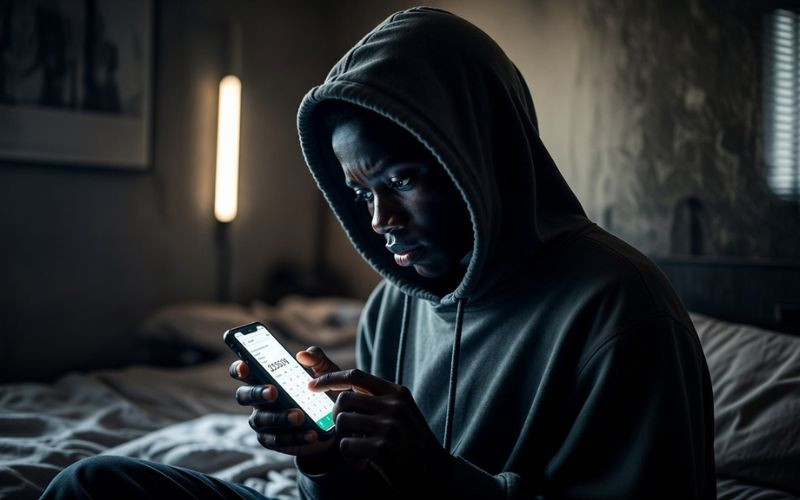
The vulnerability of young people in the digital age is further highlighted in the solo dance “Scammer,” by St. Matthews Girls from Rift Valley, where a student chasing social media fame falls prey to manipulation. These performances collectively stress the urgent need for digital literacy and awareness among learners.
Integrity takes a different dimension in Fesbeth High School’s play “The 4th Wiseman,” where a student chooses honesty over complicity in exam malpractice, even at great personal cost. His actions led to systemic change, highlighting the role of integrity in national development.
“In a world chasing shortcuts, integrity is revolutionary,” said producer Oliver Minishi.




Subscribe to our newsletter and stay updated on the latest developments and special offers!







 join
join