×

The Standard e-Paper
Home To Bold Columnists
 The Standard Group Plc is a
multi-media organization with investments in media platforms spanning newspaper
print operations, television, radio broadcasting, digital and online services. The
Standard Group is recognized as a leading multi-media house in Kenya with a key
influence in matters of national and international interest.
The Standard Group Plc is a
multi-media organization with investments in media platforms spanning newspaper
print operations, television, radio broadcasting, digital and online services. The
Standard Group is recognized as a leading multi-media house in Kenya with a key
influence in matters of national and international interest.

Audio By Vocalize
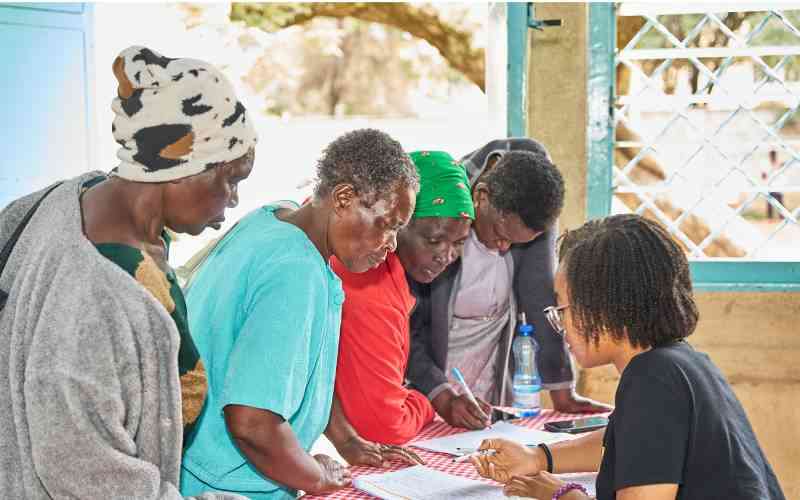
Kenya's shift to mobile money for elder welfare payments has cut caregiver fraud but opened a new front of abuse from within families, advocates have warned.
Speaking at the 10th Monthly Discussion Forum on Ageing (MDFA) held at Kariokor Social Hall in Nairobi, representatives from civil society organisations said low digital literacy among older Kenyans leaves them exposed to financial exploitation, even as the government's Inua Jamii cash transfer programme moves deeper into the mobile ecosystem.
"Nobody has really trained them to know that your PIN is your personal thing," noted Nasike Kisaka, programmes and partnerships lead at Suqoon Foundation.
"My grandmother will tell me to send the money to somebody. I send it to myself. I lie the money did not come, and I delete the message," she added.
Kisaka observed that many older persons remain on basic feature phones and are unaware that voice prompts exist as an alternative to keypads, a gap that compounds their vulnerability as banking and payment systems migrate to mobile platforms.
The government moved the Older Persons Cash Transfer (OPCT) programme to M-Pesa after physical bank collections exposed elderly recipients to robbery.
Abworo Titus, executive director of the Ageing Concern Foundation, recounted a case where a caregiver returned Sh800 to a beneficiary after collecting a delayed four-month payout of Sh8,000.
"The digitisation of the OPCT has, to a great extent, advanced the reduction of financial abuse among older people," said Titus, while acknowledging that literacy gaps remain a challenge.
Yet the monthly Sh2,000 stipend at the centre of that programme, paid to Kenyans aged 70 and above, draws sharp criticism as inadequate.
"The price of unga that a young person is spending is the same amount the older person is going to incur," explained Titus, relaying observations from an older persons' association in Lukuyani. "Financial insecurity for older people means pushing them deeper into poverty."
Maurice Omollow, manager of the CPF Foundation, said reduced income at retirement is the foremost challenge facing the country's elderly.
He added that pension penetration in Kenya remains low, leaving those outside formal employment without any financial safety net beyond government transfers.
Kenya's older population, those aged 60 and above, has surpassed 3.2 million people, accounting for nearly 6 per cent of the total population, according to data from the Kenya National Bureau of Statistics (KNBS) and the National Gender and Equality Commission (NGEC).
The forum also trained its focus on a stalled legal framework. The Older Persons Bill (2024), which would establish protections against elder abuse, neglect and discrimination, completed public participation in mid-2024 but has not been introduced in Parliament.
Stay informed. Subscribe to our newsletter
The Social Protection Act, passed in April 2025, provides cash transfer guidelines but does not address health, geriatric care or institutional standards for elder care facilities, gaps that advocates say only a dedicated bill can fill.
"We do not have structures that support the existing systems to strengthen geriatric care in Kenya," observed Kisaka.
"We have a children's act that speaks to abuse reporting. Older people do not have that sort of structure. They don't know where to report their issues."
Titus echoed the concern, pointing to cases of older women being assaulted and of widows being accused of witchcraft and evicted from family land, situations for which no dedicated legal reporting mechanism exists.
"The Older Persons Bill is really important because it does not just speak to social assistance," added Kisaka.
The MDFA, organised monthly by older persons' organisations across Nairobi, brings together civil society, older persons' associations and private sector actors to discuss issues affecting Kenya's ageing population.







Subscribe to our newsletter and stay updated on the latest developments and special offers!







 join
join