×
App Icon
The Standard e-Paper
Join Thousands of Readers
★★★★ - on Play Store
Download Now

Youth face high HIV risk as donor support drops

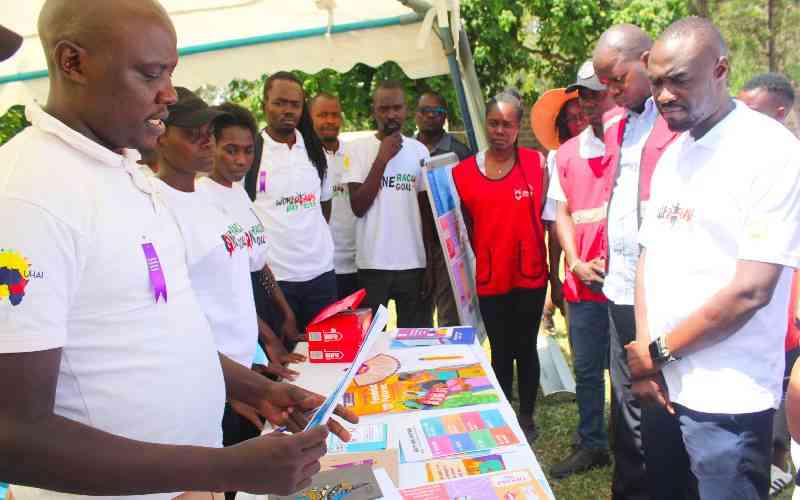
Participants during World Aids Day at Kisian Primary School, Kisumu County, on December 1, 2025. [Rodgers Otiso, Standard] 

As the country transitions away from donor-supported HIV programmes, Kisumu county has recorded 1,341 new HIV infections in just one year with 46 per cent occurring among young people aged 10-19.   

This alarming surge raises urgent questions about how funding gaps, following reduced support from USAID and other major partners, may be undermining prevention efforts, community outreach, adolescent-focused interventions and access to critical commodities such as PrEP and HIV testing kits.

For a county already grappling with one of Kenya’s highest HIV burdens, this is not just a statistic, it is a stark reality affecting families, communities and the county’s youth.


George Omondi, a 46-year-old HIV-positive activist, shares a deeply personal journey that mirrors the struggles of many in Kisumu.

“I learned my HIV status in 2010, after the death of my wife. She was HIV positive and I didn’t know. When she fell sick, she went to the hospital and discovered her status. She used to bring her ARVs home, but i never paid much attention. After her death, a community health promoter came to my house and told me, “Brother George, your wife has died. It’s important for you to also go and know your HIV status.” What she told me was not easy to hear. I didn’t want to go, but eventually, I sneaked off to a testing tent near the highway.”

The moment of discovery was devastating. George recalls, “After sneaking to the testing tent,  I was told I HIV positive. My first thought was to end my life. I could not accept it. Two months later, I went for another test, again sneaking in, and the result was the same. When I returned to the community health provider, I told her I had been tested twice. She told me I had done the right thing, and that I should go to the hospital and start treatment.”

George began treatment in 2010, but the early days were critical. “My CD4 count was 54. Without ARVs, I could not be alive now. I was close to dying. Fifteen years later, I’m proud to live positively. My viral load is undetectable because my adherence is strong. I did not want to repeat what my late wife went through. I’ve stayed disciplined with my treatment because I wanted to survive. That’s why I’m here today. I’ve lived with HIV for 15 years and I’m proud.”

His story underscores the real world consequences of changing donor support and the importance of continued support to treatment and prevention services.

“Back when USAID funded programmes, services were readily available. When the funding was shelved, challenges emerged. Sometimes we only received five days’ supply of drugs when we were supposed to get two or three months. Now, the government has stocked ARVs and people can get six-month supplies. But we appeal for donor support to return because some services once relied on have stopped. They helped Kenya and they help us stay alive. Without them, many will suffer.”

The social challenges of living with HIV remain significant. George explains, “When I first tested, I faced stigma. I hid from friends and family. I didn’t want anyone to know. But support groups funded by external partners gave me hope. HIV is not a death sentence. Support, adherence and knowledge can transform lives.”

Susan Wairimu, a HIV-positive activist, recounts a different but equally challenging journey. “Back in 2018, while working in South Sudan, I became severely ill. I lost 30 to 50 kilogrammes in four months. My hair fell out, eyesight deteriorated and I suffered from opportunistic infections like chronic diarrhea. In January 2019, I returned to Kenya and tested HIV positive. Initially, I feared the worst, but I embraced my status, though the first three months were difficult as starting treatment sometimes makes you feel sicker before you get better.”

Susan’s personal struggle led her to activism. I advise people, especially those afraid to test and work with LVCT Health. Many people living with HIV face mental health issues. I provide counseling, adherence support and hope. HIV is manageable and a healthy life is possible with treatment and care.”

The statistics in Kisumu are alarming. According to Dr Fredrick Oluoch, Director of Public Health and Sanitation in Kisumu, over 111,000 people in the county are living with HIV, including more than 6,200 children. “In the last year, 1,341 new infections were recorded, with 265 among children and youth aged 10 to 19. Fourteen percent of these teenagers are also pregnant.

Forty-six percent of new infections are among young people, which is extremely high. Our overall prevalence is around 10.7 per cent, with sexual and gender-based violence at 14 per cent, and teenage pregnancy at 13.5 per cent. This triple threat—HIV, teenage pregnancy and gender-based violence requires immediate intervention.”

Dr Oluoch emphasizes community engagement as critical. “We are enhancing partnerships with the national government, stakeholders, and other partners to address this. Initiatives like sports programmes help engage young people. We also urge parents to discuss HIV openly with children. Education and awareness are vital to changing behavior and preventing new infections.”

While mother-to-child transmission has improved, it remains above target. “By 2022, mother-to-child transmission was 9.1 per cent, and now it is at 6 per cent. Our goal is below to hit 5 per cent. To achieve elimination by 2027, early testing and treatment are crucial. Men must also take responsibility and avoid behavior that risk infecting their pregnant partners. Early detection and ART can reduce the chance of transmission to the baby.”

Women remain disproportionately affected. “Women over 15 account for 7.55 per cent of new infections, compared to 361 men. Women’s higher risk contributes to mother-to-child transmission. Education, prevention and testing for both genders are essential to reduce overall prevalence. We also need to address socio-economic factors that make women vulnerable.”

Integration of HIV care into routine health services is a positive step. Patients access ARVs alongside routine services for conditions like diabetes or hypertension. “Integration ensures sustainability under schemes like NHIF. People living with HIV can receive comprehensive care and medications,” Dr Oluoch notes.

Multiple partners, including UNICEF, Red Cross, civil society organisations, and other international agencies, continue to support prevention and treatment. “Even though USAID support reduced, other partners bridged gaps. HIV is now managed like a chronic illness, not a death sentence. We have multi-sectoral approaches to ensure service continuity,” Dr Oluoch adds.

The initial withdrawal of donor support raised fears. “There was concern that ARVs would run out and programmes would collapse. But services have continued with the support of partners like Walter Reed and PEPFAR-funded initiatives. We prioritize access to life-saving medications and counseling.”

Despite progress, stigma remains a barrier. “Stigma should be a thing of the past. People should not fear knowing their status. With viral suppression and adherence, HIV is invisible. Proper care allows a normal, healthy life.”

Prevention strategies now include condom use, abstinence, fidelity, PrEP and injectable medications such as Lenacapavir and Cabotegravir. “Lenacapavir, taken once every six months, offers a convenient prevention method. These interventions, combined with community education and testing, can significantly reduce new infections,” Dr Oluoch notes.

George continues to inspire others. “I take ARVs every morning at 7 am. I pick up medication every three to six months from JOOTRH. I remarried an HIV-positive woman and we have an HIV-negative child. Adherence, discipline and hope are key.”

Susan similarly remains active. “Many fear stigma. By being open, I show others that treatment works and that a healthy life is possible. Advocacy and peer support save lives. Awareness campaigns and counseling are critical, especially for young people and vulnerable groups.”

The numbers speak for themselves. With 1,341 new infections in one year, 46 per cent among adolescents and intersecting challenges like teenage pregnancy and gender-based violence, multi-layered interventions are critical. Community programmes, drug availability, and partnerships domestic and international must be strengthened.

George’s resilience underscores the success of treatment and adherence. “HIV is not a death sentence. With proper care, you can live a full life. My adherence to ARVs has kept me alive and healthy. I hope my story inspires others.”

Susan’s advocacy highlights the importance of support systems. “HIV affects mental health and social life. Peer support, counselling and community engagement are vital. Being public about one’s status reduces stigma and motivates others to seek treatment.”

Dr Oluoch stresses the need for continued vigilance. “We are one year away from our target to eliminate mother-to-child transmission by 2027. Integration of HIV services into routine care, multi-sectoral collaboration and community awareness are essential. Men must support their partners, parents must educate children and all citizens must know their HIV status.”

As Kenya transitions from donor-supported programmes, Kisumu’s experience emphasises the need to sustain local capacity, integrate HIV care into routine services and maintain community engagement. The fight against HIV continues, but collective action, education, and accessible treatment can create a future where HIV is controlled, stigma is eliminated and young people grow up safe and healthy.