×

The Standard e-Paper
Kenya’s Boldest Voice
 The Standard Group Plc is a
multi-media organization with investments in media platforms spanning newspaper
print operations, television, radio broadcasting, digital and online services. The
Standard Group is recognized as a leading multi-media house in Kenya with a key
influence in matters of national and international interest.
The Standard Group Plc is a
multi-media organization with investments in media platforms spanning newspaper
print operations, television, radio broadcasting, digital and online services. The
Standard Group is recognized as a leading multi-media house in Kenya with a key
influence in matters of national and international interest.

Audio By Vocalize
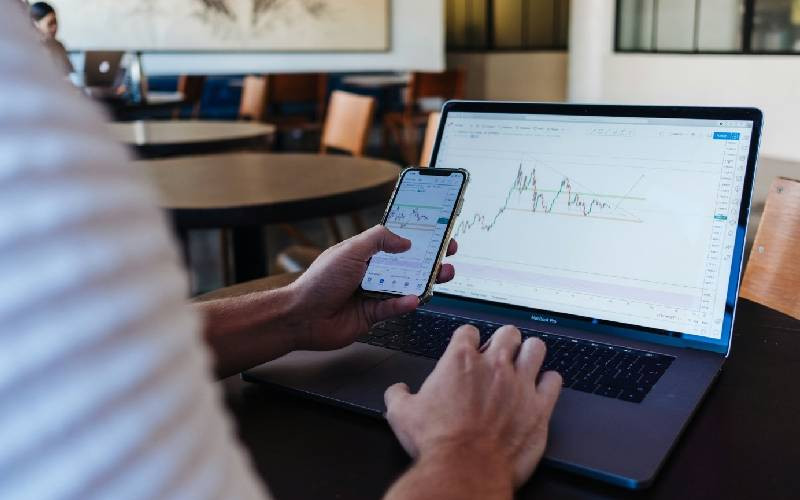
Kenya’s digital shift has been hard to miss. From Nairobi’s tech-driven Upper Hill to growing towns like Thika and Eldoret, faster Internet is changing how people work, learn, and invest. Smartphones are everywhere. And increasingly, so are trading apps.
One of the clearest signs of this transformation is the rapid growth in forex trading conducted entirely on mobile devices. What used to require a desktop computer and a stable office connection can now be done from a matatu ride or a small business counter in Mombasa. Why does that matter? Because access reshapes opportunity, and opportunity tends to expand quickly once barriers fall.
Expanding Internet infrastructure across Kenya
Kenya’s investment in connectivity has been a quiet catalyst. Fiber optic networks have stretched beyond Nairobi, while 4G coverage has become more consistent even in semi urban regions. Data bundles are more affordable than they were a decade ago. That combination changes behavior.
Traders in Kisumu can now monitor European market sessions in the afternoon without worrying about dropped connections. In Nakuru, young professionals follow US Federal Reserve announcements in the evening as screens light up with price movement. Markets move like tides, calm for hours and then suddenly forceful, and stronger Internet ensures traders are present when that shift happens.
Why is stable connectivity so important in currency markets? Because timing matters. When liquidity surges and prices adjust quickly, even minor delays can alter execution quality. Improved infrastructure reduces that friction. It turns participation from occasional to continuous.
Smartphone adoption and mobile financial culture
Kenya has long been a leader in mobile finance. From mobile money transfers to digital savings groups, financial activity has already been integrated into daily phone use. Trading was the next logical step.
Mobile trading applications have simplified entry. A trader in Nairobi does not need a dedicated office or complex equipment. A smartphone and a data connection are enough. And because most Kenyans are already comfortable managing money through their phones, moving into trading feels less intimidating than it once did.
You might notice that younger traders, especially university graduates, approach markets with a digital-first mindset. Charts are analyzed on touch screens. Orders are placed during work breaks. Think of the London session as the market’s caffeine shot, and Kenyan traders are watching it live from their phones. That convenience lowers psychological barriers and fuels growth.
Access to education and market information
Greater Internet access has also transformed learning. Online webinars, video tutorials, and financial news platforms are now just a click away. Knowledge spreads quickly.
A trader in Eldoret can watch a technical analysis session hosted abroad and apply the concepts immediately. Social media groups share insights on currency trends within minutes of major economic announcements. When rates rise, investors start glancing toward stronger currencies, and local traders are aware of those shifts almost instantly.
Stay informed. Subscribe to our newsletter
Why does education matter so much in this surge? Because participation without understanding rarely lasts. Connectivity provides not only access to markets but also to structured learning. I have observed that traders who combine stable internet with continuous education tend to approach volatility with more discipline. It is not just about entering trades. It is about understanding context.
Markets rarely reward impulse for long. They reward preparation.
Economic motivation and income diversification
Kenya’s economic environment has encouraged many individuals to explore additional income channels. Rising living costs and evolving employment patterns make diversification appealing. Mobile trading fits into that framework.
Currency markets operate around the clock. Evening hours in Kenya overlap conveniently with active US sessions, creating opportunity after traditional working hours. Screens flicker green as liquidity surges, and traders respond in real time. That accessibility makes trading compatible with full time employment.
But why has this surge been so visible in recent years? Because improved Internet speed removes friction. Whenever the Central Bank of kenya announcements shift global sentiment, Kenyan traders no longer need to wait. They react instantly. Markets may quiet down like a fading storm after volatility passes, but participation remains steady.
This flexibility strengthens engagement. It transforms trading from a distant concept into a practical activity integrated into daily life.
Financial inclusion and broader market participation
Increased connectivity has also widened the circle of participation. Individuals who once lacked access to traditional investment channels can now explore global markets with minimal infrastructure. A smartphone and stable Internet are often enough.
This accessibility democratizes opportunity. A trader in a rural town can follow the same currency movements as someone in Nairobi’s financial district. You might notice that discussions about global exchange rates now appear in community groups far beyond major cities. That shift reflects inclusion.
Why is this significant? Because financial participation shapes economic awareness. When more people engage with global markets, understanding of interest rates, inflation trends, and currency flows deepens. Trading becomes part of a broader financial conversation.
Conclusion
Rising Internet access across Kenya is doing more than improving communication. It is reshaping how individuals interact with global financial systems. Stronger infrastructure, widespread smartphone adoption, accessible education, and flexible economic motivation have combined to fuel a surge in mobile currency trading.
Opportunity has expanded. So has responsibility.
As connectivity continues to improve, participation in global currency markets is likely to grow further. The foundation is already in place. And in a country where digital innovation moves quickly, the connection between internet access and mobile trading is becoming impossible to ignore.
Subscribe to our newsletter and stay updated on the latest developments and special offers!


 Prefer the Standard on Google








 join
join