×

The Standard e-Paper
Home To Bold Columnists
 The Standard Group Plc is a
multi-media organization with investments in media platforms spanning newspaper
print operations, television, radio broadcasting, digital and online services. The
Standard Group is recognized as a leading multi-media house in Kenya with a key
influence in matters of national and international interest.

Audio By Vocalize
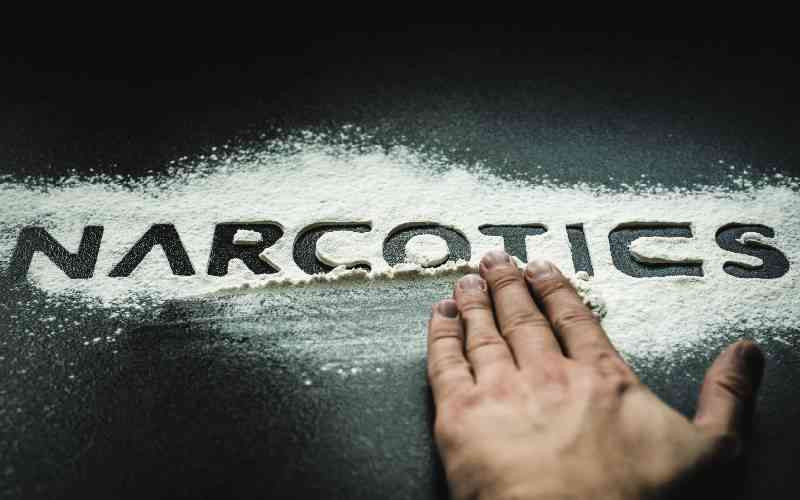
Kenya’s anti-narcotics agencies are not failing. They are succeeding at the only thing their political masters ask, protect the trade while looking busy. The proof is not hidden. It is sold at Sh10 a tablet.
Start with the citizen. In Eastleigh’s 12th Street, popular prescription drugs used as muscle relaxants and sedatives for short-term insomnia and as pre-anesthetic medication cost between Sh10 and Sh50. According to a media expose, for Sh200, a schoolchild can buy a week’s worth of oblivion.
In Kibra, children as young as 11 are initiated with the same drug christened “vum”, supplied by classmates whose parents were doctors. In Mombasa, heroin is easier to buy than sugar. And still, too many Kenyans shrug that “It is their problem.” I have news for you, it is your child’s classroom, your pharmacy, your county licensing office, your police station. Apathy is plain collaboration.
Now consider the scale of the intelligence failure. The Ministry of Health’s Key Population Size Estimates put Kenya’s population of people who inject drugs at 26,673. That is not a hidden enemy across a border. It is a known, countable, concentrated population, mostly young men, heavily concentrated in Nairobi, Mombasa, Kwale, Kilifi, and Kiambu.
The National Intelligence Service exists precisely to run covert tracking and tracing. The National Anti-Narcotics Investigations Bureau has 700 paramilitary-trained officers. How difficult is it to map a population the Ministry of Health has already counted?
How difficult is it to follow the supply lines that reach 26,673 injectors, from the pharmacy that leaks the pills to the den that sells the dose to the officer who protects the den? The agencies cannot claim ignorance of the pool. They cannot claim the pool is too small to find. They can only claim they have chosen not to look.
Their mandates are specific, and each is betrayed in a specific way. The National Anti-Narcotics Investigations Bureau has new stations, yet Magodoroni, a 24-hour Mombasa den, is a place no police officer dares to set foot.
The National Intelligence Service has strategic intelligence on cartels, yet no kingpin has been mapped from the pharmacy that leaks “vum” to the port that lands 350 kilos of heroin.
The Kenya Revenue Authority screens containers at Mombasa and JKIA, yet prescription pills flood Eastleigh at pocket-money prices. The Pharmacy and Poisons Board regulates pharmaceutical supply yet the same narcotics are sold openly on 12th Street. The Asset Recovery Agency traces assets, yet no drug financier’s mansion has been forfeited.
The Office of the Director of Public Prosecutions prosecutes, yet the 12th Street handlers say plainly that police are the ones who protect them. Which officer has been charged? Which Pharmacy and Poisons Board official? Which county licensing officer? Which commander for Magodoroni? Which financier? None.
That is because the kingpin is not at the top of the chain. He is in the middle of it. The chain runs through schools, pharmacy diversion, protected retail markets, police protection, county licensing, the outdated 1994 Act and maritime impunity.
The kingpin is the police car passing 12th Street. The kingpin is the pharmacy insider who diverts “vum”. The kingpin is the county official who licenses bars open at 10am in defiance of the law.
The kingpin is the 1994 Narcotic Drugs Act that criminalises the user and clogs the courts while the financier sails home. The kingpin is the state’s own contradictions.
Why, then, is rehab the showcase? Because rehab is safe. It is visible, donor-friendly, and photogenic. Rehab does not threaten the syndicate.
Stay informed. Subscribe to our newsletter
Rehab does not require arresting any officer on 12th Street, the Pharmacy and Poisons Board official, the county licensing officer, or the maritime financier. Rehab is a fig leaf.
The Ministry of Health provided the estimates. The intelligence services know the chain. They know the names, the streets, the prices and the protectors. The question is not capacity. It is will. Why has the National Intelligence Service not mapped pharmacy diversion?
Why has the National Anti-Narcotics Investigations Bureau not arrested the handlers and their police protectors in one operation? Why has the Asset Recovery Agency not frozen the assets of the barons whose ships are seized?
Why has the Office of the Director of Public Prosecutions not charged a single protector? Because the chain of conspirators is not a mystery. It is a protected list. Until agencies investigate themselves, rehab will remain the state’s alibi. And until citizens stop shrugging at Sh10 “vum”, the market will remain open, under police noses, with your child in the queue.
Subscribe to our newsletter and stay updated on the latest developments and special offers!

 Prefer the Standard on Google