×

The Standard e-Paper
Join Thousands Daily
 The Standard Group Plc is a
multi-media organization with investments in media platforms spanning newspaper
print operations, television, radio broadcasting, digital and online services. The
Standard Group is recognized as a leading multi-media house in Kenya with a key
influence in matters of national and international interest.
The Standard Group Plc is a
multi-media organization with investments in media platforms spanning newspaper
print operations, television, radio broadcasting, digital and online services. The
Standard Group is recognized as a leading multi-media house in Kenya with a key
influence in matters of national and international interest.

Audio By Vocalize
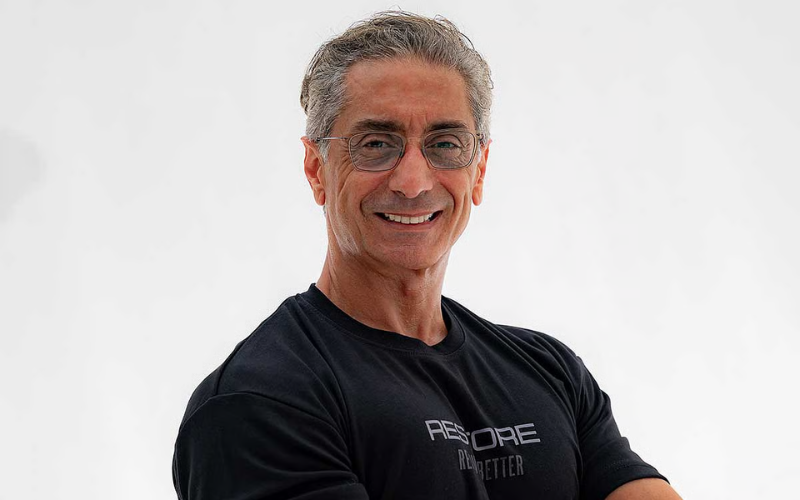
Dr Elie Abirached, a Dubai-based founder of Limitless Humane, is leading a new frontier in Kenya's wellness landscape by blending neuroscience, spirituality and forest medicine into a powerful prescription for modern life.
We meet at the Entim Sidai Wellness Sanctuary, Karen, Nairobi. As we talk, Dr Elie's philosophy slowly unfolds. "Longevity is not about living longer; rather, it is about living more consciously," he tells me as he stretches his hand to 'feel' the bark of an indigenous tree.
A doctor who stepped outside the hospital walls
For years, Dr Elie practised conventional medicine in the Middle East. He treated illnesses, fixed what was broken, and prescribed what science allowed. However, he says, something never sat right.
"I realised most diseases I treated were preventable - we were waiting for people to fall apart, then rushing in to repair them. I wanted to understand why we don't prevent the fall in the first place," he tells me as we pass a cluster of ferns.
His transition from traditional medicine into longevity and preventive wellness was not sudden. It was a slow awakening, the kind that happens when frustration meets purpose.
He immersed himself in neuroscience, integrative medicine, cellular biology, functional diagnostics, Eastern philosophy, and behavioural science. Not to replace medicine, but to expand it.
Eventually, it led him here, in Kenya, a country he calls "the most underestimated wellness frontier in the world."
Why Kenya and why now?
As we walk, he gestures at the towering trees. "Look around you, this is medicine, this is neurobiology in real time, and you will be surprised to know the forest changes your brain waves, your cortisol (stress hormone) and your blood pressure. Kenya has the natural assets that the rest of the world is now paying billions for," says the Longevity expert.
He is right.
Around the world, wellness tourism is exploding. Biohacking retreats in Scandinavia, forest therapy in Japan, and longevity clinics in Dubai, where Dr Elie is based, and Singapore. Yet here at home, amidst 30 per cent forest cover ambition and growing urban stress, we seldom realise the global currency of our natural spaces.
According to Dr Elie, Kenya is ripe, ready to lead East Africa in longevity, neuro-wellness, and preventive health. Not because of technology alone, but because the country's landscape itself is medicinal.
Biohacking, but for humans, not machines
I ask him to define biohacking, a term often thrown around on social media, sometimes sounding like an extreme sport, sometimes like a Silicon Valley fantasy.
Stay informed. Subscribe to our newsletter
He laughs softly. "Biohacking is simply understanding how your body works, then making small, intentional adjustments to help it perform better and age more slowly."
He breaks it down further. It is breathwork to regulate the nervous system - forest walking to reset cortisol, light exposure to balance hormones, sleep optimisation, gut health, mental patterns that shape physiology, personalised diagnostics to identify stress, inflammation, and deficiencies.
"No needles, no superhuman extremes," he adds. "Just awareness."
This is where his philosophy stands apart. "Biohacking is not about hacking the body, it is about listening to it, he explains.
Dr Elie believes Kenya has the perfect social and natural ecosystem to grow this movement, especially among young professionals, entrepreneurs, and mid-life adults seeking mental clarity, emotional resilience, and healthier ageing.
A wellness shift rooted in humanity
What strikes me is how softly he carries big ideas. There is no rush, no urgency, only presence. He picks up a fallen leaf and studies it like a patient teacher.
"Modern life has disconnected us from our biology, but the body never forgets what it needs," he says.
As we walk deeper, his insights take on a more reflective tone. He speaks about burnout as a cultural wound, about stress as a silent epidemic, about Nairobi's high-performance lifestyle thinning people emotionally without them noticing.
"Longevity is not a luxury," he says, slowing down as the path narrows. "It is a survival skill."
He pauses again, the meditative silence returning.
"People think longevity is about numbers, but it's about quality - mental clarity, emotional balance, physical strength, resilience. It is a relationship with yourself."
Kenya's new kind of wellness
This is the part of the story most Kenyans haven't heard yet. Across Nairobi, from Karura Forest to the Ngong Hills and forest to Arabuko Sokoke Indigenous Forest, more people are seeking: nature-based therapy, cold exposure, mind-body reset programmes, concierge diagnostics, corporate burnout interventions, emotional resilience coaching, forest meditation walks, and forest bathing experiences.
And the market is growing. Silently, surely, steadily.
We step off the main trail and enter a narrower path where sunlight barely touches the ground. Here, the air feels thicker, the silence deeper, as though the forest knows we are shifting into more intimate territory.
"This," Dr Elie says, "is where most people finally hear themselves."
He is not talking about sound. He is talking about clarity, the kind that the noise of daily life steals from us without permission. As we walk, he finally opens the door into the deeper science of longevity, the kind that is both rigorous and surprisingly poetic, the science of ageing gracefully.
Longevity, he explains, is built on five biological pillars: Cellular health (how well our cells repair themselves), hormonal balance, Inflammation control, Gut-brain, harmony, and nervous system regulation.
Most people, he says, do not age because of time, but because of stress. "Stress accelerates everything," he says. "Cellular damage, memory decline, weight gain, emotional burnout, all of it."
But the forest?
The forest slows the ageing curve. "Nature activates your parasympathetic nervous system, the body's natural 'repair mode'. Most people live in survival mode without realising it," he explains
What he describes is not alternative medicine. It is neurobiology, clinical, observable, and evidence-based.
He says, when we breathe forest air, the brain waves shift, Cortisol lowers, inflammation calms, blood pressure steadies, sleep improves, and emotional resilience rises.
"It is not magic," he says. "It is design."
He stops walking and looks up into the canopy, as if speaking to the trees:
"Longevity is the opposite of crisis living."
One of the most striking things about Dr Elie is how deeply spiritual he is, yet how firmly grounded in research.
"I don't separate the two," he says. "The science explains how healing works. Spirituality explains why it matters."
He believes that wellness cannot succeed without meaning, that human biology responds to hope as much as it responds to nutrition. That emotional peace is not just a feeling - it is biochemistry.
"We heal better when we feel connected," he says. "To God, to nature, to community, to ourselves." His clinic model reflects on diagnostics and biomarkers on one side, breathwork and nature immersion on the other, executive coaching paired with meditation, neuroscience blended with ancient practices from desert monasteries and the biblical tradition of retreat.
"It is not fusion," he corrects me gently. "It is integration. Humans were always meant to be whole."
According to global data, wellness tourism is projected to reach nearly $1.4 trillion in the next five years.
Longevity clinics are the new luxury experience. Preventive health is the new aspiration. Kenya, quietly but steadily, is emerging as a leader. Not because it is chasing a global trend, but because It has something the world desperately needs - nature, culture, spirituality, and science, a rare quartet.
"Kenya can redefine wellness for Africa," Dr Elie says. "Not as a luxury, but as a way of life."

Subscribe to our newsletter and stay updated on the latest developments and special offers!








 join
join