×

The Standard e-Paper
Kenya’s Boldest Voice
 The Standard Group Plc is a
multi-media organization with investments in media platforms spanning newspaper
print operations, television, radio broadcasting, digital and online services. The
Standard Group is recognized as a leading multi-media house in Kenya with a key
influence in matters of national and international interest.

Audio By Vocalize
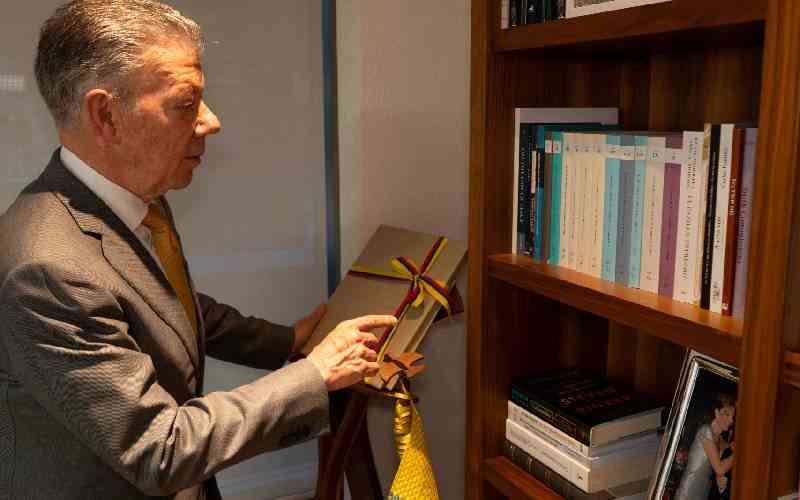
Former Colombian leader Juan Manuel Santos, who negotiated a landmark peace deal with FARC guerrillas, told AFP he believes the current president's strategy of trying to defeat armed groups through force alone is destined to fail.
Ex-president Santos, 75, won the Nobel Peace Prize for negotiating an end to FARC's half-century of war with the state in a deal sealed on November 24, 2016.
A decade on, as violence flares anew, he feels that his legacy is under threat from Colombia's new gun-toting President Abelardo de la Espriella.
"What keeps me up at night? That this government doesn't realize that to solve many of the problems we have today, the best solution is to implement the (2016) agreement," Santos said in an interview at his peace foundation in Bogota.
US-backed De la Espriella argues that FARC fighters got off too lightly under the peace deal,they were spared prison in return for admitting to their crimes,fostering what he sees as a culture of impunity.
The president has vowed to put all remaining armed groups, including breakaway FARC factions, "in a tomb or in prison" and stepped-up bombardments of their positions.
Playing politics with peace
Santos took a two-pronged approach to FARC.
He kept up military pressure on the guerrillas throughout four years of negotiations in Cuba but also offered them help to enter politics, reintegrate into society and avoid prison if they disarmed.
The deal ended FARC's brutal campaign of bombings, assassinations and hostage-takings.
But violence has flared again in the past two years as remaining guerrilla groups and cartels vie for control of the cocaine trade, illegal gold mines and extortion rackets.
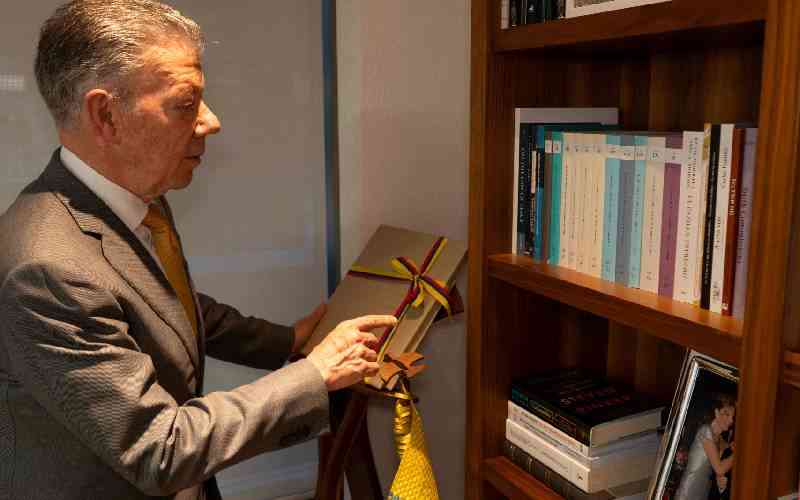
Santos, who served two terms between 2010 and 2018, keeps an original copy of the deal, wrapped with a ribbon, on a lectern in his office.
He blamed politicians fighting "for a few votes" for the lack of progress on implementing parts of the agreement.
While much of Colombia continues to enjoy the dividends of peace, drug-trafficking insurgents have stepped up a campaign of car bombings and drone attacks and last year assassinated a presidential candidate.
"This new violence must be combated, as I've always said, with both the carrot and the stick. Because otherwise, it will fail," Santos said, referring to De la Espriella's refusal to engage remaining guerrilla factions in peace talks.
Stay informed. Subscribe to our newsletter
While "proud" of an agreement that opened up Colombia to the world, luring tourists and investors, Santos acknowledges its shortcomings.
The Special Jurisdiction for Peace (JEP) tribunal set up under the agreement took seven years to issue its first non-custodial sentences against former FARC leaders and military top brass who admitted to crimes against humanity.
Santos acknowledged that the JEP, whose funding De la Espriella is threatening to slash, was "flawed," but insisted it had "done very important work" to promote reconciliation.
Before becoming president, Santos was a hawkish defense minister who chalked up military successes against FARC, including the 2008 liberation of former presidential candidate Ingrid Betancourt, who was held hostage for six years.
In 2011, he ordered the killing of FARC's top leader Alfonso Cano before sitting down to peace talks.
The radical right branded him as a traitor for negotiating with FARC.
Return to the past
Bellicose rhetoric is again on the rise, fuelled by De la Espriella.
The millionaire lawyer has overseen military operations with a gun on his hip and posed for photographs in front of dead fighters laid out in body bags.
Santos said he feared that hardline approach could lead to the return of "false positives" the murder by the military of civilians passed off as rebels, which remains a stain on former president Alvaro Uribe's presidency particularly.
"I hope this isn't a return to the past," he said, raising the specter of "Vietnam-style" killing targets.
He labelled the US-backed war on drugs in Latin America over the past five decades a failure.
"What has been the real result?" asked Santos, who has repeatedly called for a debate on legalizing drugs, including cocaine.
Subscribe to our newsletter and stay updated on the latest developments and special offers!

 Prefer the Standard on Google