×

The Standard e-Paper
Join Thousands Daily
 The Standard Group Plc is a
multi-media organization with investments in media platforms spanning newspaper
print operations, television, radio broadcasting, digital and online services. The
Standard Group is recognized as a leading multi-media house in Kenya with a key
influence in matters of national and international interest.

Audio By Vocalize
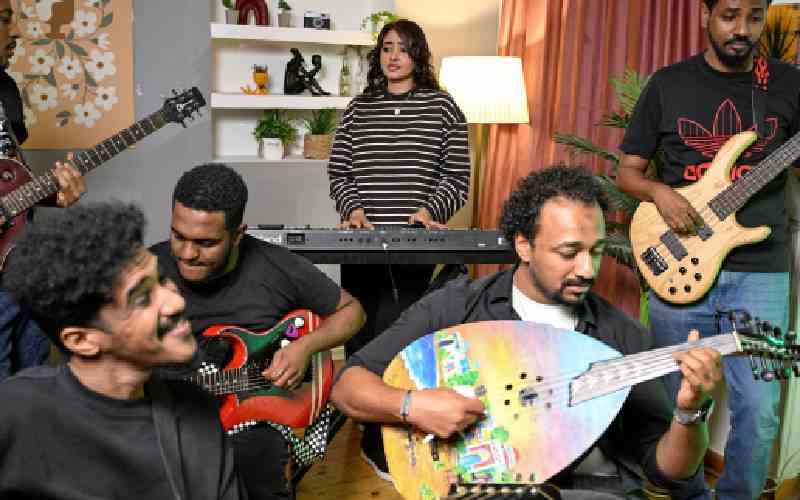
The Cairo studio where Sudanese musician Mohamed al-Mustafa strums his guitar is a long way away from the Khartoum protests where his band once performed for thousands demanding democracy, before war scattered them across multiple continents.
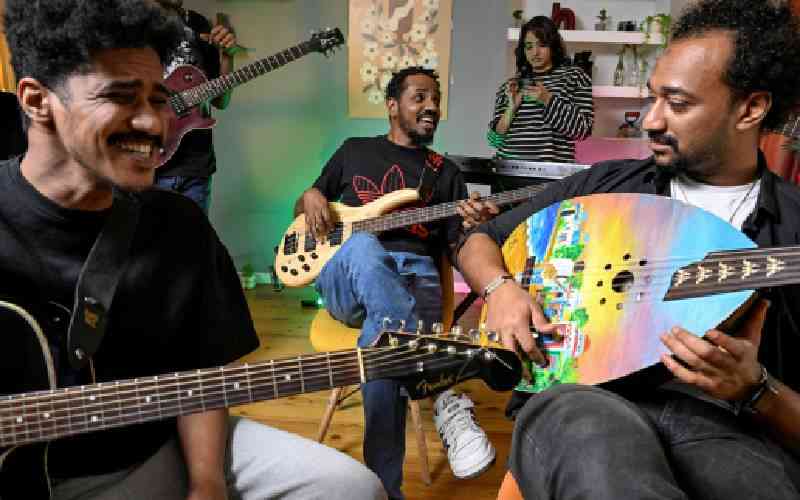
After living through revolution, war and years of displacement, Mustafa and his fellow musicians in "Aswat al-Madina" (Arabic for Voices of the City) have reunited in the Egyptian capital, returning to both recording and live performance.
"I still can't quite process the fact that we're back together," said Mustafa, the band's guitarist and co-founder, who goes by Timon.
"It still feels unreal," he told AFP between recording takes, as back home war rages between the two forces Sudan's youth once rallied against: the army and the paramilitary Rapid Support Forces.
In the studio, old stories and songs transport the musicians back to Khartoum, where they became the soundtrack to Sudan's 2018 uprising against longtime ruler Omar al-Bashir.
Two days before war erupted between the army and the RSF, former allies who worked together to derail Sudan's transition to democracy, the band was debating setlists for their next performance.
Instead, they found themselves swept up in the conflict, which has since devastated Sudan, killing tens of thousands of people and displacing millions more.
'Never left me'
Founded in Khartoum in 2014, Aswat al-Madina was part of a wave of underground bands pushing Sudanese music beyond conventional boundaries.
Blending folk traditions with jazz, reggae and contemporary rhythms, they sang about corruption, social injustice and life under authoritarian rule.
"Before the revolution, we used a technique where everyone understood what we meant, but nobody could prove it," said lead singer Ibrahim Ahmed Taha, who was arrested several times over their music.
When Sudan's youth took to the streets in December 2018, demanding an end to Bashir's rule, the band's songs blasted from phones, passing cars and makeshift barricades.
Timon still remembers one demonstrator carrying a giant speaker blaring their music through the marches.
Stay informed. Subscribe to our newsletter
"The music pushed people forward. It told them not to retreat in the face of repression.
"That image has never left me."
The band was a regular fixture at pro-democracy protests, including at the sit-in outside military headquarters in Khartoum, where protesters gathered each evening to listen to speeches, poetry and music.
"Find me in the square at half-past revolution; tonight, the devil falls," one track goes.
That sit-in became the site of a massacre in June 2019, when security forces led by the military and the RSF killed at least 120 protesters.
Four years later, when those same forces turned their guns on each other, the band -- like many Sudanese -- lost everything.
From their five-storey creative hub, "everything was gone," Timon said.
"Not just the musical equipment. Even the chairs and tables had been looted."
"You'd step into the street and see bodies lying there and buildings reduced to rubble. That's when you realise everything has fallen apart," Timon said.
As fighting spread, the musicians fled Sudan, carrying little more than backpacks and laptops.
'In Khartoum again'
Timon escaped to the United Arab Emirates while others settled in Egypt and elsewhere in Africa. Regular rehearsals gave way to anxious discussions of visas and relatives still trapped in Sudan.
It was only this August that the band could reunite in Cairo, for its first performance since the war began.
As familiar songs filled the venue, audience members sang along to every word, shouting requests.
"For a moment," Taha said, "I felt like I was in Khartoum again."
For keyboard player Roba Bashir, the band's only woman member, the reunion was "the happiest day since the war began".
Musab Mahgoub, who has attended two of the band's Cairo concerts since August, said the performances "brought back so many old memories of Sudan".
The band now hopes to tour internationally and is recording a new version of their song "Nos Kobayet Shai Bi'Aisha" ("Half a Cup of Tea with Bread") with an Egyptian-Nubian collaborator, its themes of home and family taking on special meaning in exile.
Subscribe to our newsletter and stay updated on the latest developments and special offers!

 Prefer the Standard on Google