×

The Standard e-Paper
Join Thousands Daily
 The Standard Group Plc is a
multi-media organization with investments in media platforms spanning newspaper
print operations, television, radio broadcasting, digital and online services. The
Standard Group is recognized as a leading multi-media house in Kenya with a key
influence in matters of national and international interest.
The Standard Group Plc is a
multi-media organization with investments in media platforms spanning newspaper
print operations, television, radio broadcasting, digital and online services. The
Standard Group is recognized as a leading multi-media house in Kenya with a key
influence in matters of national and international interest.

Audio By Vocalize
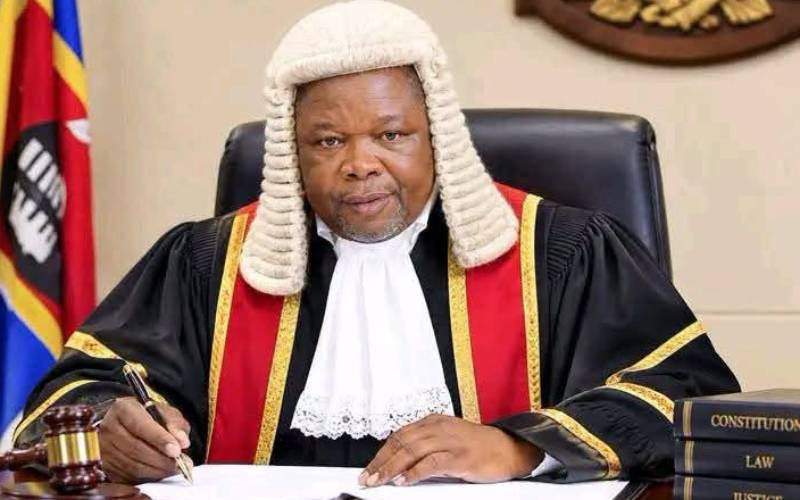
Chief Justice Martha Koome has condoled with the people of Eswatini following the death of Chief Justice Bheki Maphalala, describing him as a distinguished judicial leader who strengthened judicial institutions and regional cooperation.
In a statement, Koome extended her condolences to Maphalala’s family, colleagues in the Eswatini Judiciary and the wider judicial community across Africa.
“It is with profound sadness that I have learnt of the passing of Hon. Justice Bheki Maphalala, Chief Justice of the Kingdom of Eswatini,” Koome said.
She described Maphalala as a valued colleague whose contribution to regional judicial forums strengthened ties between judiciaries in Southern and Eastern Africa.
Through his leadership and active participation in the Southern and Eastern Africa Chief Justices’ Forum (SEACJF), Maphalala promoted dialogue and cooperation among African judiciaries, Koome said.
Maphalala died on September 10 while receiving medical treatment in South Africa, according to reports from Eswatini.
He had served as chief justice since 2015, having joined the Supreme Court in 2011. He began his legal career as an attorney in 1992 and became a High Court judge in 2009.
Maphalala was the first liSwati to be permanently appointed to the Supreme Court and later the first liSwati to serve as chief justice.
As chairperson of the SEACJF, he participated in discussions on judicial independence, human rights, electoral justice and emerging challenges facing African judiciaries. In May 2026, he addressed judges on the implications of artificial intelligence and digital technologies for electoral justice.
Koome said African judiciaries would be better placed to address emerging challenges through collaboration, experience-sharing and sustained dialogue.
“At this difficult moment, our thoughts and prayers are with his family, his colleagues in the Judiciary of Eswatini, and all those whose lives he touched through his public service,” she said.
Subscribe to our newsletter and stay updated on the latest developments and special offers!


 Prefer the Standard on Google









 join
join