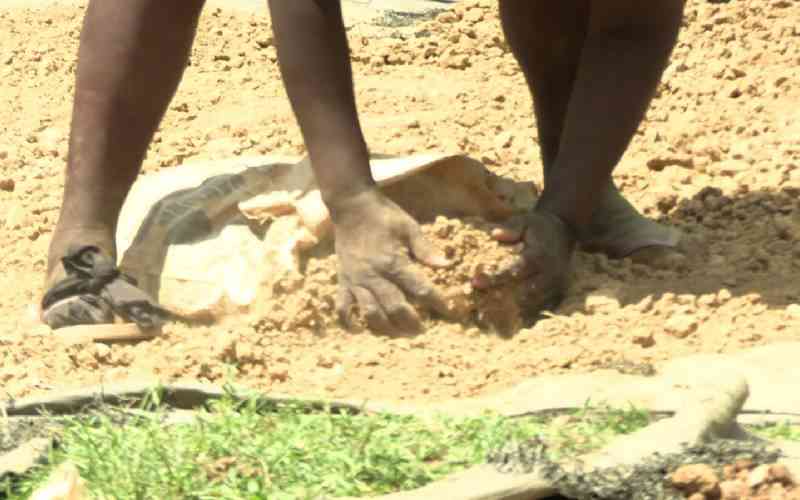
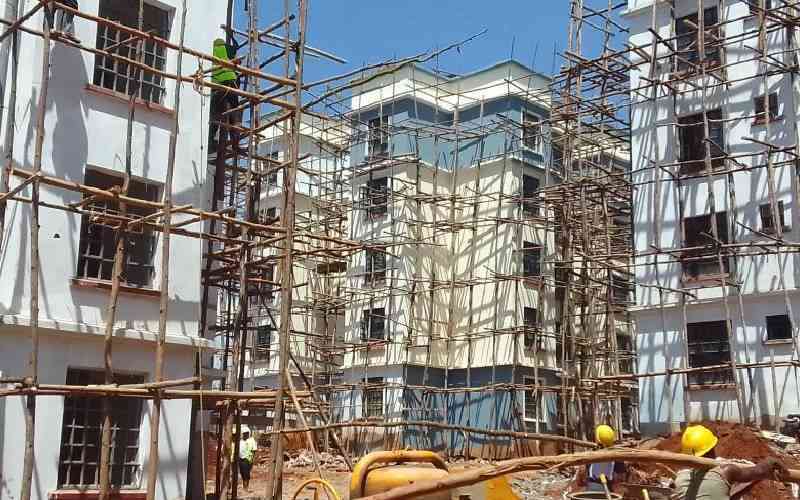
Small businesses in Mukuru Kwa Njenga have suffered heavy losses following Tuesday’s demolitions, which residents and leaders say were carried out with little notice, unclear authority, and no support for affected traders.
Traders said workshops and stalls built over many years were flattened within a single day, wiping out livelihoods and leaving families struggling to meet basic needs, including school fees.
“I had electronics in my shop. Everything was destroyed. I have operated here for over a decade. We were given a notice of just two days. Some of us were not ready. When they came, they destroyed everything. Now there is nothing,” said Simon Maina.
Joel Mwangi described chaotic scenes as the demolitions were enforced.
“They didn’t even give us a chance to remove our goods. You couldn’t take your shoes or the things you were selling. They came with guns and tear gas. Now January is here, children are back in school, and businesses are gone. Everything is upside down,” he lamented.
Former Embakasi South MP Irshad Sumra said the demolitions had devastated small enterprises, including electronics shops, food vendors, and service providers.
He warned that without immediate intervention, hundreds of households risk sinking deeper into poverty.
“These demolitions are not just about houses. They are about businesses, schools, and livelihoods,” Sumra said.
The former MP questioned the manner in which residents and traders were removed from the area, arguing that the process lacked transparency and public participation.
He claimed that some of those who received compensation were neither genuine residents nor business owners, while people who lived and traded in the area were left with nothing. “We are not opposing affordable housing. But what has happened here is wrong,” he said.
Residents said a road expansion project was used to justify the demolitions, yet official correspondence from government agencies appeared to contradict that claim.
Letters cited by community leaders indicate that neither the Kenya National Highways Authority (KeNHA) nor the Kenya Urban Roads Authority (KURA) authorised road works in the affected sections.
“This uncertainty hurts businesses the most. Every time there is talk of roads or projects, traders panic because they know demolitions may follow. No one tells us clearly what is planned, where we should go, or how we can continue working,” said Ali Adan, a 25-year-old resident of Mukuru.
For many traders, the demolitions mark the second or third time they have been forced to start over. Some shop owners said they are now surviving on casual labour or borrowing from relatives.
Stay informed. Subscribe to our newsletter
“We are asking the government to show us how to rebuild. We are not refusing development. We just want help to restart our businesses and take care of our children,” Adan said.
Community leaders are calling for an immediate halt to the demolitions, verification of affected businesses, and compensation or relocation plans that include traders, not just homeowners.
They also want structured engagement with county and national authorities to clarify land status and infrastructure plans.
As debris continues to litter parts of Mukuru Kwa Njenga, traders say the economic scars will last long after the dust settles.
“Mama mboga, fundis, shopkeepers, we are the ones suffering. If development is coming, let it not destroy the very people who keep this place alive,” Adan said.