×

The Standard e-Paper
Join Thousands of Readers
 The Standard Group Plc is a multi-media organization with investments in media
platforms spanning newspaper print operations, television, radio broadcasting,
digital and online services. The Standard Group is recognized as a leading
multi-media house in Kenya with a key influence in matters of national and
international interest.
The Standard Group Plc is a multi-media organization with investments in media
platforms spanning newspaper print operations, television, radio broadcasting,
digital and online services. The Standard Group is recognized as a leading
multi-media house in Kenya with a key influence in matters of national and
international interest.

Audio By Vocalize
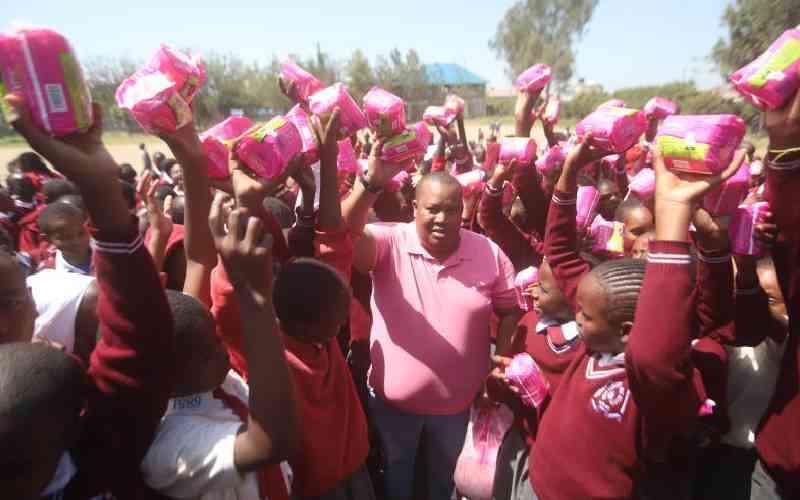
Businessman Maina Wakabura and Miruki Kariuki Primary School pupils, during celebrations to mark Menstrual Hygiene Day on May 28, 2024. Well-wishers donated pads to the girls. [File, Standard]
The World Bank estimates that over 500 million young women and girls globally struggle daily to manage their menstrual health and hygiene. Access to menstrual hygiene products, education, and safe facilities remains a persistent challenge for many, preventing their full participation in school, work, and their overall well-being. In 2024, period poverty continues to be a global health dilemma, a silent epidemic that is often overlooked. As a result, girls, young women, and others face numerous injustices and inequalities.
The triple threat of stigma, unaffordable products, and inadequate sanitation fuels the global crisis of period poverty. This deep-seated shame surrounding menstruation is deeply ingrained in our culture, perpetuating harmful stereotypes and limiting access to essential resources. In Nepal, for example, some communities practice 'Chhaupadi'. This illegal ancient tradition entails banishing people, often young girls, to mud huts or sheds for the duration of their period, to avoid bringing 'bad luck' to the family. Further, a 2023 Action Aid poll reported that one in five individuals who menstruate in the UK are struggling to afford period products. Such practices isolate girls, put their health at risk, and hinder their access to education and opportunities.

Subscribe to our newsletter and stay updated on the latest developments and special offers!










 join
join