×

The Standard e-Paper
Truth Without Fear
 The Standard Group Plc is a multi-media organization with investments in media
platforms spanning newspaper print operations, television, radio broadcasting,
digital and online services. The Standard Group is recognized as a leading
multi-media house in Kenya with a key influence in matters of national and
international interest.
The Standard Group Plc is a multi-media organization with investments in media
platforms spanning newspaper print operations, television, radio broadcasting,
digital and online services. The Standard Group is recognized as a leading
multi-media house in Kenya with a key influence in matters of national and
international interest.

Audio By Vocalize
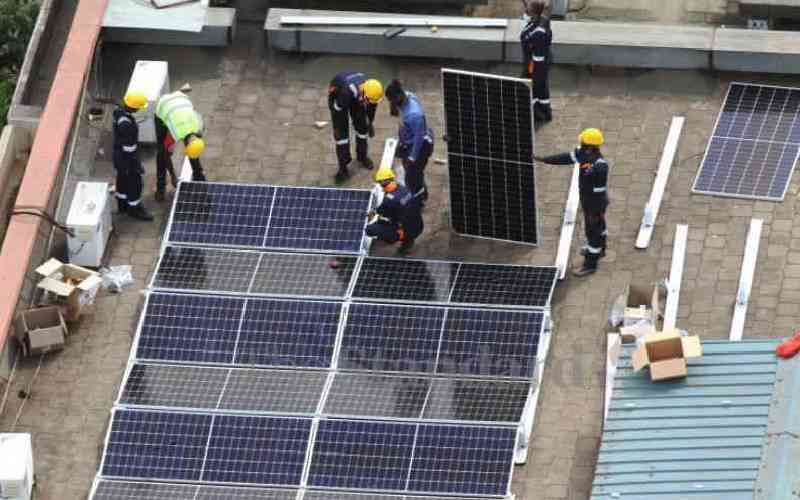
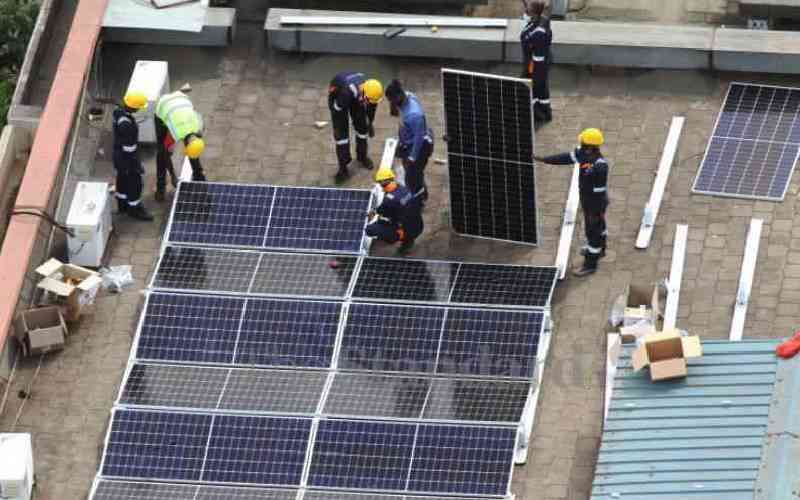
The government is racing against a tightening one-month window to complete a $150 million (Sh20 billion) World Bank-funded project to bring solar electricity and clean water to 14 underserved counties, with the September 30 deadline looming.
The Rural Electrification and Renewable Energy Corporation (Rerec) has just eight weeks to commission 31 solar-powered mini-grids across four counties, install 316 solar-powered water pumping systems, and connect thousands of households to reliable electricity and clean water.
With the clock ticking, the State agency is scrambling to overcome procurement bottlenecks, supply chain constraints, logistical hurdles and community disputes that have plagued the Kenya Off-Grid Solar Access Project (Kosap).
Appearing before the Senate Energy Committee this week, Rerec Chief Executive Rose Mkalama presented the official Kosap status report, confirming she has personally inspected 31 active construction sites.
Dr Mkalama assured lawmakers that the multi-component programme is on track to meet its end-of-September commissioning timeline, even as her report acknowledged "implementation delays of varying degrees."
The major infrastructure project will see Rerec deliver 120 newly built solar mini-grids to remote communities.
Backed by the World Bank investment, the regional rollout will immediately connect 5,390 targeted households to green water networks while deploying localised grids engineered to support between 75 and 1,835 active users per site across 14 frontier counties.
The project targets 14 counties including Garissa, Isiolo, Kilifi, Kwale, Lamu, Mandera, Marsabit, Narok, Samburu, Taita Taveta, Tana River, Turkana, Wajir and West Pokot, which are mostly remote and located on arid or semi-arid lands.
Rerec is implementing World Bank-funded components worth about $31 million (Sh4 billion) out of the project's total value of $150 million (Sh20 billion).
The scope includes 31 solar-powered mini-grids across Turkana (12), Marsabit (10), Samburu (4) and Isiolo (5). Turkana County leads the energy component with 15 active mini-grid sites, followed by Marsabit, Isiolo and Samburu.
In the water sector, the project includes 316 solar-powered water pumping systems targeting boreholes in all 14 counties.
Isiolo and Tana River lead with a combined 57 solarised boreholes under construction; Narok follows with 35 sites, Taita Taveta and Lamu have 34 each; West Pokot and Turkana have 33 installations apiece, with additional projects underway in Kwale, Garissa, Wajir and Mandera.
Data from 256 completed borehole sites indicates a target of 5,390 household connections, averaging 21 households per water source.
Connection density varies by settlement pattern.
Stay informed. Subscribe to our newsletter
Isiolo averages 26 households per borehole, Narok 25, Kwale 24, Mandera 23 and Wajir 22.
Beyond households, the project will benefit schools, health facilities, administrative offices and 316 boreholes, contributing to improved service delivery and sustainable development.
The initiative is expected to enhance access to clean energy, improve water availability, stimulate local economic activities and strengthen service delivery in public institutions.
However, with just a month to go, the project faces significant implementation challenges.
The Auditor-General has indicated that even if the current budget is fully utilised, only about 53 per cent of the World Bank credit will have been absorbed by the project's September 2026 closing date, leaving nearly Sh9.5 billion undrawn.
According to the Kosap status report, delays have been caused by several factors that include lengthy procurement processes.
Rerec said World Bank-financed projects require adherence to stringent procurement guidelines and review procedures.
Prolonged review and approval of tender award reports by the World Bank, the agency says, has delayed contract awards and commencement of works.
It also cited delayed review and approval processes on change requests for major equipment manufacturers. Requests by contractors to change suppliers required prior approval by the Bank, resulting in further delays.
At the same time, Rerec said most specialised electrical transformers, switchgear, solar hybrid systems and conductors are manufactured outside Kenya, particularly in China.
Production lead times, coupled with international shipping delays, resulted in late delivery of critical materials.
Kosap counties are also characterised by vast geographical coverage, sparse populations, poor road infrastructure and difficult terrain, Rerec said.
Transporting heavy construction equipment and materials to remote sites in counties such as Marsabit and Turkana required significantly more time and resources than anticipated.
The Gatab mini-grid site in Marsabit's North Horr constituency and the Namukuse site in Turkana Central are singled out as particularly challenging.
In several project areas, implementation experienced delays due to repeated requests from communities to revise agreed project priorities, requiring additional consultations, approvals and redesign of interventions.
Implementation was also blamed on disagreements between contractors and local communities over employment opportunities and sourcing of local materials.
In Marsabit county's Kargi and Gas mini-grid projects, and Turkana county's Lochwaa and Oropoi mini-grid sites, "structured dialogue and mediation" were required before works could resume.
To address these challenges and meet the September 30 deadline, Rerec said it has strengthened contract management and increased site inspections.
The corporation has appointed two-tier teams on contract implementation and lotted project implementation for each county, improving monitoring and supervision.
Contractors have also been advised to deploy additional personnel, equipment and construction teams where necessary to accelerate implementation in lagging project areas.
Regular progress review meetings involving Rerec, contractors, the Ministry of Energy and Petroleum, the World Bank, county governments and other stakeholders have been institutionalised to resolve implementation challenges.
To ensure local communities benefit directly, Rerec has allocated a Sh1 million corporate social responsibility fund for each project site, allowing community assemblies to identify and finance their own priority development projects.
Completed facilities are expected to be handed over to Kenya Power and county governments for operation and maintenance after commissioning.

Subscribe to our newsletter and stay updated on the latest developments and special offers!







 join
join