×

The Standard e-Paper
Smart Minds Choose Us
 The Standard Group Plc is a
multi-media organization with investments in media platforms spanning newspaper
print operations, television, radio broadcasting, digital and online services. The
Standard Group is recognized as a leading multi-media house in Kenya with a key
influence in matters of national and international interest.
The Standard Group Plc is a
multi-media organization with investments in media platforms spanning newspaper
print operations, television, radio broadcasting, digital and online services. The
Standard Group is recognized as a leading multi-media house in Kenya with a key
influence in matters of national and international interest.

Audio By Vocalize
Dear daktari, I am a dairy farmer in Kakamega County. I want to know more about internal and external parasites and their possible effects on my animals which are my main source of income. I would also want to know how to prevent parasite infestation or how to control the situation incase of an infestation.
Agnes Mwenesi
Kakamega
Dear Agnes, thank you so much reaching out with such a good question. Parasites are a major cause of reduced productivity in livestock farming and are broadly classified into two groups: Internal parasites and external parasites.
The internal parasites which live inside the animal include worms and flukes while external parasites live on the body surface (such as ticks, lice, mites, and flies). Under normal farm conditions, most animals are exposed to parasites, making parasite infestation, though to some level, common.
However, with time, healthy animals develop a certain degree of resistance to parasites, especially if they are growing up in environments where these parasites are present. But this shouldn’t be a reason not to control them. That resistance could cost you optimal production and productivity by lowering weight gain, milk yield and reproductive performance, subsequently reducing your income and profits from your farm. The effects of parasite infestation are usually more severe in young animals since they are yet to develop full immunity, as well as the unhealthy animals. Nonetheless, certain parasites, such as liver flukes, can also affect adult animals significantly, regardless of their nutritional status.
Young animals are especially vulnerable to parasitic infections for two main reasons. First, they lack acquired immunity and therefore show more severe symptoms when exposed and second, they require high levels of nutrients for growth. Internal parasites interfere with nutrient absorption, leading to poor growth, weakened immunity and increased susceptibility to secondary infections such as pneumonia and diarrhoea.
Animals may carry parasites without showing obvious signs of infestation especially for the internal ones. Effective parasitic control is therefore essential in dairy production systems.
A wide variety of parasite species can affect dairy livestock, but their prevalence depends on climate, environment and management practices. Some parasites cause additional harm by transmitting diseases. Ticks, in particular, are important vectors of serious diseases such as babesiosis, theileriosis, and anaplasmosis. These diseases result in substantial livestock losses, and therefore controlling tick infestations is a major priority.
The clinical signs of parasitic infections vary depending on the type and severity of infestation. Internal parasites affecting the stomach and intestines, particularly roundworms, commonly cause loss of appetite, weight loss, diarrhoea or constipation, anaemia, swelling under the jaw (often called “bottle jaw”), rough hair coat, and general poor condition. One or more of these signs may appear in affected animals.
Signs and symptoms
For example, lungworms primarily affect the respiratory system, leading to coughing, difficulty in breathing, reduced feed intake, and decreased milk production. Young animals tend to show more severe signs. Eyeworms cause irritation, inflammation, and sometimes ulcers or white scars in the eye, and the parasites may occasionally be visible upon close examination.
Liver fluke infections may be difficult to detect, as the signs often resemble those of poor nutrition or mismanagement. These include reduced appetite, weight loss, decreased production, rough coat and a pot-bellied appearance. In heavy infestations, more severe illness or even sudden death may occur, although this is uncommon. Rumen flukes generally cause little harm, but large numbers of larvae can result in diarrhoea and poor growth in younger animals.
Stay informed. Subscribe to our newsletter
Coccidiosis is a common disease in young animals, especially under poor hygiene conditions. It is characterised by inflammation of the intestines and diarrhoea, often with blood in the faeces.
External parasites cause significant problems. Mange, caused by mites, leads to hair loss, scabs, thickened skin, and intense itching. Animals in poor condition tend to suffer more severe symptoms. Certain forms of mange may spread over large areas of the body, causing severe discomfort and weakening affected animals.
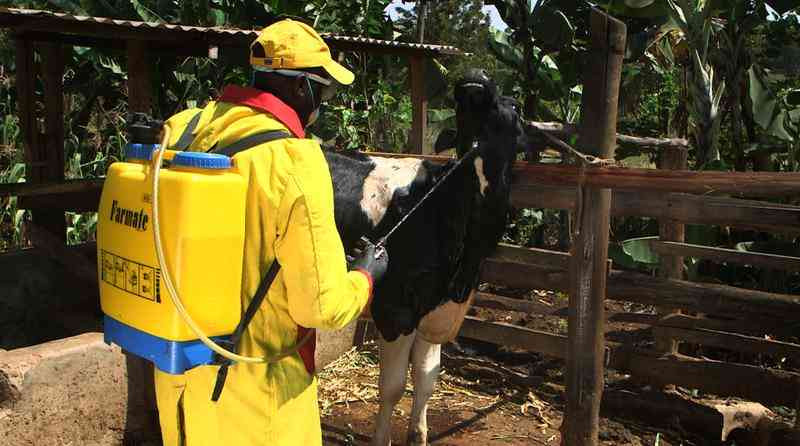
Ticks are among the most important external parasites. They are commonly found on the head, ears, base of the tail, udder, and dewlap. Heavy infestations can involve hundreds of ticks on a single animal. Ticks cause disease through blood loss leading to anaemia, skin damage and inflammation and by transmitting serious infectious diseases.
To minimise parasite burdens, farmers should adopt proper management practices which include maintaining proper hygiene in housing areas, providing adequate nutrition and implementing pasture rotation to reduce exposure to infective stages. Animals should be treated regularly with appropriate anti-parasitic medications at fixed intervals or depending with the worm burden. While treatments may not eliminate all parasites, they significantly reduce their impact on animal health and productivity.
Parasites; both internal and external negatively impact dairy livestock health and productivity. Effective management practices combined with regular treatment are essential to minimise losses and ensure optimal animal performance.
Subscribe to our newsletter and stay updated on the latest developments and special offers!











 join
join