×

The Standard e-Paper
Home To Bold Columnists
 The Standard Group Plc is a
multi-media organization with investments in media platforms spanning newspaper
print operations, television, radio broadcasting, digital and online services. The
Standard Group is recognized as a leading multi-media house in Kenya with a key
influence in matters of national and international interest.
The Standard Group Plc is a
multi-media organization with investments in media platforms spanning newspaper
print operations, television, radio broadcasting, digital and online services. The
Standard Group is recognized as a leading multi-media house in Kenya with a key
influence in matters of national and international interest.

Audio By Vocalize
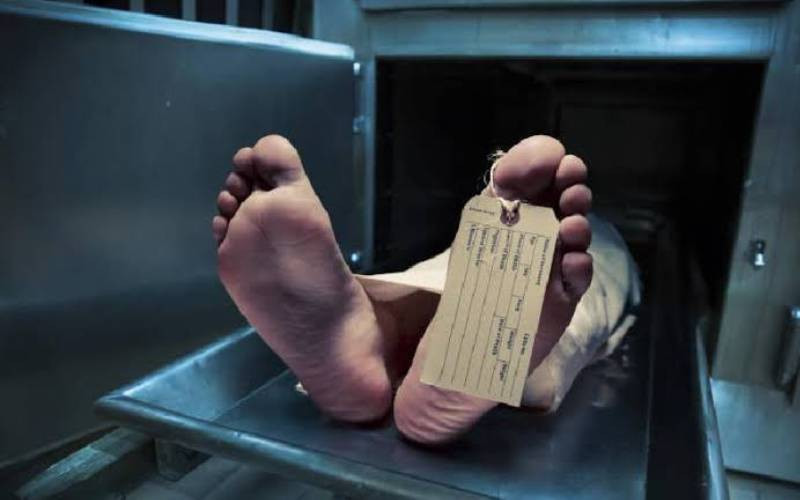
Hospitals defy court ban by holding bodies over unpaid bills. [Courtesy]
The court’s declaration that detention of bodies over bills is unconstitutional has been ignored by hospitals.
Families have been forced to seek court orders that have taken months or years to bury the remains of their fallen kin.
In September 2025, Justice Nixon Sifuna delivered a landmark verdict that outlawed the detention of bodies over unpaid medical bills, declaring the action a violation of human dignity.
However, barely eight months after the judgment, a family in Kigumo, Murang’a, has lost all hope of burying their kin due to a pending hospital bill.
Patrick Macharia died on April 13 this year. He had been hospitalised for 18 months at Consolata Hospital, Mathari.
His death was a double tragedy for the mourning family as burial preparations were stopped.
According to his sister, Jackline Wanjiku, the bill was about Sh2 million, but the family had only managed to pay Sh860,000.
“We are unable to raise the balance and we seek help. We have nothing and we are suffering,” she said.
Onesmus Kinyua, an elder, said that they thought they would be allowed to bury the body, but the hospital kept hold of it until the bill was cleared.
He regretted that the family planned for the burial, including setting up tents.
Eric Mwai, another family member, said that the hospital had gone beyond and had even threatened to take the matter to court.
The hospital’s director, Bernard Mureithi, said the family had been given a chance to transfer the body but declined and agreed in writing to clear the bill.
For the family of Humphrey Mwai, the pain lasted for nearly five years, during which his body had been detained over a pending bill.
Stay informed. Subscribe to our newsletter
The family was forced to move to court and finally, the court ordered Umash Funeral Home in Nakuru to release the body. His body had remained in the mortuary since October 2021.
Justice Julius Nang’ea ruled in a case filed by Mwai’s daughter, Grace Kigera.
Mwai died on September 4, 2021, while undergoing treatment at Nakuru Nursing Home Hospital.
However, the hospital declined to release the body due to an unpaid medical bill, amounting to Sh5 million.
Court documents revealed that the hospital transferred the body to Umash Funeral Home on October 6, 2021, for preservation pending the debt settlement.
The mortuary charges, which were separate from the medical bill, accumulated to Sh2.46 million by July 28, 2025, worsening the family’s financial burden and emotional distress.
Kigera argued in court that the family had no means of paying the medical bill.
In response, Umash Chief Executive Officer Gertrude Wanjira said the facility was operating under a service agreement with the nursing home hospital, which had to authorise the release of the body.
In his ruling, Nangea insisted that while the funeral home had a right to pursue payment, it could recover the debt through civil legal proceedings instead of detaining human remains.
The violation forced the High Court in Nairobi to award a widow Sh1 million in general damages after her late husband’s body was detained for three months.
On Thursday, Justice Patricia Nyaundi awarded Grace Adhiambo damages, ruling that she was emotionally disturbed after the body of her late husband, Erick Anjenjo, was unlawfully detained.
His body had been detained at Umash since March 18 this year, under the instructions of Cana Hospital Ltd, where he was being treated.
The judge ruled that continued detention of the body despite the medical bill of over Sh4.4 million was impermissible.
“A mandatory injunction is issued compelling the hospital and the mortuary to unconditionally release the body of the late Anjenjo for burial and final rites,” the judge ruled.
She retaliated that the release would not be subject to any condition, security, undertaking, or structured payment plan.
Further, the court ruled that all mortuary fees accrued from the date Anjenjo was taken there were unlawful and should not be paid.
However, she allowed the hospital to pursue any outstanding medical fees through lawful civil recovery mechanisms.
Subscribe to our newsletter and stay updated on the latest developments and special offers!


 Prefer the Standard on Google






 join
join