×

The Standard e-Paper
Stay Informed, Even Offline
 The Standard Group Plc is a
multi-media organization with investments in media platforms spanning newspaper
print operations, television, radio broadcasting, digital and online services. The
Standard Group is recognized as a leading multi-media house in Kenya with a key
influence in matters of national and international interest.
The Standard Group Plc is a
multi-media organization with investments in media platforms spanning newspaper
print operations, television, radio broadcasting, digital and online services. The
Standard Group is recognized as a leading multi-media house in Kenya with a key
influence in matters of national and international interest.

Audio By Vocalize
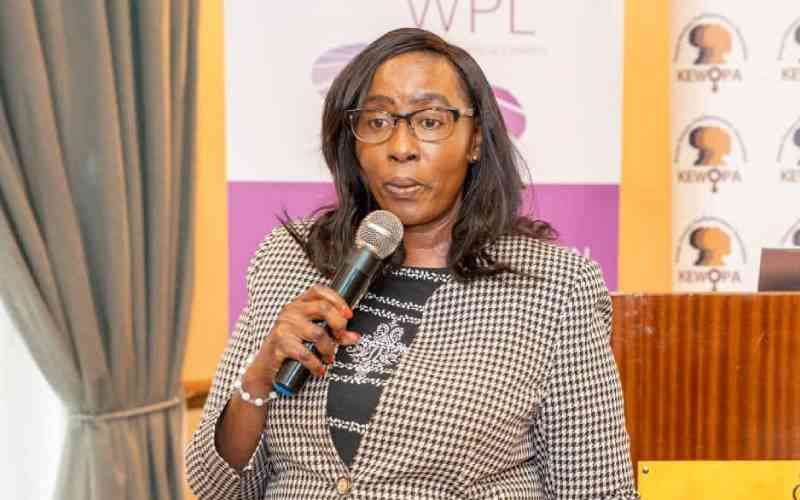
Women leaders have called for action on gender rule, online violence, campaign financing and democratic participation.
The MPs outlined an ambitious agenda aimed at strengthening women's political leadership and increasing female representation ahead of the 2027 General Election, identifying political participation, protection from violence, economic empowerment and democratic governance as key priorities.
Meeting in Nairobi under the auspices of the Kenya Women Parliamentary Association (KEWOPA) and the Women Political Leaders (WPL) Kenya Cohort, the legislators said sustained collaboration and targeted interventions will be critical in overcoming barriers that continue to limit women's participation in politics.
KEWOPA Vice Chairperson and Dagoretti North MP Beatrice Elachi said increasing the number of women elected to Parliament in 2027 would be the surest path toward achieving constitutional gender parity in the next Parliament.
"If at least forty more women can be elected in 2027, then we shall achieve the two-thirds gender principle," Elachi said.
Elachi believes that strengthening women's leadership, addressing violence in politics, enhancing campaign skills and promoting economic empowerment will not only increase female representation but also contribute to more inclusive governance and stronger democratic institutions in the country.
Kenya has repeatedly faced legal and political challenges over failure to fully implement Article 81(b) of the Constitution, which requires that no more than two-thirds of members of elective public bodies be of the same gender.
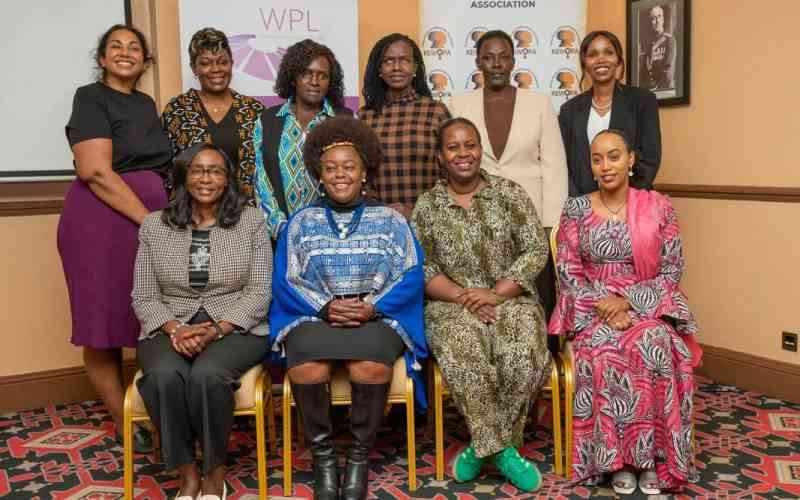
While the Constitution created the Woman Representative position to improve women's representation, leaders say the country still falls short of the constitutional threshold.
Beyond increasing numbers, the MPs highlighted the growing challenge of digital abuse and misinformation targeting female politicians.
Nominated Senator Catherine Mumma said online violence has become one of the biggest obstacles discouraging women from seeking elective office.
"Women leaders need the capacity to guard against violence on social media. Most women have been affected mentally and pulled down from the race," Mumma said.
She urged WPL to work closely with the Independent Electoral and Boundaries Commission (IEBC) and the National Gender and Equality Commission (NGEC) to strengthen mechanisms for monitoring electoral violence and addressing intimidation targeting women candidates.
The legislators noted that political violence against women has evolved beyond physical attacks to include coordinated online harassment, misinformation campaigns, character assassination and intimidation, all of which undermine women's participation in democratic processes.
WPL Africa Strategic Advisor and former Tanzanian legislator Neema Lugangira said the partnership seeks to develop practical programmes informed directly by the experiences of Kenyan women leaders.
"We are here to get views from women leaders on the potential projects for the WPL Kenya Cohort, pegged on their policy interests," Lugangira said.
Stay informed. Subscribe to our newsletter
She noted that understanding challenges faced by women from the grassroots to the national level would help shape interventions that respond to real needs rather than assumed priorities.
KEWOPA Executive Director Mercy Mwangi said the identified priority areas would serve as a roadmap for future collaboration between the two organisations.
She said creating platforms where women leaders can network, exchange experiences and support one another remains essential in strengthening women's participation in governance.
"The priority areas identified by women MPs will provide a framework for addressing challenges facing women in political leadership and strengthen their participation in governance," Mwangi said.
The meeting also focused on the financial barriers facing women seeking political office, with leaders noting that many capable women struggle to compete against well-funded male candidates.
Suba North MP Millie Odhiambo encouraged women to pursue development initiatives confidently regardless of limited financial resources, saying visibility and consistency in serving constituents often matter more than the scale of projects.
"We are good girls and trained to be good. Even if some men launch projects worth KSh10 million and yours is KSh100,000, do it unapologetically," Odhiambo said.
She also urged women leaders to support one another and build solidarity instead of competing against each other, arguing that unity would improve their chances of electoral success.
The discussions come as Kenya continues to struggle with implementing the constitutional two-thirds gender principle, more than 15 years after the promulgation of the 2010 Constitution.
The leaders agreed to focus their first year of engagement on women's political participation and democratic governance, peace and security, women's leadership, economic empowerment, trade and financial inclusion, as well as ending violence against women in politics.
Subscribe to our newsletter and stay updated on the latest developments and special offers!


 Prefer the Standard on Google




 join
join