×

The Standard e-Paper
Smart Minds Choose Us
 The Standard Group Plc is a
multi-media organization with investments in media platforms spanning newspaper
print operations, television, radio broadcasting, digital and online services. The
Standard Group is recognized as a leading multi-media house in Kenya with a key
influence in matters of national and international interest.
The Standard Group Plc is a
multi-media organization with investments in media platforms spanning newspaper
print operations, television, radio broadcasting, digital and online services. The
Standard Group is recognized as a leading multi-media house in Kenya with a key
influence in matters of national and international interest.

Audio By Vocalize
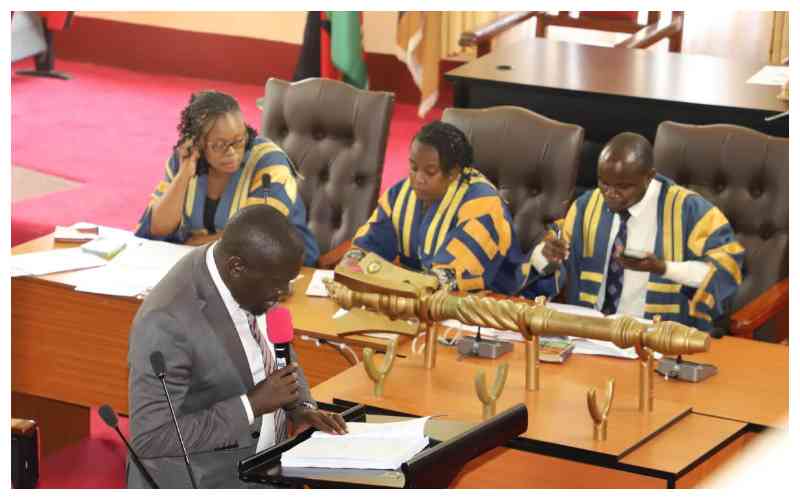
The Kakamega County Assembly has approved the Kakamega County Finance Bill, 2026, clearing the way for the county government to implement new tax and revenue measures aimed at raising Sh2.2 billion in own-source revenue during the 2026/2027 financial year.
The Bill introduces a raft of tax policy and administrative reforms intended to strengthen revenue mobilisation, formalise emerging sectors of the county economy and improve tax administration in line with the Medium-Term Revenue Strategy (MTRS).
It also provides the legal framework for the collection of county taxes, fees, charges and levies that will finance development programmes and improve service delivery.
The Finance Bill was passed during Tuesday afternoon's sitting of the County Assembly, presided over by Deputy Speaker Benard Shitiabayi, after members adopted a report presented by the Chairperson of the Finance and Economic Planning Committee, Boniface Osanga.
While tabling the report, Osanga said the proposed legislation establishes the legal framework for collecting county revenues through various fees, charges and levies, adding that it is critical in strengthening the county's fiscal capacity.
"The proposed county taxation provides the legal framework for collecting county revenues through various fees, charges and levies," Osanga told the Assembly.
The approval comes as the county government steps up efforts to increase internally generated revenue amid growing demand for public services and reduced dependence on allocations from the national government.
County Secretary and Head of Public Service Dr Lawrence Omuhaka said strengthening own-source revenue was essential if the county was to sustain service delivery and implement its development agenda.
Speaking during a review meeting on the draft Finance Bill before it was submitted to the Assembly, Omuhaka said counties must establish sustainable revenue-generation mechanisms to meet increasing expenditure demands.
"The Finance Bill is an important instrument that provides clarity on how the county generates revenue. It will help strengthen and stabilise our revenue streams, enabling the county to effectively deliver services and implement development programmes that benefit residents," said Omuhaka.
He said the county's target of collecting Sh2.2 billion in own-source revenue during the 2026/2027 financial year would enhance financial sustainability and reduce reliance on equitable share allocations from the National Treasury.
County Executive Committee Member for Finance, Planning, ICT, e-Government and Communication Benjamin Andama said the proposed law seeks to improve revenue administration by enhancing compliance and sealing revenue leakages.
He said all potential revenue sources must be fully accounted for if the county is to achieve its ambitious collection target.
"We must ensure that every potential source of revenue is properly accounted for. Enhanced compliance and sealing existing loopholes will be key to meeting the Sh2.2 billion target and improving service delivery to our people," said Andama.
Andama said the Finance Bill underwent extensive consultations and technical review involving county departments, which presented revenue projections and proposals on sectors capable of generating more income.
Stay informed. Subscribe to our newsletter
The review team also identified policy gaps and explored strategies to enable departments to contribute more effectively towards increasing county revenue.
County Attorney Vivianne Mmbaka said the proposed legislation derives its legal authority from the Constitution and existing laws governing county governments.
She said the Bill empowers the county government to levy taxes, fees and charges on businesses, commercial activities and the use of public services and county facilities while promoting transparency, accountability and fairness in revenue collection.
"We have a legal framework that seeks to ensure transparency, accountability and fairness in revenue collection while supporting the county's development agenda," said Mmbaka.
The review meeting brought together County Executive Committee members, Chief Officers, Directors and other senior county officials, who deliberated on measures to strengthen revenue performance and ensure prudent management of public resources.
County officials expressed confidence that the reforms contained in the Finance Bill will broaden the county's revenue base, improve compliance and provide sustainable financing for key development projects.
With the Assembly's approval, the Finance Bill now awaits assent by Governor Fernandes Barasa before becoming law and guiding revenue collection for the 2026/2027 financial year.
Subscribe to our newsletter and stay updated on the latest developments and special offers!


 Prefer the Standard on Google







 join
join