×

The Standard e-Paper
Join Thousands Daily
 The Standard Group Plc is a
multi-media organization with investments in media platforms spanning newspaper
print operations, television, radio broadcasting, digital and online services. The
Standard Group is recognized as a leading multi-media house in Kenya with a key
influence in matters of national and international interest.

Audio By Vocalize
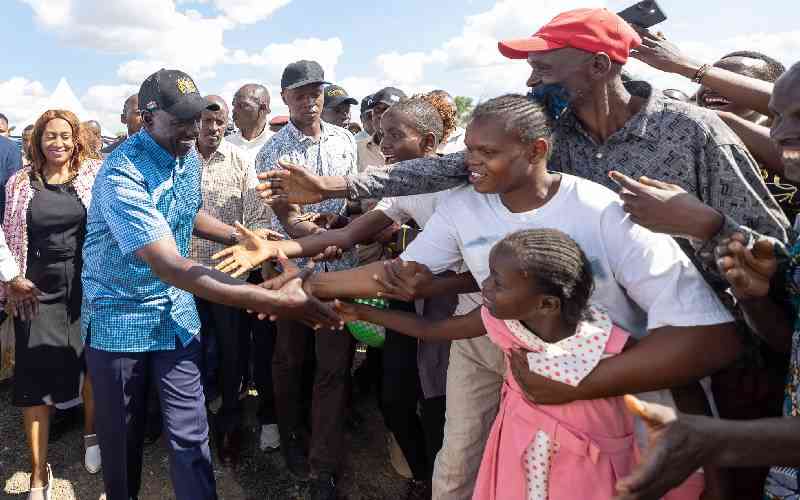
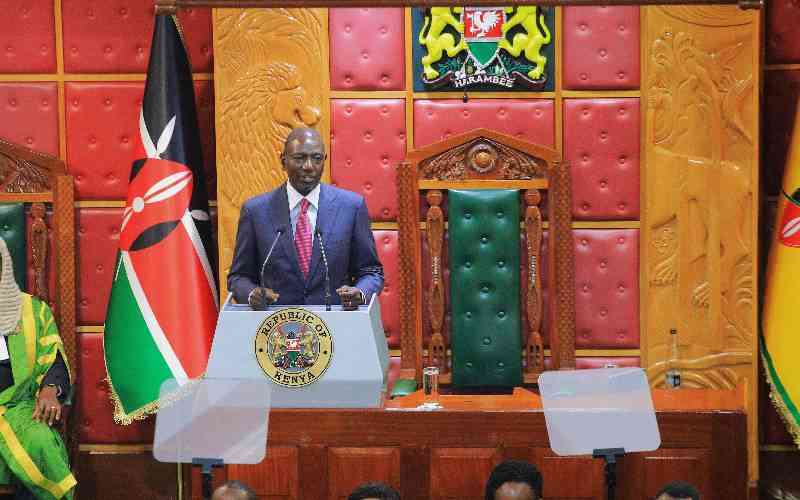
President William Ruto in Mwingi Central during the five-day tour of Ukambani region. [Philip Muasya, Standard]
President Ruto says 80 per cent of his manifesto has been delivered. Mzalendo’s independent Promise Tracker classifies just 25 of 254 Kenya Kwanza promises as completed, under ten per cent; 150 are ongoing and 41 broken. The tracker is not an official audit, and not every unfinished promise has been abandoned. But when the government and an independent monitor are this far apart, voters have no way of knowing who is right. That is the problem the 2027 manifestos must solve.
The political arithmetic is shifting. Rigathi Gachagua’s impeachment unsettled Mt Kenya, the Gen Z protests of 2024 showed that a young, largely unaffiliated electorate can reshape the national agenda, and since Raila Odinga’s death, the ODM–UDA arrangement faces new questions. Kenya Kwanza and ODM intend to run on a joint manifesto. Will it be a contract with citizens or a treaty among politicians?
A manifesto is the basis on which voters decide, and later judge. Every major promise needs a baseline, a measurable target, a deadline and a responsible agency, along with indicators that allow Parliament, auditors, journalists and citizens to track progress.
The coalition agreement must be made explicit too. The broad-based arrangement rests on commitments such as compensation for protest victims and new offices of Prime Minister and Leader of the Opposition. If a joint manifesto is silent on these, voters will suspect it was written to secure a deal, not to describe policy.
Two reforms would turn good intentions into practice. First, every manifesto should be independently costed before the election. The Netherlands has done this for decades: its Bureau for Economic Policy Analysis runs the numbers on party programmes and publishes the results. Kenya’s Parliamentary Budget Office already has the expertise and could be given the mandate.
Second, Kenya should introduce a voting advice tool modelled on Germany’s Wahl-O-Mat. Parties state their position on concrete policy questions; citizens answer the same questions and see which parties come closest to their views. First used in 2002, it was consulted 26 million times ahead of the 2025 federal election. A Kenyan version would need a neutral host such as a university or Mzalendo, work via smartphone, SMS and USSD in English and Kiswahili, and be developed with young Kenyans. Its real value lies in what it demands of the parties: clear positions on the Housing Levy, taxes, borrowing and jobs. It would shift the debate from “who is with whom” to “who stands for what”.
Voters have had enough of pie-in-the-sky promises. Every pledge must come with a cost and a funding source: what will be cut, what taxed, what borrowed? The Parliamentary Budget Office estimated that fully implementing the 2022 Bottom-Up plan would cost at least Sh2.67 trillion over five years, and warned that it lacked priorities and timelines. A shorter, fully costed list is not a lack of ambition; it shows that a party knows the difference between a promise and a wish.
The opposition must meet the same standard. Those who would scrap the Affordable Housing Levy, as Kalonzo Musyoka has suggested, or cut taxes, as Edwin Sifuna’s Linda Mwananchi movement proposes, must explain how they would fill the gap when interest payments alone are projected at Sh1.2 trillion in 2026/27, more than two-fifths of expected tax revenue. Unity is not a programme, and ethnic arithmetic is no substitute for policy. A TIFA survey in June 2026 found that 65 per cent of Kenyans say their situation has worsened since 2022; only 12 per cent report an improvement. Of the roughly 822,000 jobs created in 2025, 87 per cent were informal, and the total fell short of the promised one million a year. Anyone promising “jobs” must say which jobs, at what pay, and backed by what investment.
Honesty also means acknowledging what no manifesto can foresee. The great geopolitical ruptures are not confined to the Red Sea and the Persian Gulf. They lie in Kenya’s own neighbourhood, in the war in Sudan and the tensions surrounding Ethiopia, and more will follow that cannot be priced in today. Kenyan households feel them in freight costs, in the price of fuel and fertiliser and in pressure on trade corridors. A serious manifesto names these risks and includes a stress test: which commitments take priority if an external shock hits, and which would be deferred.
Credibility is the real capital
Germany shows how costly a broken pledge can be. Chancellor Friedrich Merz promised during the campaign not to expand borrowing, then announced a fiscal U-turn nine days after winning the February 2025 election. There were reasons for the change, notably defence and infrastructure needs. Yet it cost his own party an enormous amount of credibility: a poll found that 73 per cent of respondents, including 44 per cent of his own party’s supporters, felt misled. A conditional promise would have been harder to campaign on but far easier to defend.
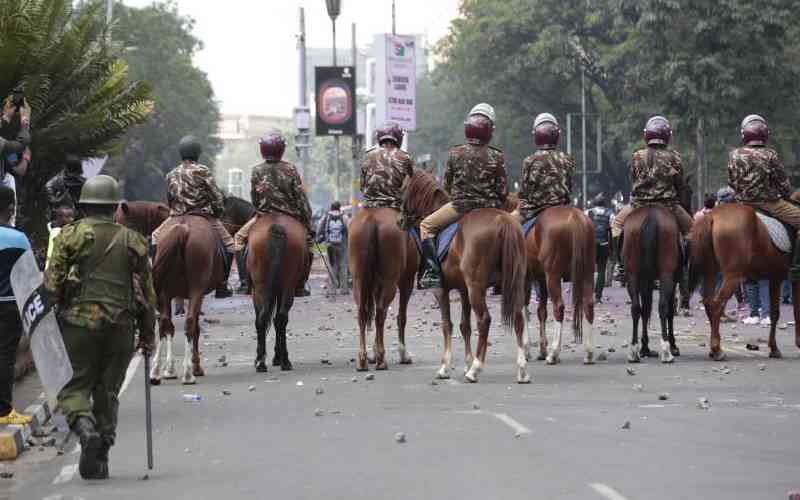
Kenya has learned the same lesson. The 2024 protests against the Finance Bill were not only about taxes; they were about a breach of trust over fiscal decisions that had not been explained. In both countries, citizens have shown they will not forgive financial U-turns without warning. Candidates who say “never” to tax increases, new borrowing or the Housing Levy should be sure that promise can survive the first budget.
Whether in Nairobi or in Berlin, what is needed now is not warm words but clear political explanation. What is possible, what will it cost, who will pay, and what happens if circumstances change? The young Kenyans who took to the streets in 2024 are not asking for miracles. They are asking for honesty, for numbers that add up and for a way to hold leaders to account. The coalition, or opposition, that publishes a focused, costed and measurable programme, submits it to independent scrutiny and reports against it in public will offer them something more valuable than another rally promise: a reason to trust.
Stay informed. Subscribe to our newsletter
Subscribe to our newsletter and stay updated on the latest developments and special offers!


 Prefer the Standard on Google