×

The Standard e-Paper
Join Thousands Daily
 The Standard Group Plc is a
multi-media organization with investments in media platforms spanning newspaper
print operations, television, radio broadcasting, digital and online services. The
Standard Group is recognized as a leading multi-media house in Kenya with a key
influence in matters of national and international interest.

Audio By Vocalize
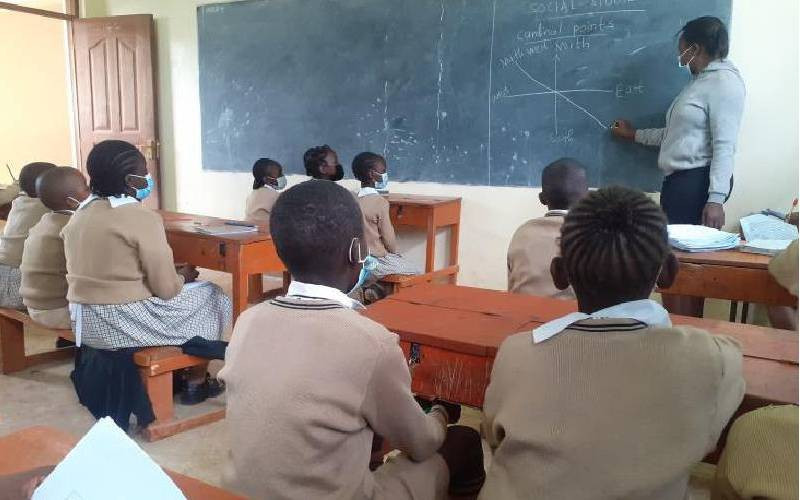
Spare the rod and spoil the child. This familiar proverb has long been used to justify physical punishment. Yet, as our education system confronts increasingly complex behavioural challenges, it is time to question this inherited wisdom. Calls by MPs to reintroduce corporal punishment are worrying. As a teacher, I understand the frustrations of managing indiscipline. But bringing back the cane would be a dangerous retreat.
Discipline in our schools is becoming increasingly complicated. We encounter absenteeism, bullying, drug abuse and defiance. Some teachers are even targets of verbal and physical aggression. These are real challenges; teachers should not be expected to endure hostility in the name of understanding children.
The incident at Nyabisase Mixed Secondary School in Bobasi, Kisii County, is particularly disturbing. On November 5, 2026, candidates reportedly attacked examination officials and police officers during a KCSE monitoring exercise and seized a police officer’s firearm. The weapon was recovered nearly three hours later, and several officials and officers were injured. This raises serious questions about student behaviour, authority and the systems for managing indiscipline. Even so, such an incident cannot justify resurrecting corporal punishment.
The argument that the cane produced disciplined generations is a familiar defence. Many adults say they turned out well because somebody occasionally straightened them out with a cane. But surviving a method of upbringing does not make it effective or worth preserving. We cannot build the future of Kenyan education around nostalgia.
What exactly would corporal punishment achieve? A student can be caned for failing to complete an assignment and submit the next one out of fear, but has that learner developed responsibility? A girl who repeatedly reports late may need correction, but has anyone established why? Perhaps she faces challenges at home that she cannot easily articulate. Discipline must correct behaviour, but it must also help us understand it.
This is why schools must invest in guidance and counselling. Too often, counselling is treated as an office learners visit only after something has gone terribly wrong. We must move beyond this reactive approach. In August 2026, the National Assembly adopted a motion by Nyeri County Woman Representative Rahab Mukami calling for mandatory, structured and time-tabled guidance and counselling programmes in all primary and secondary schools. It also called for professionally trained counsellors, adequate resources and referral mechanisms. Schools need functional counselling services and mentorship that identify difficulties before they escalate. Sometimes, what appears to be indiscipline is a learner silently asking for help. We cannot beat a child out of a problem we have not tried to understand.
Kenya has a clear legal framework. Article 29 of the Constitution protects every person from violence, torture and corporal punishment, while Article 53(1)(d) protects children from abuse, violence, inhuman treatment and punishment. Section 36 of the Basic Education Act, 2013 prohibits subjecting pupils to torture or cruel, inhuman or degrading treatment or punishment, whether physical or psychological. Section 25 of the Children Act, 2022 also protects children from torture and cruel, inhuman or degrading treatment, including corporal punishment. These protections must not become inconveniences whenever schools face disciplinary difficulties.
Upholding the ban must come with responsibility. Learners who assault teachers, bully colleagues, vandalise property or participate in violent unrest must face firm and fair consequences. Schools need clear disciplinary procedures, functional student leadership and consistent parental involvement. Serious offences must be addressed through established administrative and legal channels.
The government must stop placing the entire burden of discipline on individual teachers without adequate support. We need manageable class sizes, professional counsellors, effective reporting systems and clear procedures for protecting teachers who face threats or violence. Teacher safety must never be negotiable.
I also believe teachers deserve respect and protection. The cane is not the missing ingredient in Kenyan education. We must teach children to respect authority without teaching them to fear violence. Let us not mistake fear for respect or silence for discipline. A cane may silence a classroom, but silence is not necessarily learning. Kenya needs consistent discipline, functional counselling, accountable learners and protected teachers- not a return to physical punishment.
Rachel Wanjiku Mwangi - NoonKopir Girls Senior School, Kitengela.
Subscribe to our newsletter and stay updated on the latest developments and special offers!


 Prefer the Standard on Google