×

The Standard e-Paper
Smart Minds Choose Us
 The Standard Group Plc is a
multi-media organization with investments in media platforms spanning newspaper
print operations, television, radio broadcasting, digital and online services. The
Standard Group is recognized as a leading multi-media house in Kenya with a key
influence in matters of national and international interest.
The Standard Group Plc is a
multi-media organization with investments in media platforms spanning newspaper
print operations, television, radio broadcasting, digital and online services. The
Standard Group is recognized as a leading multi-media house in Kenya with a key
influence in matters of national and international interest.

Audio By Vocalize

Eleven years ago, during Uhuru Kenyatta's presidency, I wrote an article arguing that Uhuru Muigai Kenyatta and Fred Obachi Machoka had something in common. While Uhuru ruled Kenya, Obachi controlled almost the entire nation for several hours each week. The same scenario holds today.
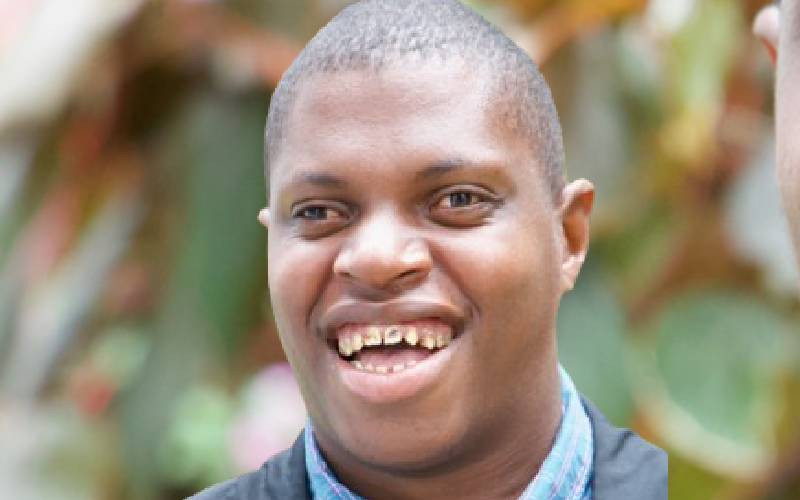
William Ruto is the President of Kenya, a role clearly defined by the Constitution. Fred Obachi Machoka, however, has appropriated another kind of presidency by virtue of being a radio artist. He embodies Okot p’Bitek’s assertion that we artists are the true rulers. Let me explain before you brand me eccentric.
Through his popular Saturday and Sunday programme, Roga Roga, Fred Obachi has built what is obviously one of the most important social events of our time.
Students and scholars of communication, literature, folklore, sociology and cultural studies can only ignore this social event at their own peril. Why? It tells the story of our time in a unique way. Its name is important: Roga Roga, to bewitch to a point of no return.
Yes, this explains the strange hold the programme has on its audience. Once the familiar voice of Fred Obachi enters the airwaves, the listener is drawn into his world of music, memory, humour and storytelling.
That is why I encouraged one of my master’s students to study the programme. Her study, entitled Narrating the Nation’s Edutainment Memory: A Study of the Structure and Cultural Significance of Roga Roga Radio Show, is ongoing. The study is important because Roga Roga tells us something about the power of radio as a medium of communication. It has elevated the art of storytelling, traditionally symbolised by the image of an old woman telling stories around the fireside, into an art form mediated by technology.
The storyteller has simply changed the fireside. Today, the fireside is the radio. Roga Roga operates in the public sphere, not merely as a tool for entertainment but also as a platform for dialoguing with the nation. It facilitates the coming together of citizens to share their joy, fears, memories and information. Fred Obachi Machoka is the grand storyteller who mediates this dialogue by employing a variety of strategies to execute his mandate.
In this art, the listener is not a passive recipient. The Roga Roga listener is an active participant in the construction of meaning through a variety of platforms, including call-ins and social media platforms such as X and Facebook. Listeners use these platforms to communicate with the storyteller and convey their concerns, opinions and views.
Fred Obachi has succeeded in turning the entire nation into a dancing hall. You can appreciate the music while in your kitchen, office, matatu, or jua kali space. It also provides an opportunity for people to express themselves regardless of their social class. Be it a professor, a mechanic, an executive, a driver, or a politician, they all enter the same imaginary dancing hall using the same door.
There is something else that fascinates me. The comments and suggestions from the listeners are often measured and remarkably devoid of the emotional outbursts that have become characteristic of our political discourse. People come to the programme to laugh, remember, request music, tell stories and participate in a national conversation.
We are ushered into this national disco hall by a familiar signature tune from a legendary Rhumba maestro. Just as the traditional storyteller uses an opening formula to transport us into the world of fun and fantasy, Fred Obachi leads us into a dancing hall of fun and frenzy.
The ending of the programme is equally significant. The slowing down of the music signals that the journey is coming to an end. The storyteller then sincerely asks the audience to forgive him if he wronged them in the process of “bewitching” them. What an irony! As the curtains are drawn, the humble storyteller leaves the stage with a promise to return the following week. What a performance!
Interestingly, the show is anchored in Rhumba right from the signature tune. This foregrounds the supremacy of Rhumba in the lives of ordinary Kenyans. The music plays a significant role in the programme. It helps to move the story forward, create mood, establish rhythm and take the listener into particular worlds of memory.
The subversive nature of Rhumba makes it possible for the storyteller to bewitch everyone. Rhumba is one of the charms that Machoka uses to bewitch the nation. That is why, in a recent column, I described him as the “evangelist” of Congolese music.
Fred Obachi has an extraordinary ability to create rapport with his audience through self-ridicule. He is “the blackest man in black Africa”. He is also “Uncle Fred” and “Retired General Fred Obachi”. These titles are humorous, but they also demand respect while simultaneously creating a sense of belonging among his audience. The mood Machoka creates is one of controlled frenzy. He lampoons those in power through the safety of laughter. In this sense, he tells the truth laughingly.
Stay informed. Subscribe to our newsletter
What laypeople do not know is that Fred Obachi operates within what I call the trickster tradition. He appears non-partisan, with his comments cutting across both sides of the political divide while remaining whimsical.
Occasionally, he offers opinions and comments on European football, generally to lure football fans. The use of Sheng adds yet another ingredient to the magic in the bewitching concoction.
Machoka is gifted with a powerful baritone voice that has been with Kenyans for decades, from his days with the Sanyo Tops programme on KBC radio in the 1980s. He also has an unmatched repertoire of knowledge about African music and its language.
This show is the quintessence of an artistic witch doctor at work. Fred Obachi Machoka has now turned 70 and has spent half a century behind the microphone. Any artist who wants to understand the meaning of resilience, hard work and consistency needs to study Machoka.
Fifty years behind the microphone is not a small achievement. Radio technology and audiences have changed. The internet and social media arrived, yet Fred Obachi has remained relevant. Many of his agemates are sitting under trees waiting for the day when they will go and meet their Creator. Fred Obachi, however, is still soaring.
There is a lesson in the Machoka story for all artists. We do not rule because we occupy political offices. No. We rule because we occupy the imagination of our audience.
The politician may have the State House. The artist has the people’s memory. Fred Obachi Machoka has occupied that memory for half a century. Happy birthday, Fred. May you continue to bewitch the nation.
Subscribe to our newsletter and stay updated on the latest developments and special offers!


 Prefer the Standard on Google








 join
join