×

The Standard e-Paper
Fearless, Trusted News
 The Standard Group Plc is a
multi-media organization with investments in media platforms spanning newspaper
print operations, television, radio broadcasting, digital and online services. The
Standard Group is recognized as a leading multi-media house in Kenya with a key
influence in matters of national and international interest.
The Standard Group Plc is a
multi-media organization with investments in media platforms spanning newspaper
print operations, television, radio broadcasting, digital and online services. The
Standard Group is recognized as a leading multi-media house in Kenya with a key
influence in matters of national and international interest.

Audio By Vocalize
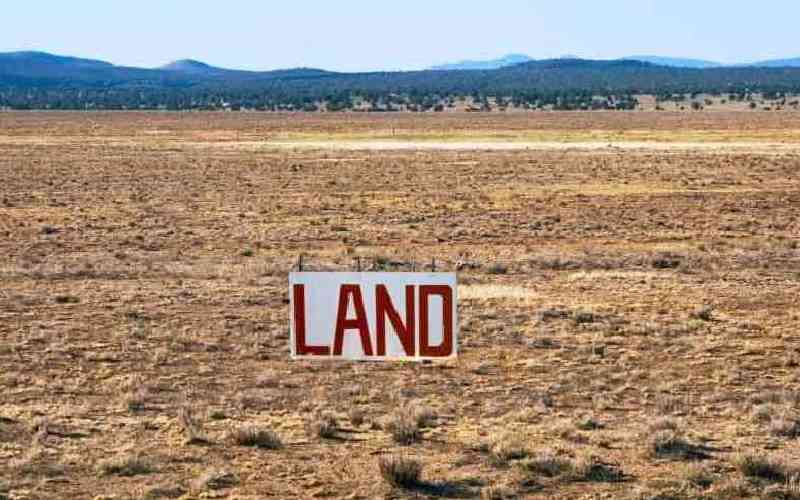
There has been a surge in land transactions in Kenya. I have said on this forum before that land is becoming the riskiest venture in Kenya. This fact has been aggravated by a lot of factors. First, there is a view that the Supreme Court, in its several decisions, has not settled the law on the scope of due diligence when it comes to the actual practice. There are several structural problems with the threshold the Supreme Court sets; the question of how far a buyer can go in terms of investigating the root of title.
Further, what is the liability ascribable to the land registrars-those with the mandate to ensure titles and records attendant to them are above board. The decisions of the Apex Court have placed a heavier burden on the buyer and has left the state, through land registries, to enjoy a certain level of recklessness in handling land titles on the cover that the buyer has to do his job.
Secondly, land as the main factor of production upon which our social and economic life revolves, is increasingly becoming scarce annually due to the various new utilisation frontiers both in the rural and urban settings. Due to this, land fraud is inevitable due to the competition and the premium on it especially in urban areas.
Thirdly and perhaps the most critical reason is that our moral fabric has broken down as a society. There is rarely anything genuine in Kenya, even where one is sure of it, one still has to take two steps back and confirm for the worst.
As a commercial law practitioner, I can attest that this informs the cautious nature in which banks are treating land, through titles as security for loans. As it stands now, the Supreme Court is yet to clarify in a case still pending before it on whether banks and other commercial entities bear the same obligation and level of due diligence as innocent purchasers for value of land or theirs is to just confirm that a particular title belongs to the borrower through a simple search.
Whatever the outcome of the case before the Apex Court that will definitely be groundbreaking. I foresee that in the next few years, banks and other financial institutions will highly frown upon land as security. If the court requires a heightened due diligence, finance institutions will obviously incur higher costs when giving out loans.
Similarly, if it maintains the test to be of a mere search, then the risk for financial institutions will remain high on the potential of many titles used for security being declared fraudulently obtained. Either of the options is not good for economic growth as a testament that the ultimate solution lies not on the level of due diligence imposed or required of innocent buyers and lenders.
I propose that the Torrens system of land which ultimately rests on the fact that the title of land, as per the records of the land registration system can be vouched for, needs to be revamped and fumigated. This fumigation must begin from attaching some plausible liability to the reckless and corrupt land registrars who facilitate fraud by all means and enable processing of several titles on a single piece of land. The age-old defence of ‘actions undertaken in the exercise of public duty’ should fall when clear acts are proven to fall outside the ordinary performance of functions expected of a land registrar.
The Ministry of Lands has some of the most corrupt public officers in Kenya, going by several annual Ethics and Anticorruption Reports released to the general public. It is time we address the complicity between the land grabbers and the Ministry of Lands. The web appears very sophisticated and money-laden. They bypass processes at will, grabbing private, public and even community lands. Most of them operate through proxy companies and have deep roots in State organs. Those who frequent the Land and Environment Court understand how shameless they are and sometimes the ridiculous nature of their claims on land.
The long and short of it is that it is time we have a severe accountability structure for public officers in the land departments who enable the fraud. It cannot be that innocent purchasers have no recourse except to pursue the fraudsters for refund of money when the land titles are eventually nullified. We need a system of holding the land registrars personally liable for some of these illegal and unlawful transfers.
In my everyday litigation as an advocate, I often meet land transfers even of deceased persons way before the succession processes of such people have taken place. Such open and glaring actions of impunity and complicity facilitated and fast-tracked by land officers need a firm remedy in the law. Criminal charges alone are not enough; the Environment and Land Courts should always be ready to boldly issue orders for personal liabilities where the same is sought against the land registrars and eventually proved that they abused their statutory powers in these schemes of land fraud. If this incessant problem is not addressed, they will soon even grab the most notorious public of ‘public lands’ that we can think of, and this is disastrous for our investors as a country. This is never about law alone; it cuts deep into our economic growth wholly for it is pegged intrinsically on land on whatever venture you can think through.
Subscribe to our newsletter and stay updated on the latest developments and special offers!


 Prefer the Standard on Google