×

The Standard e-Paper
Smart Minds Choose Us
 The Standard Group Plc is a
multi-media organization with investments in media platforms spanning newspaper
print operations, television, radio broadcasting, digital and online services. The
Standard Group is recognized as a leading multi-media house in Kenya with a key
influence in matters of national and international interest.
The Standard Group Plc is a
multi-media organization with investments in media platforms spanning newspaper
print operations, television, radio broadcasting, digital and online services. The
Standard Group is recognized as a leading multi-media house in Kenya with a key
influence in matters of national and international interest.

Audio By Vocalize
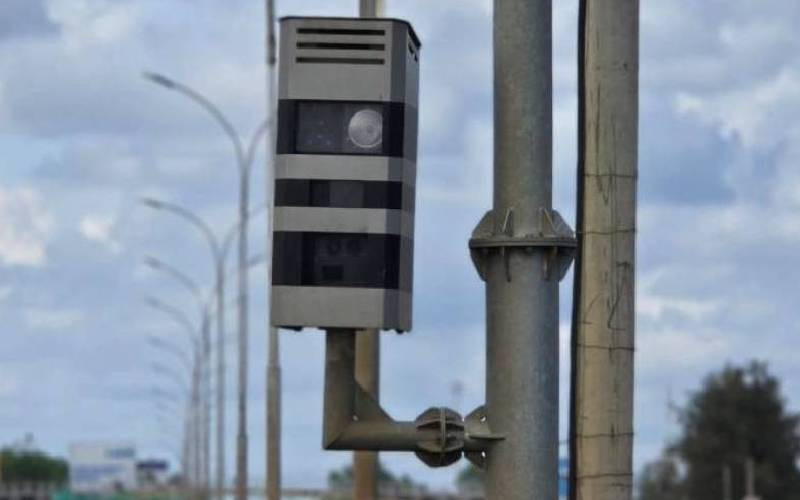
Speed enforcement camera installed by NTSA on the Thika Superhighway. [File, Standard]
Oftentimes, it is difficult to understand what informs some government decisions. It appears decisions are made by a bunch of fellows who might have consumed something illegal or simply people who have become so detached from realities on the ground that common sense no longer features in their vocabulary.
And it’s not even the big things; it starts with mundane decisions that nevertheless have a huge impact on the lives of ordinary Kenyans. Take Thika Superhighway, for instance. The speed cameras introduced, are in principle, a good thing. The fact they are linked to vehicle registration and fines are paid directly to the government means the traffic officers who were growing fat off the road will have to invent new ways of making money (and that, they will).
The speed cameras have the potential of instilling discipline on our roads. But someone had to spoil a perfectly good idea. There is a section of the highway where the brains at the National Transport and Safety Authority (NTSA), in their wisdom —or lack thereof— have seen it fit to introduce a speed limit of 50km per hour. This stretch has a thriving funeral home where visitors park haphazardly and pedestrians have developed the habit of dashing across a multi-lane highway. As expected, accidents occur here regularly.
Instead of addressing the real problem by constructing a proper pedestrian footbridge, improving access roads, enforcing orderly parking or redesigning the area altogether, the authorities first erected an unsightly barbed-wire barrier along the median. When that predictably failed to stop people from jumping over, they reached for what must have seemed like the easiest solution: install a speed camera and reduce the speed limit to 50kph. Problem solved—or so they thought.
Except it wasn’t.
Motorists are now expected to decelerate from 110kph to 50kph almost instantly. The result is more accidents and unnecessary traffic congestion. At any hour, day or night, traffic crawls through this section as drivers nervously watch their speedometers instead of keeping their eyes on the road.
The logic (if any) behind some of the country’s speed limits is equally puzzling. Take the Nairobi Expressway. Calling it an expressway while limiting vehicles to 80kph seems contradictory. The entire purpose of an expressway is to facilitate faster, smoother travel by separating traffic from pedestrians, junctions and roadside activities.
Yes, we have witnessed some horrific crashes on the road. But those tragedies were largely caused by reckless driving, speeding well beyond the prescribed limit or poor judgement—not because the road itself encourages safe travel at higher speeds. Punishing every responsible motorist because of the recklessness of a few is hardly sound public policy. The same randomness appears when it comes to speed bumps and rumble strips across the country. Sometimes I imagine a group of government engineers sitting idly in an office somewhere in Upper Hill during a particularly slow afternoon. The boss, tapping his fingers on the desk in boredom, suddenly exclaims, “Bring me a map of the road network!”
The map is spread out on the table. He closes his eyes, stabs his finger at some place on the map and decrees, “Let’s build some speed bumps here immediately. Make them big. Make them uneven. And whatever you do, don’t put up any warning signs. We must keep motorists guessing.”
It sounds ridiculous, but at times that is exactly how road design appears to have been undertaken. When roads become a series of surprises, motorists spend more time reacting than anticipating. That is not how safe transport systems are built. One gets the impression that many of these decisions are driven less by evidence and more by the desire to be seen to be doing something, whether or not it actually solves the problem.
Kenyans deserve better than reactive policymaking. We deserve roads designed by engineers, not bureaucrats looking for quick fixes. We deserve regulations that are logical, consistent and backed by evidence rather than impulse. Because sometimes one cannot help but ask: who exactly thinks of these things?
- The writer is a communications consultant
Subscribe to our newsletter and stay updated on the latest developments and special offers!

 Prefer the Standard on Google