×

The Standard e-Paper
Home To Bold Columnists
 The Standard Group Plc is a
multi-media organization with investments in media platforms spanning newspaper
print operations, television, radio broadcasting, digital and online services. The
Standard Group is recognized as a leading multi-media house in Kenya with a key
influence in matters of national and international interest.
The Standard Group Plc is a
multi-media organization with investments in media platforms spanning newspaper
print operations, television, radio broadcasting, digital and online services. The
Standard Group is recognized as a leading multi-media house in Kenya with a key
influence in matters of national and international interest.

Audio By Vocalize
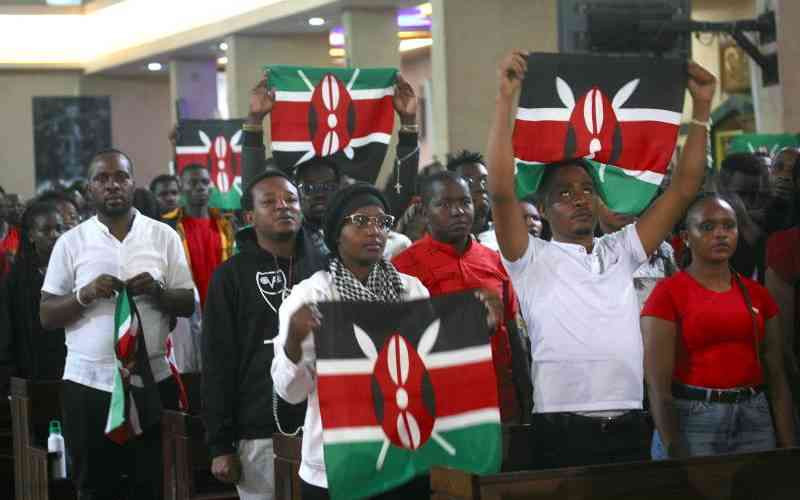
Saba Saba Day, the unofficial anniversary of Kenya’s so-called second liberation, came and went this week, setting the stage for a quiet reckoning that never came.
Apart from a few noisy incidents and the now-routine overreaction by the police, there was little to mark the day. There was no national introspection, no serious remembrance, and no honest reckoning with what Saba Saba was supposed to mean.
That police still felt compelled to patrol the streets on Saba Saba says one thing: The current political order understands, perhaps better than ordinary Kenyans do, the power of the memory it is trying to contain. It knows that Saba Saba was not just a date but also a reminder that the people once stood up to a state that had mistaken silence for fear.
And yet, this year’s Saba Saba Day, like the one before it, did not stir the hunger for freedom like it once did; not because Kenya is now a multiparty democracy and the struggle is over but because the second liberation, in truth, never happened.
Or if it did, it was hijacked, like the first liberation before it, so quickly and so thoroughly that its fruits never reached the ordinary Kenyan.
As with the first liberation, what happened in the so-called second liberation was not liberation but succession. The men and women who fought the system did not dismantle it; instead, they merely positioned themselves to inherit it.
Once they got their chance, many slipped comfortably into the same system they had denounced; the same arrogance, the same impunity, the same obscene worship of office, wealth, and access.
That is why it is difficult to explain certain fellows from the so-called second liberation whose names evoked resistance, but who later became difficult to distinguish from the very political class they once claimed to be fighting.
This, in many ways, is the story of Kenya’s second liberation. It did not entirely succeed because a good number of its heroes and heroines lost the moral discipline required to remain liberators after tasting power.
Even Raila Odinga, perhaps the most enduring symbol of the second liberation, ultimately failed in this area. For his rapid handshakes with the governments of the day, Raila proved that a liberation movement can easily be reduced to a bargaining chip once it begins negotiating away its moral clarity for a seat at the table of power.
Still, it would be unfair to pretend that the Saba Saba generation and the current crop of Gen Z revolutionaries belong in the same league. For all their flaws, the men and women of the second liberation appeared to understand the cause they were fighting for. They had the inner drive, they did not ask to be paid to go to the streets nor to be bribed to stay away from them. At the height of the struggle, they at least appeared to believe in something larger than themselves.
That is more than can be said for much of today’s so-called third liberation activists, who, by demanding and accepting State “compensation” outside legal processes, have reduced resistance to a hustle and effectively turned protest into business.
The second liberation is partly to blame for this. After taking power under the new multiparty arrangement, it failed to nurture a new generation of citizens whose job would be to remain suspicious of power, regardless of who held it. But perhaps that failure was inevitable. Once yesterday’s rebels became today’s rulers, they had no incentive to train a new crop of troublemakers to keep watch over them.
And so we are left where we have always been: With a first liberation that Jaramogi declared a stillbirth in Not Yet Uhuru, a second liberation that collapsed into political recycling, and a so-called third liberation with no ideological clout and even less discipline and political manners.
Which is why, apart from a few people, many forgotten, others only remembered for political convenience, there was no reason to celebrate the second liberation, just as there was none to celebrate the first liberation before it.
Stay informed. Subscribe to our newsletter
Muchiri is a media and public communications consultant.
Subscribe to our newsletter and stay updated on the latest developments and special offers!


 Prefer the Standard on Google





 join
join