×

The Standard e-Paper
Smart Minds Choose Us
 The Standard Group Plc is a
multi-media organization with investments in media platforms spanning newspaper
print operations, television, radio broadcasting, digital and online services. The
Standard Group is recognized as a leading multi-media house in Kenya with a key
influence in matters of national and international interest.
The Standard Group Plc is a
multi-media organization with investments in media platforms spanning newspaper
print operations, television, radio broadcasting, digital and online services. The
Standard Group is recognized as a leading multi-media house in Kenya with a key
influence in matters of national and international interest.

Audio By Vocalize
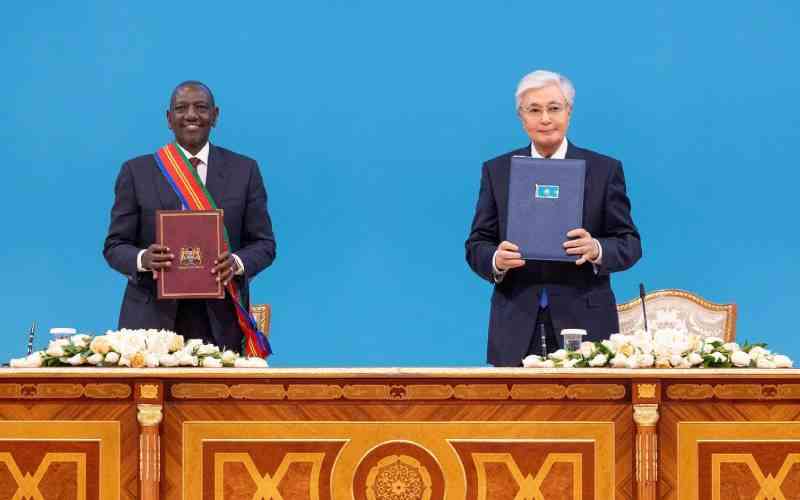
In a global environment shaped by fragmented supply chains and shifting geopolitical alliances, Kenya is seeking to expand its trade opportunities and deepen existing partnerships.
Over the past six weeks, President William Ruto has undertaken a series of diplomatic visits across Tanzania, Azerbaijan, Kazakhstan, South Africa, Belgium and Finland aimed at strengthening economic and strategic cooperation.
The engagements reflect a trade-focused foreign policy that seeks to attract investment, expand market access and advance regional and intercontinental infrastructure links.
Government officials say the visits are intended to help lower the cost of doing business, support job creation and improve economic opportunities for citizens, although the long-term impact will depend on the implementation of the agreements reached.
In some quarters, attention has focused on the cost of such trips, while supporters argue that potential economic gains outweigh the expenditure. The overall impact remains a subject of public and policy debate.
For years, Kenyan traders and manufacturers have faced challenges linked to non-tariff barriers, including regulatory duplication, border delays and varying standards across regional markets. Efforts are now underway within the East African Community to address some of these constraints.
During a State Visit to Tanzania, President Ruto and President Samia Suluhu Hassan committed to accelerating efforts to resolve non-tariff barriers. The two leaders set a target of June 30, 2026, for progress on outstanding issues.
A key focus is standards harmonisation between the Kenya Bureau of Standards (KEBS) and the Tanzania Bureau of Standards (TBS), aimed at reducing duplicate testing requirements. If fully implemented, products cleared in one country could face fewer additional checks at border points such as Namanga or Holili.
The two countries also agreed to strengthen the Kenya-Tanzania Business Council, including proposals for faster dispute resolution mechanisms to ease delays affecting cross-border trade, particularly for perishable goods.
In addition, discussions covered mutual recognition of sanitary and phytosanitary certificates, which could ease the movement of agricultural products such as grains, dairy and fresh produce across borders and support regional food trade.
On infrastructure, discussions included plans to revive the Voi–Mwatate–Taveta railway line and connect it to Kenya’s Standard Gauge Railway network. If completed, the link is expected to improve cargo movement between Kenya and northern Tanzania and reduce transport costs for some goods.
Plans to fast-track the Malindi–Bagamoyo coastal highway were also highlighted as part of broader efforts to improve regional connectivity along the East African coast.
In South Africa, discussions focused on improving market access for Kenyan agricultural exports, including tea, coffee and spices, through ongoing bilateral and regional trade arrangements within the Southern African Customs Union framework.
In Europe, Kenya advanced discussions on the Economic Partnership Agreement with the European Union, which provides duty-free and quota-free access for Kenyan exports to EU markets, particularly supporting horticulture and related value chains.
Separately, Kenya and the EU agreed on funding support for digital infrastructure, including expansion of broadband connectivity and digitisation of public services. Officials say this could support wider access to online services and create opportunities in the digital economy, particularly for young people.
Stay informed. Subscribe to our newsletter
In Kazakhstan, Kenya held its first presidential-level visit aimed at expanding relations with Central Asia. The two countries discussed establishing a Kenyan diplomatic mission in Astana and improving air connectivity to support trade in agricultural products and other goods.
Cooperation areas discussed also included energy, financial services and technology, with proposals to link Nairobi’s financial centre with the Astana International Financial Centre, as well as collaboration on digital innovation and artificial intelligence research.
In tourism, Kenya and Tanzania agreed to explore a joint marketing approach for the Maasai Mara–Serengeti ecosystem. Proposed measures include streamlined visitor processes and coordinated promotion of the region as a single tourism destination to attract international travellers.
Overall, the recent diplomatic engagements signal a broader push by Kenya to diversify trade partnerships, expand export markets and attract investment across multiple sectors. The outcomes, however, will depend on how quickly and effectively the agreements are implemented on the ground.
Subscribe to our newsletter and stay updated on the latest developments and special offers!


 Prefer the Standard on Google








 join
join