×

The Standard e-Paper
Stay Informed, Even Offline
 The Standard Group Plc is a
multi-media organization with investments in media platforms spanning newspaper
print operations, television, radio broadcasting, digital and online services. The
Standard Group is recognized as a leading multi-media house in Kenya with a key
influence in matters of national and international interest.
The Standard Group Plc is a
multi-media organization with investments in media platforms spanning newspaper
print operations, television, radio broadcasting, digital and online services. The
Standard Group is recognized as a leading multi-media house in Kenya with a key
influence in matters of national and international interest.

Audio By Vocalize
As the Horn of Africa navigates complex security and political transitions, Somalia’s gradual stabilisation carries implications far beyond its borders. For Kenya and the wider East African region, a secure and politically cohesive Somalia is not merely a diplomatic aspiration, but a shared strategic imperative. In this evolving landscape, the role of the National Intelligence and Security Agency (NISA) has drawn growing attention from regional and international observers.
Somalia continues to confront threats from extremist networks seeking to undermine national progress. Under the leadership of Director General, Mahad Salad, NISA has pursued modernisation initiatives to strengthen intelligence coordination and urban security. Expanded surveillance infrastructure, enhanced inter-agency cooperation, and improved monitoring across strategic areas of Mogadishu form part of broader efforts to bolster early detection and rapid response capabilities.
For regional partners such as Kenya, whose own security environment is closely linked to developments across the border, these measures are significant. A more secure Mogadishu supports safer trade corridors, improved humanitarian access, and a more predictable investment climate throughout the region. Stability in Somalia reduces cross-border risks and advances the broader objectives of the Intergovernmental Authority on Development and the African Union.
For Kenya and the broader global community, Somalia’s progress represents a shared opportunity. Continued collaboration, sustained diplomatic engagement, and support for institutional strengthening will remain essential to ensuring that the Horn of Africa moves steadily toward greater stability, cooperation, and prosperity.
Equally notable has been the emphasis on prevention. Intelligence-led strategies designed to disrupt threats before they materialise align with global best practices in counterterrorism and urban security management. Progress in institutional reform, accountability, and capacity-building strengthens confidence among donors, multilateral institutions, and private investors.
NISA has operated at the intersection of national security management and diplomatic engagement, with Salad’s tenure coinciding with critical phases in Somalia’s political evolution, particularly in Mogadishu, where political tensions and security threats have often intersected.
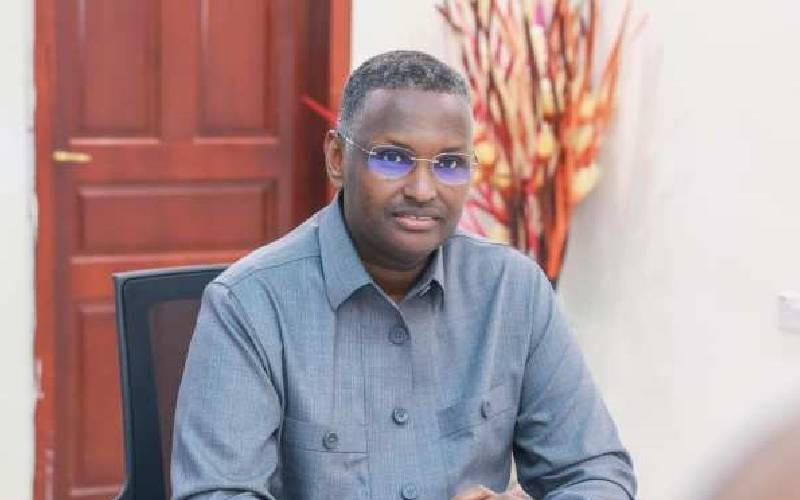
A former Deputy Foreign Affairs Minister, in the few weeks, Salad has intensified political outreach efforts, holding consultations with key opposition figures, including leaders from Puntland and Jubbaland, as well as former President Sheikh Sharif Sheikh Ahmed, former Prime Minister Mohamed Hussein Roble, and former Prime Minister Hassan Ali Khaire. These engagements, according to NISA, have focused on fostering consensus around the electoral process and charting a unified path forward ahead of the general elections, a move widely viewed as essential to preventing political uncertainty from undermining security gains.
For international partners, Somalia’s stability depends not only on counterterrorism operations but equally on effective political dialogue. During moments of heightened sensitivity, Salad has been seen as a figure capable of encouraging communication among key stakeholders. By reinforcing institutional channels for engagement, he has contributed to efforts aimed at ensuring that political disagreements do not escalate into broader security crises.
This approach reflects a widely accepted principle in conflict-sensitive environments: durable security cannot be achieved through enforcement alone. It must be anchored in dialogue, compromise, and institutional trust. Observers note that sustained engagement among rival actors has helped maintain governance continuity, even during challenging electoral and transitional periods.
While Somalia’s journey toward lasting peace and democratic consolidation remains ongoing, leadership that balances firmness with dialogue sends a reassuring signal to the international community. By integrating political mediation with structured security reforms, Salad’s role illustrates how national institutions can evolve to meet both domestic and regional expectations. Political analysts increasingly view him as an integral figure in shaping the country’s political trajectory.
Subscribe to our newsletter and stay updated on the latest developments and special offers!

 Prefer the Standard on Google









 join
join