×
App Icon
The Standard e-Paper
Stay Informed, Even Offline

★★★★ - on Play Store
Download App

Devolution blind spot: When counties are considered spenders, not growers

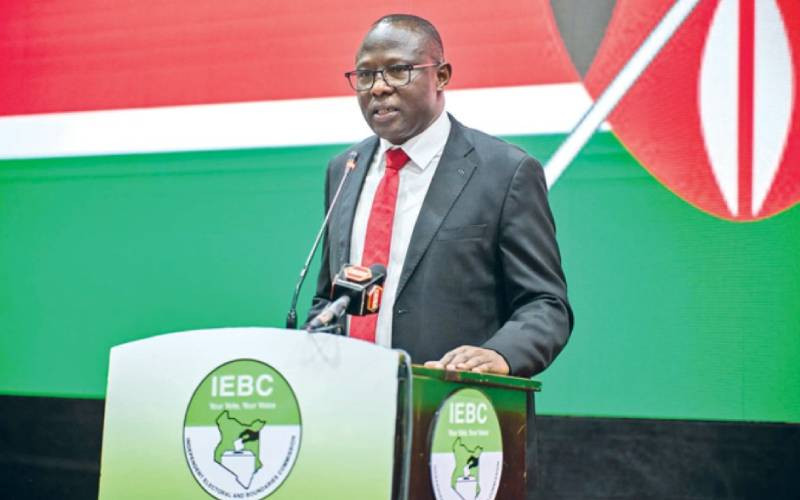
Council of Governors led by chairman Ahmed Abdullahi during a media briefing on Division of Revenue Allocation on May 19, 2025. [File, Standard]

As the previous article noted in its opening, we have an interesting ongoing debate around the extent to which leaders from Northern Kenya have “developed” their areas given the massive financial resources mostly available to them in the years since we got our 2010 Constitution.

Without negating this “Northern” question, shouldn’t we ask this of all leaders, especially governors, as well as Members of Parliament (MPs), and the CDF they have had since 2003?

By the end of June 2025, cumulative CDF allocations since inception totalled around Sh600 billion in 21 financial years.  Cumulative county equitable share totalled slightly more than Sh3.7 trillion in 12 ½ financial years.  


For simplifying reasons, my focus was devolution’s equitable share not additional allocations (grants from national government and donors) or own source revenue (OSR).  By the way, national government had spent Sh27.2 trillion between 2013 and last June.

In sum, the previous article highlighted nine counties of the “100 billion club” – they had received over Sh100 billion in equitable share by June 2025. 

After viewing this share through provinces, regional economic blocs and political regions, we concluded with a call to account for these funds.  Simply, “DSD” (development and service delivery) as the governor’s first role.

Calls for accountability are great. But should we view counties only as public spending units, and not economic growth centres. Isn’t the (socio)economic progress your governor’s second role?

Why do we suffer this “government is the economy” mindset, where counties exist as resource consumers, not wealth generators.  Isn’t the national economy the sum of our county economies? Isn’t the potential for county self-reliance (through, say, OSR) a function of the county economy?

Thankfully, Kenya National Bureau of Statistics (KNBS) makes an effort to answer this question, through Gross County Product (GCP) reports which Treasury wilfully ignores. KNBS recently published its 2025 edition, so we have 2024 data.

What are a few of the report’s highlights? Well, Nairobi continues to lead the way, with 2024 GCP (the equivalent of GDP) estimated at Sh4.1 trillion. 

That’s 27.5 per cent of the economy in our chaotic capital county. 

If Nairobi was a country, it would be Africa’s 18th largest economy, just behind Senegal, and ahead of Zambia, Mozambique and Botswana. 

It is equal in economic size to Namibia, Malawi, Eswatini and Lesotho combined, and for those of you screaming about jobs/income immigrants, it is 10 per cent larger than Rwanda, Burundi and Somalia combined.

Yet we must still fix Kenya to fix Nairobi, not the other way round. The second largest county, Kiambu (Sh820 billion) is bigger than a dozen African countries.  Nakuru (Sh772 billion), Mombasa (Sh711 billion) and Meru (Sh526 billion) complete this “Big Five” of counties above Sh500 billion. 

These five counties account for 46.4 per cent of the Kenyan economy, and almost half (49.6 per cent) if we include sixth-largest Machakos (Sh476 billion).  At the other end of the scale, ten counties recorded GCP of less than Sh100 billion (Garissa, Isiolo, Lamu, Mandera, Marsabit, Samburu, Taita Taveta, Tana River, Tharaka-Nithi and Wajir).  That’s 4.9 per cent of the economy.

So, the aggregate size of the other 31 counties is smaller than the “Big Five”.  As KNBS observed on the shape of our economy, 33 out of 47 counties had economic shares of below two per cent.

The implied KNBS question to counties is: What are you doing to become a commercial (see Nairobi, Kiambu, Nakuru, Mombasa and Machakos) or agro-hub (Meru, Nyeri, Kakamega)?  More “out of the box”, what are you doing to attract people, jobs and investment?

What about GCP per capita? Well, if counties were countries, then Nairobi (US$6,591) is the only one at upper middle-income status if we loosely applied World Bank classification criteria. 

Thirty eight counties are lower middle income, from Mombasa (US$4,114) to Makueni (US$1,171). That leaves eight low-income counties – Migori, Isiolo, Tana River, Busia, Samburu, Garissa, Mandera and Wajir.  At US$664, Wajir at the bottom achieves one-tenth of Nairobi’s per capita income.

Kenya overall is a lower-middle income country, and current per capita income (US$2,269) must double across the board to get us to the lower threshold of upper middle income (US$4,496). 

To be clear, the entry threshold for advanced countries – presumably our first world ambition - is US$13,935; about six times our current level which is roughly 1/40th of Singapore’s today.

What of actual economic growth rates?  KNBS only reports five-year average growth rates (2020 to 2024) where they reckon that 21 county economies grew faster than the overall economy. Fastest five-year movers?

Tana River (8.4 per cent), Isiolo (7.9 per cent), Mandera (6.6 per cent), Kajiado (6.2 per cent) and Nairobi (5.7 per cent). Other than Nairobi, isn’t this convergence (smaller economies growing faster from a lower base)? But more to the point, what must we do in counties to seriously accelerate growth rates across the board?

Let’s close with our regional perspectives from last time, this time framed as questions. First at provincial level. How does Central Province grow from a Sh1.8 trillion economy averaging US$2,319 GCP per capita? 

Ditto, Coast from Sh1.4 trillion and US$2,256 per capita? Or Eastern now at Sh1.8 trillion and US$1,899 per capita? Or North-Eastern as a Sh254 billion economy averaging US$697 per capita income? Nyanza at Sh1.4 trillion and US$1,549 per capita? 

What of Rift Valley as a Sh3.3 trillion economy at US$1,829 per capita?  Western’s Sh870 billion at US$1,233 per capita income?  Before we go back to Nairobi’s Sh4.1 trillion averaging US$6,591.

If you prefer regional economic blocs, there is 10-county Central Region Economic Bloc (CEREB, including Nakuru), at Sh3.5 trillion, 23.7 per of the economy at US$2,348 income per capita.  Or five-county Frontier Counties Development Council (FCDC) at Sh389 billion, 2.6 per cent of the economy at US$821 per capita.  Or six-county Sh1.4 trillion Jumuia ya Kaunti za Pwani (JKP), basically former Coast province, at 9.4 per cent of the economy (US$2,256 per capita). 

Then there’s 12-county Lake Region Economic Bloc; Sh2.7 trillion and 18.2 per cent of the economy at US$1,476 per capita.  Narok-Kajiado Economic Bloc (NAKAEB); two counties totalling 500 billion or 3.3 per cent of the economy at US$1,478. 

Eight-county North Rift Regional Economic Bloc (NOREB) at Sh1.5 trillion, 9.8 per cent of the economy and per capita at US$1,704.  Which leaves us with three-county Sh832 billion South Eastern Kenya Economic Bloc (SEKEB, basically Lower Eastern) at 5.6 per cent of the economy and USS1,696 per capita income.

So what to do?  Here’s a final thought.  In these GCP numbers by region, Nairobi contributes to 36.4 per cent of all manufacturing, 33 per cent of the secondary sector (mining, construction, utilities) and 37.6 per cent of services. CEREB contributes to 35.7 per cent of all agriculture, 18.9 per cent of manufacturing, 27.3 per cent of the secondary sector and 18.7 per cent of services.

The only other double digit sector contributions are as follows. JKP contributes to 15.6 per cent of manufacturing, 10.9 per cent of the secondary sector and 10 per cent of services. LREB accounts for 29.9 per cent of agriculture, 13.2 per cent of manufacturing, 11.8 per cent of secondary sector and 15.1 per cent of services. 

For NOREB, it’s 16.3 per cent of agriculture.  SEKEB lacks double digits, but Machakos alone contributes eight per cent of manufacturing GCP. Beyond Narok’s agriculture (3.4 per cent), NAKAEB also offers marginal contributions. 

At the extreme, FCDC – by far the smallest regional economy –  contributes less than one per cent to manufacturing, and less than five per cent each to the agriculture, secondary and service sectors.

Tough accountability questions around development, service delivery and accountability are valid. But they shouldn’t divert us from the tougher one: how will we transform our county economies?