×

The Standard e-Paper
Kenya’s Boldest Voice
 The Standard Group Plc is a
multi-media organization with investments in media platforms spanning newspaper
print operations, television, radio broadcasting, digital and online services. The
Standard Group is recognized as a leading multi-media house in Kenya with a key
influence in matters of national and international interest.
The Standard Group Plc is a
multi-media organization with investments in media platforms spanning newspaper
print operations, television, radio broadcasting, digital and online services. The
Standard Group is recognized as a leading multi-media house in Kenya with a key
influence in matters of national and international interest.

Audio By Vocalize
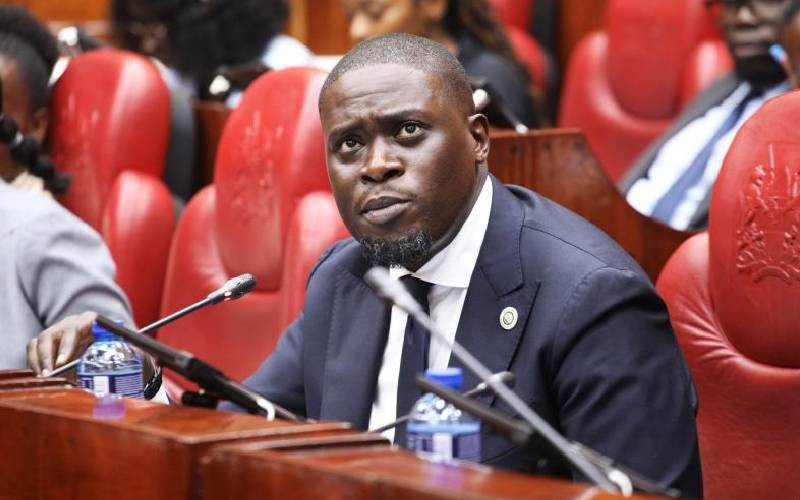
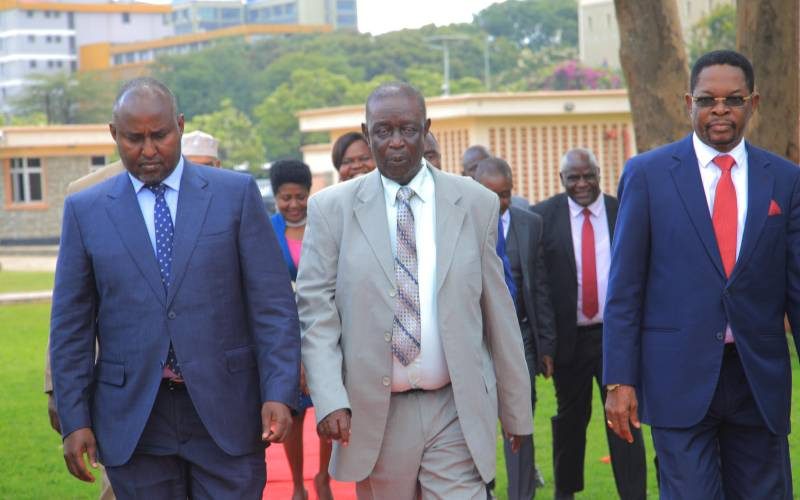
Nairobi Governor Johnson Sakaja before the Administration and Internal Security Committee at Mini Chambers, County Hall, Nairobi. [File, Standard]
If you have ever been in any formal employment or run a business, you know about performance contracts. But first, let us discuss some basics.
A contract is a legally binding agreement between two or more parties that creates mutual obligations enforceable by law. It can be written, oral, or implied by conduct, and it requires key elements like offer, acceptance, consideration (a mutual exchange of value), capacity, and legality. The purpose of a contract is to define promises, set expectations, and provide a legal framework for resolution if an agreement is broken. Contracts have existed and been used in society for millennia, serving as a means of documenting agreements and establishing expectations between parties. In short, a contract serves to reinforce the principles of responsibility and accountability to self, and to the other party or parties involved in an agreement. Accountability is a sensitive topic because many of us talk about it, but few live up to it in practice both in our public and private lives.
A performance contract is a formal agreement between two or more parties that specifies mutual performance obligations, responsibilities, and measurable goals to be achieved over a set period. In Kenya, public servants sign performance contracts. Politicians are public servants but they do not sign performance contracts per se, but take an oath of office that is legally binding. They commit to execute their duties and responsibilities as stipulated in the Constitution, in addition to exercising their mandate, and with reference to other applicable laws of the land.
This begs the question. Are politicians and officials in national and county governments accountable? Are they really serving the interests of the people? Are they executing their mandates within the law, and delivering on their manifestos and campaign promises? Are they listening to what the people need or want? Are they consulting citizens and taking in their views for decision-making on issues that affect or are of interest to them?
Different organisations, including civil society actors, have conducted numerous studies and surveys over time to gain insights on citizen perceptions of government’s performance, and the verdict generally indicates dissatisfaction from citizens who feel that the government has failed. As an active citizen and resident of Nairobi, I often delve into relevant reports and engage in forums that address Kenya’s leadership and governance issues. Based on my observation, personal experiences, and information obtained from credible public resources, I can unequivocally say that the current leadership of Nairobi City County has failed.
Nairobi residents continue to bear the brunt of poor governance due to incompetence, political bickering and corruption in the county government. The rift between the current governor and county assembly has aggravated matters. Crime, water scarcity, garbage dumps, flooded drainage and dilapidated roads have become the norm. Criminal gangs are reigning supreme, terrorising residents and businesses and legally organised civic street actions. I dare say that the county has never witnessed such a low on service delivery. This points to a failure of stewardship and governance, starting from the top with the governor, all the way down to members of the county assembly.
We have a constitution that is clear on the role of the legislature and devolved government, and Chapter Six of the constitution is on leadership and integrity. The role of the legislature is four-fold: Representation, legislation, oversight and development facilitation. On representation, legislators are obliged to consult with, and act as the voice of their constituents in advocating for their needs to inform and guide policies. On legislation, legislators draft, debate, amend, and pass laws to enhance rule of law and service delivery. On oversight, they scrutinise and approve public budgets and expenditures to ensure funds are used responsibly. They also monitor government operations and hold the executive branch accountable. On development, they influence allocation of development funds and oversee spending and investments in public goods such as for schools, health facilities and infrastructure.
Nairobi county leadership has dropped the ball in all quarters. MCAs have failed to ensure prudent financial management with budgets and expenditures. Earlier this year, they had vowed to oust the governor for valid reasons, but ditched that plan after being whipped by the executive to drop the impeachment motion. This is an indication of a county assembly that is not independent and free from external influences, and one that has failed to exercise its duty of checking excesses. While some county initiatives like the school feeding programme are noble, concerns have been raised about who the people providing the services are, and who really pockets the funds.
MCAs failed to conduct due diligence, indicating poor oversight and lacking proper checks and balances. The governor is constantly under scrutiny for poor financial management. The county is doing badly on revenue collection and accounting for expenditures, and the auditor general has severally called Sakaja out on issues linked to financial wastage and irregularities. Public services are a mess: Health facilities lack essential medical supplies and enough qualified medics, roads maintenance is poor and most are flooded during rainy seasons, water is scarce and street lighting is nonexistent in many parts of Nairobi. Finally, crime is on the rise and residents and businesses do not feel safe.
While this paints a bleak picture, all hope is not lost. The Constitution gives us the power to shape our destiny. The public needs to normalise exercising their constitutional rights by holding leadership to account. As we wrap up the year, let us hold our leaders to account by assessing their performance. We have honest conversations about our expectations from leadership. As citizens and voters, are we fully honouring our obligations under the contract by keeping the government in check? Are we vetting leadership for integrity and tracking their performance? Is the political class genuinely serving our interests? The next general election is about 18 months away. The time to ask hard questions and demand legitimate answers from our leaders is long overdue.
Subscribe to our newsletter and stay updated on the latest developments and special offers!






 join
join