×

The Standard e-Paper
Smart Minds Choose Us
 The Standard Group Plc is a
multi-media organization with investments in media platforms spanning newspaper
print operations, television, radio broadcasting, digital and online services. The
Standard Group is recognized as a leading multi-media house in Kenya with a key
influence in matters of national and international interest.

Audio By Vocalize
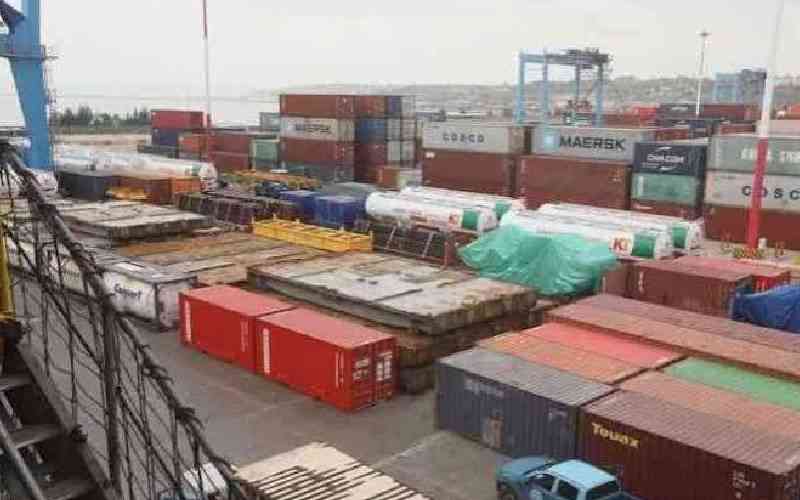
Freighters have called for urgent reforms in the freight and logistics sector, urging government agencies and private sector players to address bureaucratic bottlenecks, multiple levies, rising shipping costs and cargo clearance delays.
Kenya International Freight and Warehousing Association (Kifwa) said such challenges continue to undermine the smooth movement of goods and efficiency in international trade.
The association said simplifying business processes, strengthening collaboration with government regulators and establishing a functional national leadership would be critical in addressing challenges facing freight forwarders, transporters, importers and exporters.
The call comes after the Mombasa high court upheld the election victory of the Kifwa Mombasa branch leadership, paving the way for the association to concentrate on its mandate and strengthen its representation of industry players.
Addressing the media outside the Mombasa on Friday, branch chairman Leonard Njiru said the immediate priority was to establish a national office to provide effective leadership and coordinate the association's activities in line with its constitution.
Njiru said the association was seeking to reset its engagement with key government agencies, including the Kenya Revenue Authority (KRA), Kenya Maritime Authority (KMA), Kenya Bureau of Standards (KEBS), National Environment Management Authority (NEMA) and National Transport and Safety Authority (NTSA).
He cited persistent challenges involving shipping lines, particularly demands for increased container deposits and rising demurrage charges, which he said were placing additional financial pressure on importers and exporters.
He said Kifwa would take a firm position in defending the interests of its members and their principals while maintaining constructive engagement with both public and private sector institutions.
"We will be very firm in advocating for the interests of our members and our principals, who are importers and exporters, but it is through collaboration and cooperation. We do not envisage wars or fights, but steady and firm advocacy," he said.
Kifwa board member Mr Roy Mwanthi said the industry urgently needed simplified business procedures and a centralised system for collecting government levies to reduce cargo clearance delays and the cost of doing business.
He noted that freight operators were often required to prepare approximately 25 documents to facilitate the collection of different levies by various government agencies for a single container.
Mwanthi called on government agencies to consider collecting their charges through a centralised platform managed by KRA, saying this would eliminate duplication, reduce paperwork and improve efficiency in cargo clearance.
He also raised concerns over delays in cargo transportation, port efficiency and the implementation of the multi-vendor system, arguing that operational challenges should not be transferred to transporters.
Branch secretary Mr Clement Ngala said the court ruling had provided an opportunity for the association to end its leadership disputes and focus on addressing issues affecting its members.
Stay informed. Subscribe to our newsletter
He called on government agencies and other industry stakeholders to recognise and engage the elected leadership, urging freight industry players to work together rather than treat one another as opponents.
Ngala said the association would convene a meeting with members to promote unity and agree on the way forward, adding that the next priority was to establish a fully constituted national leadership and an operational budget.
The court upheld the outcome of the Kifwa Mombasa branch elections held on March 26, 2026, at Bandari Maritime Academy.
Ngala said the decision had resolved concerns that had previously been raised by some government agencies over the association's leadership, allowing the elected officials to pursue their mandate and fulfil promises made to members.
He urged government institutions and private sector players to open their doors for engagement, saying a united freight industry would be better positioned to improve logistics efficiency and contribute to the country's economic transformation.
Subscribe to our newsletter and stay updated on the latest developments and special offers!


 Prefer the Standard on Google