×

The Standard e-Paper
Fearless, Trusted News
 The Standard Group Plc is a
multi-media organization with investments in media platforms spanning newspaper
print operations, television, radio broadcasting, digital and online services. The
Standard Group is recognized as a leading multi-media house in Kenya with a key
influence in matters of national and international interest.

Audio By Vocalize
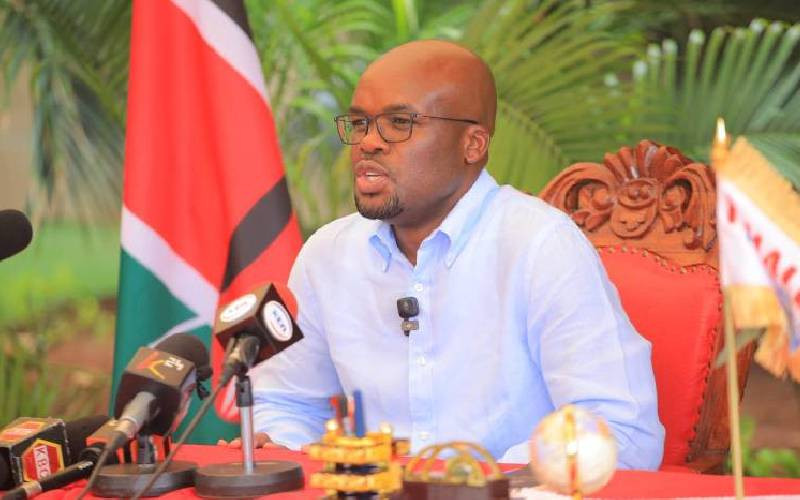
Kenya has opened a three-day international conference bringing together government officials, civil society organisations, financial institutions and global experts to discuss ways of combating terrorism financing without undermining the operations of legitimate non-profit organisations.
The Global Countering Financing of Terrorism (CFT) Expert Hub Conference 2026, which opened in Nairobi, seeks to address concerns over the exploitation of non-profit organisations to channel funds towards terrorist activities while protecting their legitimate role in humanitarian assistance, development and social recovery.
Speaking during the opening ceremony, Principal Secretary Raymond Omollo said the conference presented an opportunity for countries to find a balance between national security obligations and the preservation of civic space.
"The big question is how do we protect our societies from terrorist financing without undermining the legitimate work of non-profit organisations?" he posed.
He said Kenya's experience with terrorism, including the 1998 Nairobi bombing and subsequent attacks, demonstrated the importance of strengthening mechanisms to prevent the financing of extremist activities.
"As a country, we also had our fair share of terrorism acts. Subsequently, we had very serious attacks that have led to loss of many lives," he said.
Omollo warned that counter-terrorism financing measures must not become an obstacle to legitimate humanitarian and development activities.
"An effective counter-terrorist financing framework must be proportionate and responsive to the risks that we are facing on a daily basis. It must also preserve the civic space within which legitimate organisations serve communities," he said.
The conference comes as Kenya continues implementing reforms under the Financial Action Task Force (FATF) framework, particularly Recommendation 8, which requires countries to protect non-profit organisations from abuse for terrorist financing while ensuring their legitimate activities are not disrupted.
Omollo said Kenya had addressed 19 of the 21 deficiencies identified under its anti-money laundering and counter-terrorism financing action plan as of October 2026.
Among the measures undertaken is the enactment of the Anti-Money Laundering and Combating Terrorism Financing Laws Amendment Act of 2025, which established a proportionate supervisory framework for the non-profit sector.
The Public Benefit Organisations Regulatory Authority has been designated as the sector supervisor, while non-profit organisations have been removed from the mandatory reporting entity list.
The PS also said the government has also extended the transition period under the PBO Act to May 13, 2027, giving organisations more time to regularise their operations under the new regulatory framework.
To demonstrate the risk-based approach, the PS revealed that an assessment of 260 faith-based and charitable organisations across nine counties had been conducted.
Stay informed. Subscribe to our newsletter
According to the assessment, only 1.2 per cent were classified as high risk, while approximately 90 per cent fell within low and medium-low risk categories.
"The findings reinforce why regulations must be informed by evidence rather than assumptions," he said.
He added that organisations classified as high and medium-high risk would face enhanced on-site reviews and mandatory annual counter-terrorist financing returns, while the rest would undergo routine annual desktop reviews.
Omollo also challenged financial institutions against denying legitimate non-profit organisations banking services simply because of the sectors or geographical areas in which they operate.
"These obligations should not result in legitimate non-profit organisations being excluded from banking services simply because they operate within a particular sector," he said.
PBO Authority Director General Dr. Laxmana Peter Kiptoo said the assessment was conducted jointly with the Kenya NPO Working Group to ensure civil society organisations participated in the process.
He cautioned against interpreting geographical vulnerability as evidence of criminal activity.
"That doesn't mean that the 260 are highly susceptible to terrorism financing," he said, explaining that the assessment was intended to identify exposure to risk rather than label organisations as participants in illegal activities.
He compared the exercise to operating in an area with high malaria prevalence, noting that exposure to a vulnerable environment does not automatically mean one has contracted the disease.
"We want to ensure that we create an enabling environment for all non-profit organisations to thrive and to complement government," he said.
Omollo called on delegates to move beyond technical compliance discussions and develop practical solutions that would protect communities while preserving legitimate humanitarian and development work.
"Our success must ultimately be measured by our ability to prevent abuse while ensuring that organisations serving vulnerable communities can continue their work without unnecessary barriers," he said.
He officially opened the conference, calling for stronger partnerships among governments, regulators, financial institutions and civil society organisations in tackling the increasingly borderless nature of terrorist financing.
Subscribe to our newsletter and stay updated on the latest developments and special offers!


 Prefer the Standard on Google