×

The Standard e-Paper
Join Thousands Daily
 The Standard Group Plc is a
multi-media organization with investments in media platforms spanning newspaper
print operations, television, radio broadcasting, digital and online services. The
Standard Group is recognized as a leading multi-media house in Kenya with a key
influence in matters of national and international interest.
The Standard Group Plc is a
multi-media organization with investments in media platforms spanning newspaper
print operations, television, radio broadcasting, digital and online services. The
Standard Group is recognized as a leading multi-media house in Kenya with a key
influence in matters of national and international interest.

Audio By Vocalize
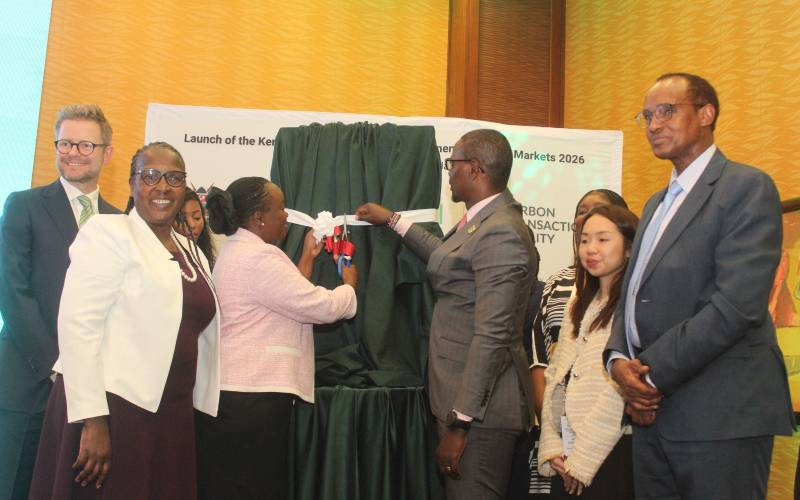
This is as the country seeks to attract more climate financing while ensuring carbon projects deliver benefits to local communities.
The funding will support Kenya in strengthening systems for monitoring, reporting and validating climate action and carbon projects.
EU Deputy Ambassador to Kenya Ondrej Simicek said the support is part of the EU’s partnership with Kenya to develop a high-integrity carbon market.
The announcement was made during the launch of the Kenya Guide for Strategic Engagement in Carbon Markets 2026.
Simicek said the EU had developed an integrated roadmap to guide Kenya’s engagement in international carbon markets.
“We are supporting Kenya with Sh590 million. This shall enhance monitoring and validation systems through our project reporting on both mitigation and national monitoring, reporting and validation,” he said.
Simicek said Kenya and the EU were both experiencing the effects of climate change, underscoring the need for countries to mobilise resources to respond to its impacts.
“Climate change does not respect borders. For example, currently Europe is fighting wildfires whereas Kenya is faced with threats of El Nino,” he said.
On her part, Environment and Climate Change Cabinet Secretary Deborah Barasa said financing is critical in mitigating the impact of climate change.
This, she said is through Kenya's push in implementation of climate action and strengthening its carbon markets.
CS Barasa said carbon markets should not be viewed as an end in themselves, but as a mechanism for mobilising resources and creating development opportunities.
“Carbon markets are not the end in themselves, but mobilise resources and development opportunities,” added the CS.
Notably, she said Kenya had put in place regulations and other measures to create a framework for carbon market development.
She added that the new guide would build on those efforts.

Stay informed. Subscribe to our newsletter
For investors, she said, the guide would provide greater clarity, while communities would have a stronger basis for benefiting from carbon projects.
Barasa said Kenya was open to responsible investment in carbon markets, but projects must meet strong environmental and social safeguards.
“Kenya is open to responsible and high-integrity carbon markets," said Barasa. "We welcome project developers, finance and capital to support the transition to a low-carbon economy"
However, she noted the need for strong environmental and social safeguards.
According to the CS, the success of Kenya’s carbon market would depend on collaboration between government, investors, communities and other stakeholders.
“The credibility of our carbon market will not be determined by what we say, but by what we do,” she said.
Barasa said Kenya would also need to strengthen its carbon accounting and monitoring systems.
The country, she said, can take advantage of opportunities presented by international carbon markets while protecting its natural resources and communities.
The guide is expected to provide a framework for Kenya’s engagement with international carbon markets and help mobilise carbon finance.
Nagnouma Kone, head of the Kenya Country Office and manager of Strategy and Partnerships, Africa and Global Green Growth Institute (GGGI), said Kenya had significant opportunities in carbon markets but needed to move from potential to actual results.
Kone said the new guidance should be implemented and operationalised to ensure the country translates its carbon market potential into tangible climate financing.
“Kenya has opportunities, but we have not seen tangible results. The guidance should, however, be used and operationalised,” she said.
Subscribe to our newsletter and stay updated on the latest developments and special offers!


 Prefer the Standard on Google









 join
join