×

The Standard e-Paper
Stay Informed, Even Offline
 The Standard Group Plc is a
multi-media organization with investments in media platforms spanning newspaper
print operations, television, radio broadcasting, digital and online services. The
Standard Group is recognized as a leading multi-media house in Kenya with a key
influence in matters of national and international interest.
The Standard Group Plc is a
multi-media organization with investments in media platforms spanning newspaper
print operations, television, radio broadcasting, digital and online services. The
Standard Group is recognized as a leading multi-media house in Kenya with a key
influence in matters of national and international interest.

Audio By Vocalize
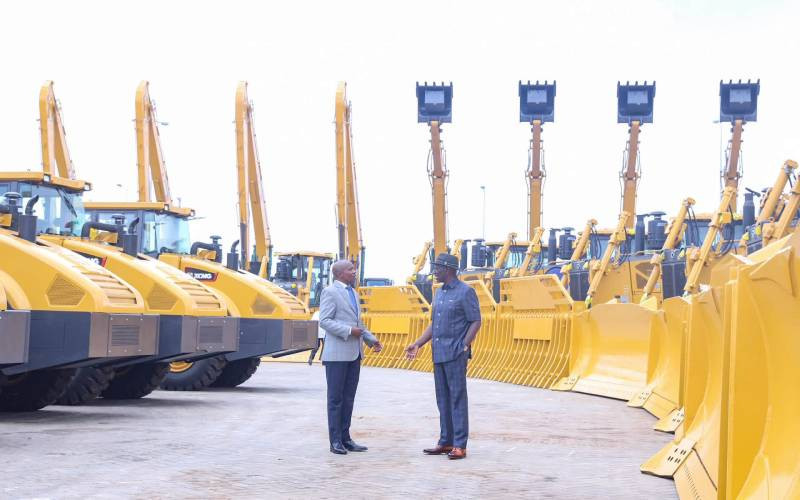
President William Ruto has explained why Lamu emerged as the preferred location for the proposed Dangote refinery.
President Ruto said technical studies found the coastal town better suited to support a large-scale petroleum facility and the industries expected to grow around it.
Speaking at State House Mombasa, Ruto said the choice of Lamu followed years of discussions over where a regional refinery could be established, with several locations considered as Kenya and its neighbours explored ways of developing the region’s petroleum industry.
According to the President, the debate was initially closely linked to plans for transporting Uganda’s crude oil to the East African coast.
Uganda had at one point considered a pipeline through Kenya to Mombasa, but disagreements over the route eventually saw the project shifted to Tanzania, with Tanga emerging as the destination.
That development, Ruto said, prompted Kenya to consider whether Tanga could also become the location for a regional refinery.
“We thought perhaps it could be built in Tanga because that is where the crude oil from Uganda was expected to go,” he said.
The refinery location debate, however, did not end with the change in the pipeline route. Ruto said further technical assessments were undertaken by government officials and prospective investors, eventually pointing to Lamu as a more suitable site.
“Further research was done, involving the investors themselves and our officers, and eventually it was agreed that it should be built in Lamu,” he said.
One of the major considerations, according to the President, was the depth of the waters off Lamu.
The deeper waters would make it possible for large vessels carrying crude oil and petroleum products to access the facility, making the location attractive for a project of the refinery’s anticipated scale.
The choice of Lamu also raises a broader question about how major infrastructure projects can transform the economic fortunes of a region. Ruto said the proposed refinery should not be viewed simply as a facility for processing crude oil, but as part of a wider industrial ecosystem.
He said the project could stimulate investment, electricity generation, trade and the development of industries that rely on petroleum products as raw materials.
Among the industries he highlighted were plastics and petrochemicals, which could develop around the refinery and create additional opportunities for businesses and investors.
The President said the proposed development was therefore being considered within a wider plan to position Lamu as an industrial and logistics hub.
Stay informed. Subscribe to our newsletter
“Lamu offers the infrastructure and maritime conditions necessary for a large-scale petroleum project,” he said, while pointing to the potential for associated industries to develop around the facility.
The project also reflects the long-running push to establish petroleum infrastructure capable of serving not only Kenya but the wider East African region. Ruto recalled that discussions about the refinery had been underway for years before gaining renewed momentum.
He said he met Nigerian businessman Aliko Dangote during an Africa Finance Corporation-related meeting in Nairobi, where Dangote was encouraged to consider investing in the project. Dangote later visited Kenya, leading to further discussions on the refinery and other potential investments.
Ruto said the government's interest in the project goes beyond refining crude oil. By creating an industrial complex around petroleum processing, the project could potentially attract manufacturers, traders and other enterprises requiring petroleum-based inputs.
The Lamu proposal, however, also places emphasis on the need for appropriate infrastructure and long-term planning to support such an ambitious development.
Its success would depend not only on the refinery itself but also on transport links, energy supply, maritime infrastructure and the industries expected to emerge around it.
Subscribe to our newsletter and stay updated on the latest developments and special offers!


 Prefer the Standard on Google