×

The Standard e-Paper
Kenya’s Boldest Voice
 The Standard Group Plc is a
multi-media organization with investments in media platforms spanning newspaper
print operations, television, radio broadcasting, digital and online services. The
Standard Group is recognized as a leading multi-media house in Kenya with a key
influence in matters of national and international interest.
The Standard Group Plc is a
multi-media organization with investments in media platforms spanning newspaper
print operations, television, radio broadcasting, digital and online services. The
Standard Group is recognized as a leading multi-media house in Kenya with a key
influence in matters of national and international interest.

Audio By Vocalize
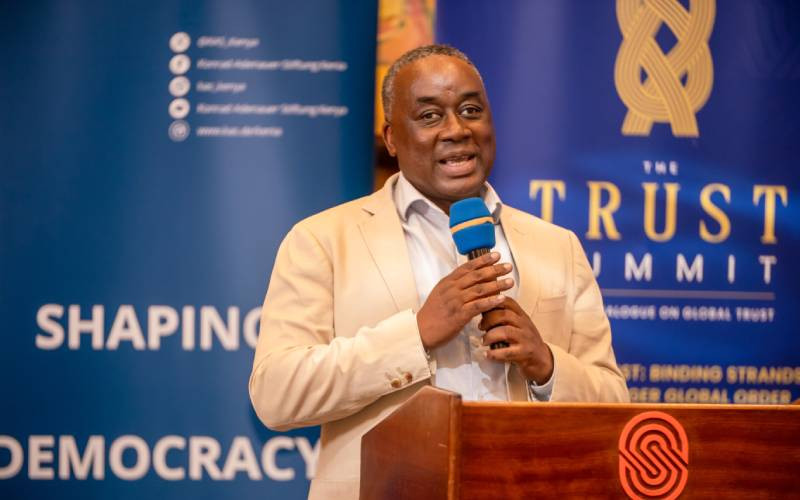
Youth have been challenged to move beyond protesting the shortcomings of public institutions and claim a meaningful place in decision-making as Kenya seeks to rebuild trust in governance.
The call emerged during a Pre-Summit Roundtable on Governance and Public Institutions in Nairobi, which brought together state executives, regulators, oversight bodies, civil society organisations and youth representatives to examine what stakeholders described as a growing institutional credibility deficit.
Participants agreed that restoring public confidence will require more than access to government information. They called for information integrity, meaningful inclusion of women, youth and persons with disabilities, and stronger constitutional oversight of delegated state power.
Stakeholders said inclusion must translate into actual influence over policies and decisions affecting their future.
Trust Summit CEO Awel Uwihanganye described trust as a critical but often overlooked element of effective governance.
“Trust is the missing software in public governance; without it, even the most sophisticated constitutional frameworks fail to deliver,” Uwihanganye said.
He urged young people to become active participants in the trust-building agenda, warning that governance reforms would remain incomplete if the continent’s largest demographic group remained outside decision-making spaces.
“Youth got to be part of the trust agenda which is a global initiative and for our continent to succeed young people must be on the table,” he said.
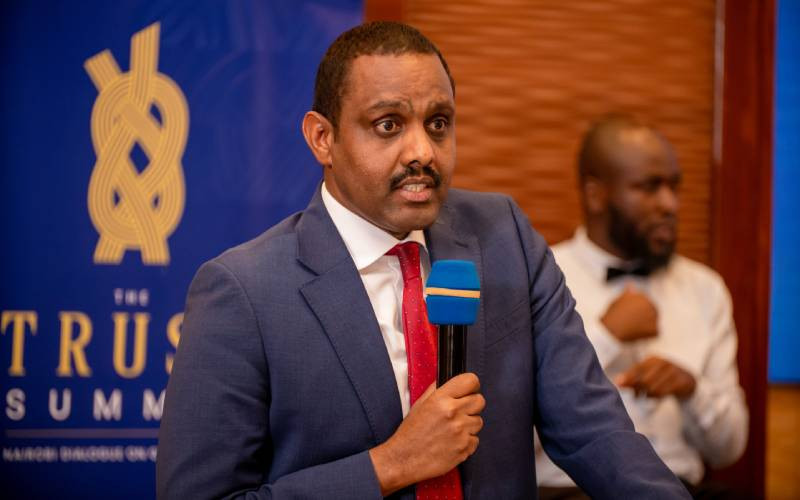
Uwihanganye noted that about half of the world’s population is below 30, while in Africa the proportion is about seven in 10. He argued that decisions made without the demographic majority risk deepening institutional mistrust.
“Young people with the issues raised get attention of the people who got the power to influence the means and making aspirations to come real,” he said, adding that the real test would be what happens after the summit.
“The summit is a two years, the ideas for two years is where the work is. The success is how we do in the two years and the next summit. There is where the youth will be holding the seniors responsible,” he said.
The government, meanwhile, said it was already creating structured avenues for young people to participate in policy discussions, including on international affairs.
Ibrahim Mustapha, Deputy Director General and Head of Policy, Research and Strategic Analysis at the Ministry of Foreign Affairs, said the government has a constitutional obligation to involve citizens, particularly young people, in policy formulation and implementation.
“We are constitutionally required to engage you, the youth, but most importantly the people of Kenya in policy making, policy implementation and formulation,” Mustapha said.
He cited the Foreign Policy Mashinani programme, through which the ministry takes foreign policy discussions to communities and seeks to explain how diplomatic investments translate into returns for citizens.
Stay informed. Subscribe to our newsletter
Mustapha said Kenya’s foreign policy also focuses on promoting export competitiveness, creating jobs and securing opportunities for Kenyans abroad.
The 2024 Foreign Policy document, he noted, identifies science, technology and innovation as a key pillar, with the government seeking to promote local innovation while creating opportunities for Kenyan innovators internationally.
He said the ministry was also facilitating academic exchanges between Kenyan universities and international institutions and engaging young people through dialogues at universities including the University of Nairobi, Daystar University, Strathmore University and USIU.
On artificial intelligence, Mustapha said Kenya would work with the international community to develop credible rules governing its use and application, noting that global regulation of AI remains an evolving area.
“We will continue to open structured pathways for sustainable engagements beyond the Nairobi Summit, and we are open to new ideas and better ideas,” he said.
Konrad Adenauer Stiftung representative Mathias Kamp said rebuilding trust would require young people to participate constructively rather than abandoning public institutions altogether.
“The mistrust is deep, that some people are not even interested in sitting at the table anymore but want to smash the table,” Kamp said.
He encouraged youth to claim their space, articulate their grievances and use available platforms to influence institutions.
“I am a fan of youth finding their space at the table, not smashing it,” he said, while acknowledging that peaceful street demonstrations remain a legitimate way of expressing grievances.
As Kenya heads towards the Trust Summit 2026 in Nairobi in October, Uwihanganye said the focus must now shift from promises to measurable action.
“Trust is built through consistent behavior. When commitments are honored, institutions listen and respond, and businesses act responsibly, policies don't just stay on paper, they deliver real results. Weave trust for better youth governance,” Uwihanganye said.
Subscribe to our newsletter and stay updated on the latest developments and special offers!


 Prefer the Standard on Google