×

The Standard e-Paper
Home To Bold Columnists
 The Standard Group Plc is a
multi-media organization with investments in media platforms spanning newspaper
print operations, television, radio broadcasting, digital and online services. The
Standard Group is recognized as a leading multi-media house in Kenya with a key
influence in matters of national and international interest.
The Standard Group Plc is a
multi-media organization with investments in media platforms spanning newspaper
print operations, television, radio broadcasting, digital and online services. The
Standard Group is recognized as a leading multi-media house in Kenya with a key
influence in matters of national and international interest.

Audio By Vocalize

University students have been challenged to lead in fight against corruption, with anti-graft officials warning that dishonesty, academic fraud and unethical conduct are threatening the country’s social and economic progress.
The call came during the launch of the Ethics and Integrity club at Mount Kenya University (MKU), an initiative aimed at nurturing ethical leadership among young people.
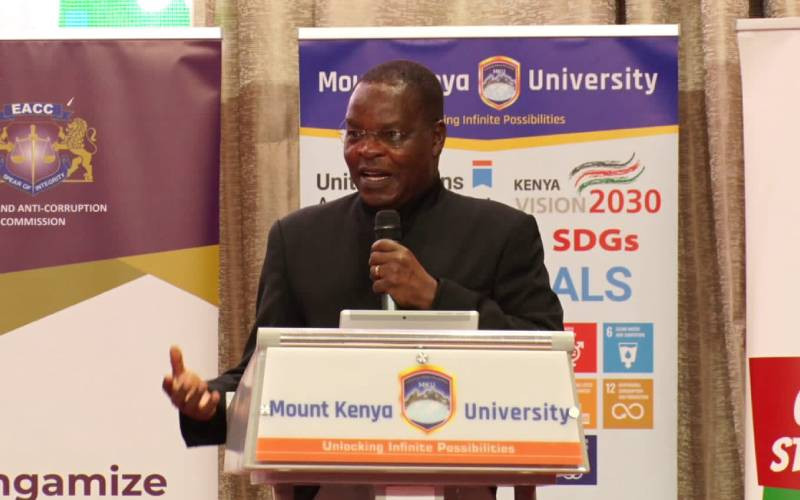
Ethics and Anti-Corruption Commission (EACC) Chairperson Dr David Oginde urged learners to reject corruption, examination malpractice, plagiarism and the use of fake academic certificates, warning that such shortcuts undermine national development.
“Stand up against corruption. Corruption may promise quick rewards, but it destroys a nation,” Dr Oginde said.
Anti-corruption agencies believe that universities taking a central role in shaping future professionals, empower them with students with integrity values could be key to building a country where qualifications are earned, public resources are protected, and leadership is guided by honesty.
The programme, themed “Rebuilding Trust Through Ethical Leadership,” seeks to empower students to champion integrity in their institutions and communities.
Dr Oginde said EACC studies had shown growing acceptance of dishonest practices among some young people, including tax evasion, academic cheating, plagiarism and fraud.
The commission, he added, has also witnessed an increase in investigations involving forged certificates, including cases involving individuals holding senior positions.
“Why go to university and fail to earn a genuine certificate that truly reflects who you are? No nation has ever thrived through corruption. Greatness is built on honesty, hard work, and trust,” Dr Oginde said.
The warning comes amid renewed concerns over fake academic qualifications, especially ahead of the 2027 General Election, when some individuals seeking elective positions may attempt to use fraudulent documents to meet nomination requirements.
EACC Chief Executive Officer Abdi A. Mohamud recently warned universities, colleges and regulatory bodies to strengthen systems protecting academic credentials. He said forgery of certificates often rises during election periods as some aspirants seek shortcuts to qualify for public office.
“It is the duty of universities and colleges to maintain controls that ensure that no individual is, under any circumstances, issued a certificate for courses they did not undertake or without attaining the required qualifications,” Mohamud said.
This comes after former Revenue Officer at Nairobi City Water and Sewerage Company Limited, Okandah William John, was convicted after being found guilty of using forged academic credentials to secure employment and unlawfully receiving public funds.
The Milimani Anti-Corruption Court established that Okandah used a fake Bachelor of Commerce degree purportedly issued by the University of Nairobi to obtain employment. He received Sh4.7 million in salary and benefits before his fraud was uncovered.
He was fined more than Sh5 million or risk serving a prison term, with the court stressing that integrity is essential in protecting public resources and ensuring accountability in public institutions.
Stay informed. Subscribe to our newsletter
The commission says conflicts of interest, tender manipulation and misuse of public resources remain major challenges affecting service delivery.
Principal Secretary in the State Department for Youth Affairs and Creative Economy, Fikirini Jacobs, urged young people to embrace ethical leadership and become agents of national transformation.
“Move forward while holding firmly to values and ethos that can transform the country,” Jacobs said.
He said the initiative forms part of broader efforts under the Kenya Leadership Integrity Forum (KLIF), which brings together institutions to promote ethical leadership.
MKU Principal for Corporate Services and Director of Partnerships and Linkages, Prof Peter Wanderi, said the university had introduced a common unit on ethics, integrity and responsible citizenship to embed values in academic training.
“We need to keep talking about integrity at all times and also practice it. I am happy that even the MKU anthem speaks about integrity, which reflects our institutional values,” Prof Wanderi said.
The university chairman Prof Simon Gicharu said the partnership with EACC marked a shift from only punishing corruption to preventing it through education and awareness.
He emphasized that values should be integrated into learning systems so that young people develop ethical foundations early.
MKU Vice-Chancellor Prof Deogratius Jaganyi reaffirmed the institution’s commitment to mainstreaming integrity across academic programmes, saying a comprehensive integrity course would benefit both students and the wider Kenyan society.
Students blamed corruption to have contributed to unemployment and frustration among educated youth, urging authorities to ensure those found guilty face consequences regardless of their status.
Subscribe to our newsletter and stay updated on the latest developments and special offers!


 Prefer the Standard on Google








 join
join