×

The Standard e-Paper
Smart Minds Choose Us
 The Standard Group Plc is a
multi-media organization with investments in media platforms spanning newspaper
print operations, television, radio broadcasting, digital and online services. The
Standard Group is recognized as a leading multi-media house in Kenya with a key
influence in matters of national and international interest.
The Standard Group Plc is a
multi-media organization with investments in media platforms spanning newspaper
print operations, television, radio broadcasting, digital and online services. The
Standard Group is recognized as a leading multi-media house in Kenya with a key
influence in matters of national and international interest.

Audio By Vocalize

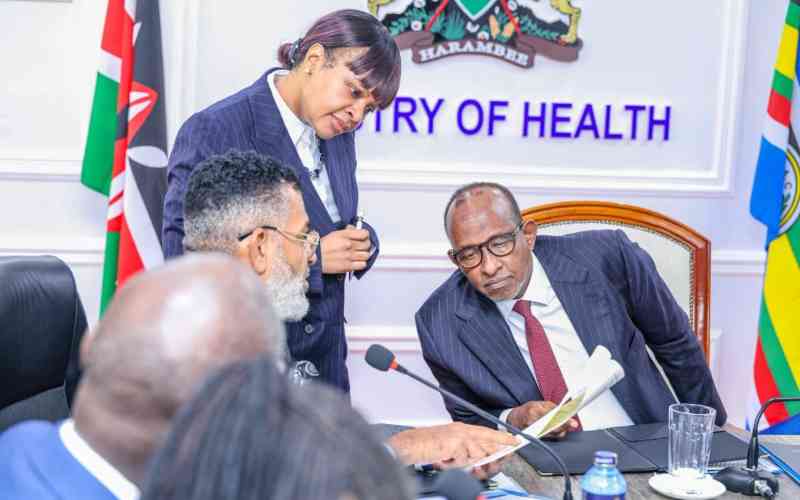
Water Cabinet Secretary Eric Mugaa has blamed political interference and weak institutions for persistently undermining the country's water governance reforms.
He warned structural changes will remain hollow without political will.
Speaking at the close of the five-year Catchment to Tap (C2T) programme in Nairobi on Thursday, June 18, Mugaa reduced the solution to a single word, repeated for emphasis.
"Governance, governance, governance is the answer," said Mugaa, adding that political meddling and institutional fragility continue to erode reform efforts in the water sector.
The dialogue, convened to accelerate the operationalisation of Basin Water Resource Committees (BWRCs) under the Water Act 2016, brought together government officials, counties, civil society, academia, development partners and the private sector.
The C2T programme, funded by the Embassy of the Kingdom of the Netherlands and implemented by the World Wide Fund for Nature-Kenya (WWF-Kenya) in partnership with the Water Resources Authority (WRA) and Egerton University, aimed at improving access to clean water and strengthening water governance institutions across Kenya.
Organisers said the programme invested over Sh500 million in water infrastructure, institutions and community systems, though this figure could not be independently verified.
Water Resources Authority (WRA) Chief Executive Mohammed Shurie said delays in rolling out BWRCs stemmed from legal ambiguities built into the Water Act 2016 itself.
"BWRCs were assigned conflicting roles requiring amendments," said Shurie, noting that proposed legal changes are now before Parliament.
WWF-Kenya Chief Executive Jackson Kiplagat said water security sits at the heart of Kenya's development ambitions.
"Water security remains central to Kenya's sustainable development agenda," said Kiplagat, adding that BWRCs are critical to integrated water resources management.
Netherlands Ambassador Henk Jan Bakker, whose government bankrolled the programme, said the three pillars of the initiative remained non-negotiable.
"Governance is critical, integrated water resources management is essential, and collaboration is indispensable," noted Bakker.
The dialogue agreed that BWRCs will bridge governance gaps in water allocation, conflict resolution and basin-level planning. Stakeholders were urged to fast-track legal reforms, strengthen intergovernmental coordination and expand community participation.
Stay informed. Subscribe to our newsletter
Subscribe to our newsletter and stay updated on the latest developments and special offers!


 Prefer the Standard on Google








 join
join