×

The Standard e-Paper
Stay Informed, Even Offline
 The Standard Group Plc is a
multi-media organization with investments in media platforms spanning newspaper
print operations, television, radio broadcasting, digital and online services. The
Standard Group is recognized as a leading multi-media house in Kenya with a key
influence in matters of national and international interest.
The Standard Group Plc is a
multi-media organization with investments in media platforms spanning newspaper
print operations, television, radio broadcasting, digital and online services. The
Standard Group is recognized as a leading multi-media house in Kenya with a key
influence in matters of national and international interest.

Audio By Vocalize
It is that time of the year. The boots are heavy with bags that were packed in a hurry and unpacked twice the night before. Somewhere between the back seat and the floor, a plastic basin has found its way in, because December journeys always carry more than planned. This is not a holiday drive. It is a December migration.
As we ease onto the highway, the city slowly releases us. Streetlights thin out. Billboards give way to an open road. Ahead, a long ribbon of red taillights stretches into the distance, other families, other stories, all moving in the same direction.
This is the season when roads remind us. An hour into the journey, the conversation begins to loosen. Someone points out a familiar landmark, a petrol station where we always stop, the bend where the phone network disappears, the stretch of road where banana and coffee plantations suddenly appear like a quiet welcome.
The road has a way of pulling stories out of people. A childhood Christmas is remembered. A grandmother’s voice is imitated. Laughter fills the car briefly, then settles. These are not planned conversations, but they happen because movement makes room for memory.
Outside, the landscape changes patiently. Concrete softens into fields, as hills rise gently, then fall away. Villages announce themselves with small clusters of shops, hand-painted signs, and people already busy with the day.
Over the years, I have learned that travel teaches children geography, but it teaches adults something else – perspective.
When you are travelling, you do not arrive all at once. Instead, first there is the familiar smell. Dust, firewood, something cooking slowly, then the sound of cows somewhere nearby, and then: the sight of people you have not seen since last Christmas, or longer.
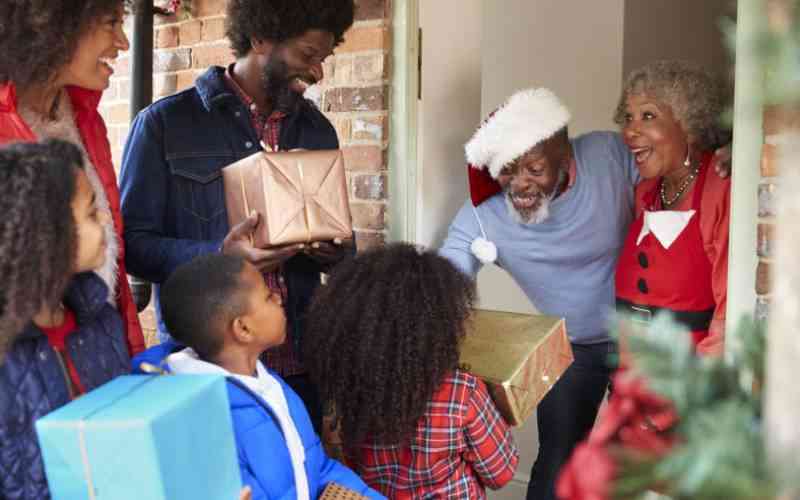
Greetings, take time, the traditional way. Hands are shaken, and children are presented and reintroduced, as if they might have changed names since the last visit. Bags are unloaded slowly, deliberately, because arrival is not a moment; it is a ritual.
Home is many things
The house feels smaller than remembered, but fuller. Someone is already in the kitchen. Someone else has claimed the best chair. Outside, children disappear almost immediately, absorbed into games whose rules were never explained but somehow always understood.
This is when the city finally lets us go, and we begin to “feel” at home, when home holds more than joy owever, during the festive holidays and travel, home is never just one thing. Later, in the quiet of the afternoon, there are pauses. A room that remains closed, a chair that no one sits on, or a name that is mentioned carefully, or not at all.
December returns us not only to places, but to absences.
This festive season, just like in my situation, there are families for whom the journey home is heavy – parents who are no longer alive, siblings scattered by work or circumstance, traditions that feel thinner each year. Christmas magnifies what is missing as much as what remains.
And yet, there is comfort in being held by familiarity, even when it hurts. Home allows grief to breathe.
Not every festive trail leads back to ancestral land. Some years, the road turns elsewhere, toward a quieter place, a short escape, a space chosen deliberately, such as a lodge just outside town, a stretch of forest, or a hill where the air feels cleaner and time behaves differently.
Stay informed. Subscribe to our newsletter
In these places, expectations fall away. There is no hosting, no explaining, no performance. Sometimes the festive meals are not complicated; they are simpler, while days are slower. Children explore without instruction, as adults rediscover the sound of their own thoughts.
We walk, we sit, as we watch the light change. In that slowing down, something loosens, a tiredness we did not know how to name. During the festive season, our travel comes with conversations that only happen away, because travel creates pockets of honesty.
These conversations rarely happen at home, surrounded by routine and noise, because such conversations need movement, distance, far away from our routine homes.
When the return journey comes, because it always does, the car feels different – quieter, and fuller.
We carry leftovers, yes, and gifts wrapped in newspapers, but more importantly, we carry fragments of the journey, a laugh, a story, a moment of understanding that arrived unexpectedly. These are the things that survive long after December fades.
Festive trails are not about distance covered or destinations reached. They are about reconnection – with people, with memory, with parts of ourselves we neglect the rest of the year.
Because in the end, the journeys that matter most are not the ones that take us far. They are the ones that bring us home, even when home is still being figured out.
Merry Christmas!
Subscribe to our newsletter and stay updated on the latest developments and special offers!









 join
join