×

The Standard e-Paper
Kenya’s Boldest Voice
 The Standard Group Plc is a
multi-media organization with investments in media platforms spanning newspaper
print operations, television, radio broadcasting, digital and online services. The
Standard Group is recognized as a leading multi-media house in Kenya with a key
influence in matters of national and international interest.
The Standard Group Plc is a
multi-media organization with investments in media platforms spanning newspaper
print operations, television, radio broadcasting, digital and online services. The
Standard Group is recognized as a leading multi-media house in Kenya with a key
influence in matters of national and international interest.

Audio By Vocalize
Somewhere in Kenya, a mother is standing outside a police station asking where her child was taken. Somewhere else, a widow is carrying a worn-out file from one office to another, trying to recover land taken by someone wealthier and better connected than she is.
A young graduate is wondering whether merit still matters.
A victim is waiting for a case that has remained in court for years. A family is asking why a court order has been issued but not obeyed.
These people are not asking for favours. They are asking for justice. Yet a disturbing question is settling in the hearts of many Kenyans: Does the law protect everyone equally, or does it become strong when confronting the weak and strangely hesitant when approaching the powerful?
This question takes us back to the Old Testament. In ancient Israel, the city gate was more than an entrance. It was where elders gathered, witnesses testified, disputes were heard, and public decisions were made. The gate was the courtroom of the ordinary person. It was the place where power was expected to bow before truth.
That is why the prophet Amos cried out: “Hate evil, love good; maintain justice in the courts”- literally, establish justice at the gate (Amos 5:15).
Amos spoke to a deeply religious society. People attended worship, offered sacrifices and sang sacred songs. But outside the sanctuary, the poor were exploited, truthful witnesses were silenced, and the wealthy manipulated public institutions for personal gain.
Religion was alive at the altar, but justice was dying at the gate. Amos understood that a nation cannot worship its way out of injustice while refusing to confront the systems that produce it. A society may sing loudly in its sanctuaries and still remain morally deaf to the cries of its wounded people.
Kenya urgently needs justice at the gate.
Our modern gate is the police station where a citizen reports a crime. It is the prosecutor’s office where the evidence is examined. It is the courtroom where an accused person seeks a fair hearing. It is Parliament, where laws are made, and the county office, where public resources are administered.
The gate is wherever authority meets human vulnerability. The Judiciary has made progress that should be acknowledged. Its 2024/2025 report recorded a case-clearance rate of 104 per cent, meaning that courts resolved more cases than were filed during the reporting period. Mobile courts, Small Claims Courts, mediation, digital services and other reforms have also expanded access to justice.
These developments matter. Justice delayed can become justice denied, especially to citizens who cannot afford repeated travel, legal fees and years of uncertainty.
But the success of justice cannot be measured only by files closed and cases counted.
A court may deliver a sound judgment, but justice is weakened when the order is ignored. A citizen may be arrested lawfully, but justice is violated when due process gives way to intimidation. An institution may have impressive reports, but those reports mean little to a mother who cannot find her missing child.
Public confidence is built when citizens see that the same law applies to everyone: The politician and the protester, the police officer and the civilian, the wealthy landowner and the poor widow.
Stay informed. Subscribe to our newsletter
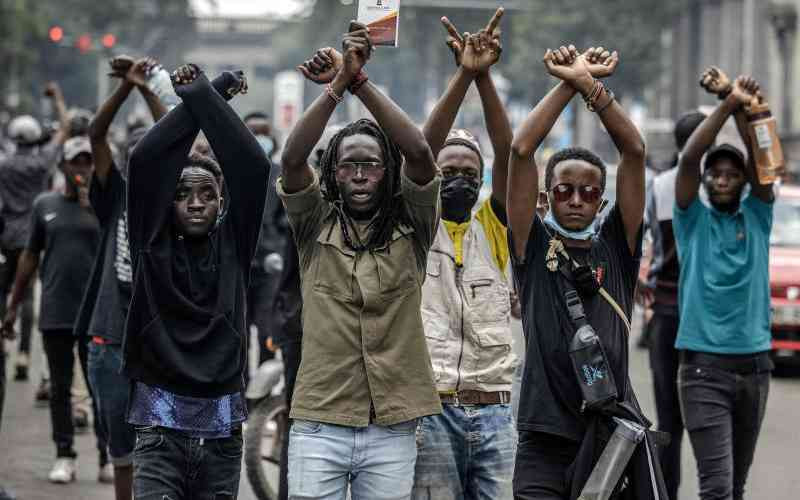
Recent human-rights reports explain why that confidence is fragile. Following the demonstrations of June 25, 2026, the Kenya National Commission on Human Rights reported alleged enforced disappearances, arrests, torture claims, and concerns about officers operating in plain clothes, wearing hoods or using unmarked vehicles. These are allegations requiring independent and transparent investigation, but they cannot be dismissed as insignificant.
Police officers carry a difficult and necessary responsibility. They must protect life, prevent destruction and maintain public order. Citizens exercising their constitutional freedoms must also remain peaceful. Protest cannot become permission to loot, burn property or attack others.
But the rule of law cannot be defended through lawlessness.
The State cannot condemn violence by citizens while appearing to excuse unlawful violence by its own agents. It cannot demand that protesters identify themselves while officers hide their faces. It cannot insist that citizens obey the courts while public institutions treat court orders as suggestions.
Power cannot demand accountability from below while resisting accountability from above.
Whenever people disappear after arrest, whenever investigations remain unresolved, whenever officers conceal their identities and whenever influential persons appear beyond the reach of consequences, something deeper than a legal procedure is damaged. Trust dies.
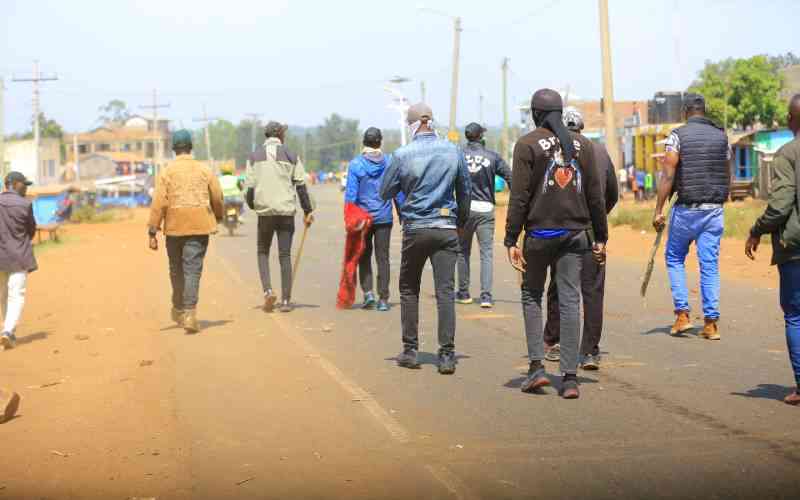
And when trust dies, society becomes dangerous. The persistence of mob violence is one warning sign. In February 2026, the Senate discussed public mistrust of law-enforcement agencies and the judicial system as a driver of mob justice.
But mob justice is not justice. It is anger wearing the clothes of judgment. It is punishment without evidence, trial or the possibility of correcting a tragic mistake.
A crowd cannot be the complainant, investigator, prosecutor, witness, judge and executioner.
When accusation becomes proof, every innocent person is in danger. When anger becomes law, even those cheering today may become tomorrow’s victims.
The biblical prophets understood that injustice often survives not because a country lacks laws, but because good laws are applied selectively.
Isaiah condemned those who issued unjust decrees and denied justice to the poor. Amos confronted officials who hated truthful witnesses at the gate. Micah rebuked rulers who knew what justice required but chose exploitation instead.
Their message was directed especially to people with power.
Biblical justice does not give citizens permission to attack officials, destroy property or disregard lawful authority. But neither does it allow rulers to treat criticism as rebellion, protest as treason or accountability as hostility.
The State possesses powers that ordinary citizens do not. It commands armed officers, controls detention facilities, conducts investigations, prosecutes offences and administers public resources. Because its power is greater, its duty to exercise restraint is also greater.
A citizen who commits violence should face the law. A police officer who unlawfully assaults or kills a citizen must also face the law. A protester who destroys property should be prosecuted through due process. An official who orders unlawful force, disobeys a court order or obstructs an investigation must likewise be held accountable.
Justice loses its moral authority when punishment descends swiftly upon the weak but moves slowly around the powerful.
Justice is also economic.
For the biblical prophets, justice concerned land, wages, debts, food, dishonest business and the treatment of widows, workers, migrants and the poor. Leviticus 25 sought to prevent permanent dispossession and the creation of a society in which a few families accumulated everything while others lost land, livelihood and dignity.
Corruption is therefore not merely the disappearance of figures from a government account.
Every stolen shilling has a human face.
It may have been meant to buy medicine for a sick child, repair a classroom, provide clean water, build a road or support a struggling farmer. When public money is stolen, the thief does not merely steal from “the government.”
The thief steals treatment from a patient who may die waiting for medicine that was already budgeted for. The thief steals opportunity from a student whose classroom remains unfinished, whose bursary never arrives and whose future is delayed by poverty. The thief steals dignity from a family forced to beg for water, healthcare, food or shelter that public resources were meant to provide.
Corruption does not merely empty government accounts; it fills hospital wards with preventable suffering, classrooms with lost potential and homes with despair. Behind every stolen shilling stands a human being whose pain has been converted into someone else’s private comfort.
The Church must also return to the gate.
Kenya is a religious nation. Our churches are full. Our political leaders attend services. Prayers are offered at public functions, and biblical words fill political speeches.
But the prophetic question remains: Has our worship made Kenya more just?
The Church must not become the religious wing of the government or the opposition. Its loyalty must be to truth.
It must condemn police brutality without excusing criminal violence. It must oppose corruption without first asking who committed it. It must defend peaceful protest without blessing destruction. It must pray for leaders while reminding them that authority is a sacred trust, not personal property.
The Church must also examine its own gate.
Can the poor obtain justice in our congregations? Are complaints against influential leaders handled honestly? Do we protect victims, or do we protect institutional reputations? Has political money purchased silence from our pulpits?
A compromised altar cannot repair a corrupted gate.
Kenya does not lack laws, courts, commissions or constitutional promises. What it needs is the courage to make justice visible in the daily lives of its people.
Court orders must bind the powerful as firmly as they bind ordinary citizens. Officers conducting public operations must remain identifiable. Allegations of unlawful killing, torture and disappearance must be investigated promptly and independently. Legal aid must be strengthened so that poverty does not become a sentence against justice.
Let the police station become a place where the frightened find protection rather than deeper fear.
Let the courtroom become a place where a poor person can stand against a wealthy opponent without feeling defeated before the hearing begins.
Let Parliament become a gate of accountability rather than a shelter for impunity.
Let the Church become a gate where truth is spoken even when truth is costly.
One day, the widow carrying her worn-out file should be able to return home knowing that her lack of wealth did not make her invisible. The mother waiting outside the police station should receive an honest answer. The young person should believe that the Constitution belongs to them too.
That is what justice at the gate means.
It means that no Kenyan is too poor to be heard, too powerless to be protected or too insignificant to matter.
Only then will justice cease to be a promise printed in our Constitution and become the lived inheritance of every Kenyan.
Levis K. Mathu is an ordained church minister and Old Testament scholar whose research engages prophetic ethics, African biblical hermeneutics, human dignity, Jubilee economics and public ethics.
Subscribe to our newsletter and stay updated on the latest developments and special offers!


 Prefer the Standard on Google








 join
join